Parshat Beshalach: Women Leading the Song?

Parshat Beshalach contains a song of gratitude sung by the Jewish people after the miraculous splitting of Yam Suf. According to the peshat, Moshe led the men in singing Az Yashir, while Miriam led the women in a short song. However, one particular line points to the women’s involvement and leadership in Az Yashir as well.

The verse, “This is my God (zeh Eli) and I will glorify Him,” is interpreted as the peak of revelation for the Jewish people. Rashi interprets the word “this” to mean the people pointed to God’s glory. Rashi continues citing another midrash: the “maidservants saw at Yam Suf what even the prophets never saw,” meaning everyone, even the lowliest maidservant, received this highest level of revelation at Yam Suf. 

Another midrashic tradition highlights the women’s unique ability to recognize God in challenging times. The Talmud teaches that in the merit of the “nashim tzidkaniyot” (righteous women), the Jews were redeemed from Egypt. These women bravely continued to give birth in the face of Pharaoh’s harsh decrees. They birthed their babies in the fields and had faith that God would protect the children. God performed miracles for them and provided angels to nurse them. As a reward for the righteous women’s actions and commitment, their children followed in their footsteps and were the first to recognize and point to God’s presence at the Sea and proclaim “Zeh Eli.” 

This has been a challenging week in Israel, from the tragic loss of chayalim to continued disruptive covid wave. When we read Az Yashir, may it be a tefillah that when we God-willing one day cross to the other side of these uncertain waters, we can follow in the footsteps of the righteous women and children and say “Zeh Eli,” as we recognize God and express gratitude for our redemption. Shabbat Shalom – Karen Miller Jackson

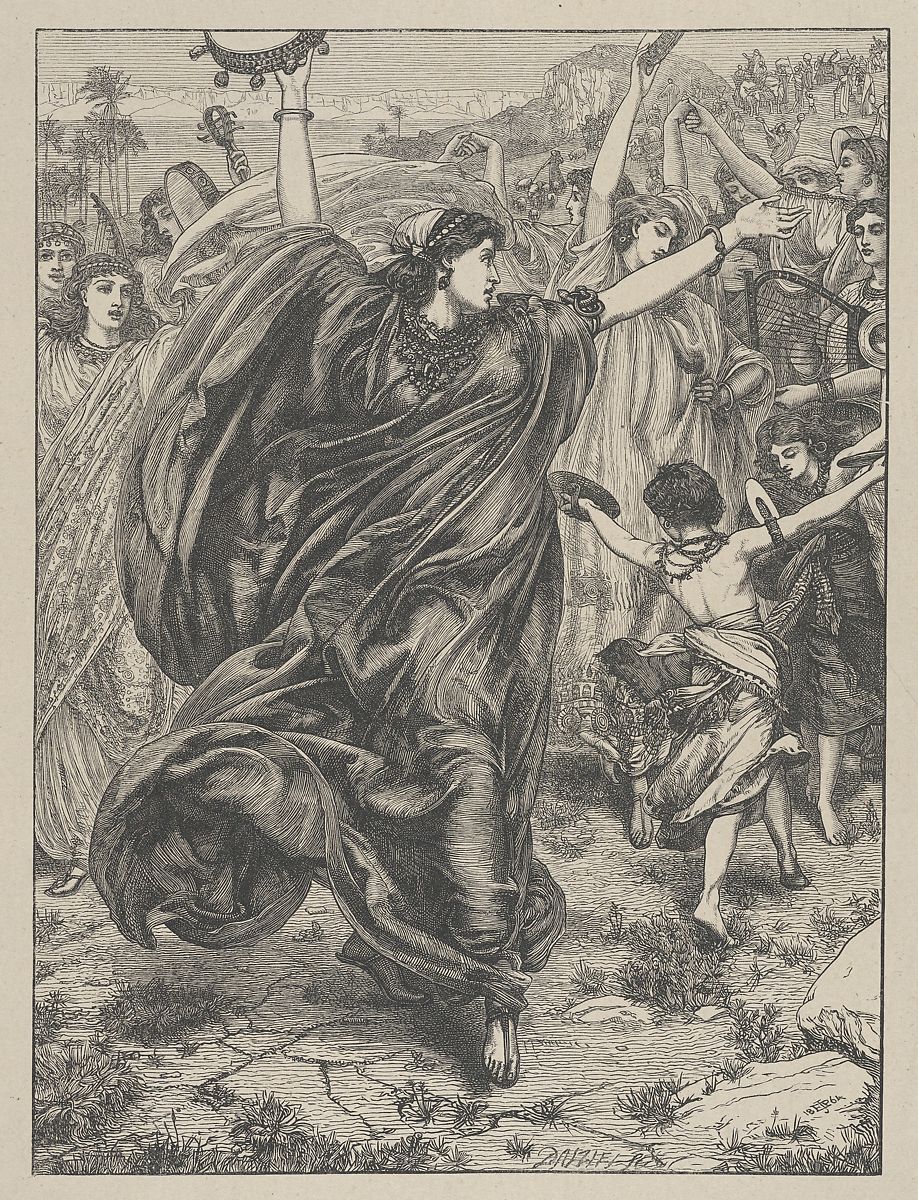
*Miriam, by Sir Edward John Poynter from The Metropolitan Museum of Art


On Welcoming and Accepting

How welcoming should we be to converts? And what approach should we take with young Jews who are ambivalent about their commitment to Torah and mitzvot? One commentary on parshat Bo provides a refreshing perspective on these questions.

Parshat Bo contains the laws of the Passover sacrifice, and the Sefer HaChinuch uses this as an opportunity to explain a principle about keeping mitzvot. When the Torah commands us not to break the bones of the korban Pesach the Sefer Hachinuch famously comments: “after one’s actions, follows the heart.” Meaning, that even if a person has negative thoughts or lack of motivation, by doing good and doing mitzvot – actions or habits, no matter how small and whether or not one understands them – his/her thoughts will be stirred toward positive feelings and enthusiasm toward Torah and faith in God. This relates to the Sefer Hachinuch’s purpose as a halakhic commentary of unknown authorship from 13th century Spain which provides meaning for the mitzvot. In the introduction he writes that one impetus for this commentary was to inspire his son and friends and “awaken their hearts.” 

A similar approach is taken to converts by Hillel in the Talmud, when he is approached by 3 non-Jews who wished to convert but with a significant caveat. One wouldn’t accept the oral Torah, another would convert on the condition that he be appointed kohen gadol and the third wanted the Torah to be taught “on one foot.” Each time Hillel converted them and after they were welcomed they began to observe and learn. This led them to correct their original demands and reinforced Hillel’s decision. 

The message of Sefer HaChinuch and Hillel: sometimes the way to Torah and God is through accepting ambivalence and partial commitment. Just as this was a successful approach historically, it is even more relevant today. Shabbat Shalom – Karen Miller Jackson


Parshat Va’era: Abuse and the Hardening of the Hearts

When someone inflicts widespread, deep and recurring damage on others, are they able to repent? Is teshuvah always open to us, irrespective of the severity and repetitiveness of our actions? Parshat Va’era raises this issue, and the commentators provide answers with particular relevance today. 

Before Moshe goes to Pharaoh the second time, God says explicitly, “I [G-d] will harden Pharaoh’s heart.” How could Pharaoh be punished if he was unable to choose whether or not to sin? Does this mean that for some sinners, the gates of repentance are locked?

The midrash teaches that Pharaoh had free will and the option to repent during the first five plagues. Yet, after he was given ample opportunity to repent and refused to do so, G-d subsequently denied him the possibility of teshuvah. This midrash keys into a subtle difference in language in the Torah. For the first 5 plagues it states “Pharaoh’s heart stiffened,” while after that it states that “God hardened his heart.” Why should someone lose the possibility of repenting? Rambam and Ramban both comment that Pharaoh had free will but then lost it as a consequence of his own actions. Pharaoh’s sins — the abuse and enslavement of an entire people — were so serious that God removed his ability to repent. 

This week, Israeli media reported numerous cases of abusers. Most prominently, Chaim Walder died by suicide after his abuse was made public and judgement was passed in rabbinic court. I couldn’t help wondering whether repentance is possible for those who inflict widespread and recurring damage on others. Perhaps the hearts of sinners are never fully hardened, unless Hashem so decides. 

At the same time, as reports of abuse recur and our initial shock wears off, we must not let our own hearts harden – by becoming indifferent to the victims. We must help past victims, work harder to prevent these crimes and create a better future for our children. Shabbat Shalom – Karen Miller Jackson


What’s in a name?

Parshat Shemot, literally “names,” contains a contrast between characters who are referred to by name alongside others who are unnamed. The parsha opens by listing the names of Yacov’s sons who went down to Egypt. Yet, the Torah then avoids using names when it refers to “a new king,” “a man from the house of Levi,” “daughter of Levi,” “daughter of Pharaoh,” and others. The midwives are referred to both by name (Shifra and Puah) and as “the midwives,” and Bat Pharaoh names the baby, Moshe. With this mixture of naming and anonymity, what can be learned about the value of using names in parshat Shemot?

Here are three approaches. Sforno teaches that the children of Yacov are named because they lived up to their “names” or good character and family values. However, the generation enslaved in Egypt were not worthy of mentioning by name, hence the anonymity. The midrash, in contrast, extracts the opposite message from the beginning of Shemot: one of the main reasons Bnei Yisrael were redeemed from Egypt was that they kept their Hebrew names in exile. The midrash assumes the next generation carried on at least some of the values of Yacov. Lastly, Rashi teaches that naming is an act of love: by listing the names of b’nei Yacov in Shemot, God conveys love for Israel and reassurance of redemption in the face of hardship.

Today, psychologists have shown that using names can be an effective tool for managing emotions. Dr. Daniel Siegel uses the phrase “name it to tame it” — by referring to emotions by name, one can better navigate stressful situations and create closer relationships. How appropriate that parshat Shemot emphasizes the power of naming in the midst of difficult times, as a reminder that referring to others or emotions by name can bring about redemption. Shabbat Shalom – Karen Miller Jackson


Parshat Vayechi: Parenting Different Personalities

What wisdom does Parshat Vayechi contain on parenting different personalities?

As Yacov’s life draws to an end he gathers his sons together. First, Yacov’s intention is to tell them “what is to befall you in days to come.” After speaking to each individual son the Torah says: “these were his parting words. He blessed them, blessing each one with a parting word appropriate to him.” What was the purpose of Yacov’s final speech?

This question perplexed the biblical interpreters especially since some of Yacov’s words sound unlike brachot. Ibn Ezra argues that these were words of prophecy, not blessings. Yet, the harshest words said to Shimon and Levi seem to be about the past, not the future: “Cursed be their anger. I will divide them in Jacob and scatter them in Israel.” Commentaries understand this as rebuke for their previous willingness to kill Yosef and their violent revenge on the city of Shechem after the taking of Dina. 

A psychologically insightful interpretation is offered by the Or Hachaim who writes that in fact all of these words were blessings. Even the harsh words to Shimon and Levi were given as brachot. By scattering them throughout the tribes and giving Levi the peaceful service in the mikdash, this channeled their anger and aggressive tendencies. In fact, Or Hachaim teaches, Yacov blessed each son appropriately for him. Every soul has its own individual potential and Yacov intended his bracha to maximize the potential and strengths of each child. 

Appropriately, parshat Vayechi is also the source of the custom to bless our children on Friday nights. It reminds us that each child is an individual and we continue to bless them in the hope that they internalize our positive values, maximize their potential and channel their middot for the good. Shabbat Shalom – Karen Miller Jackson

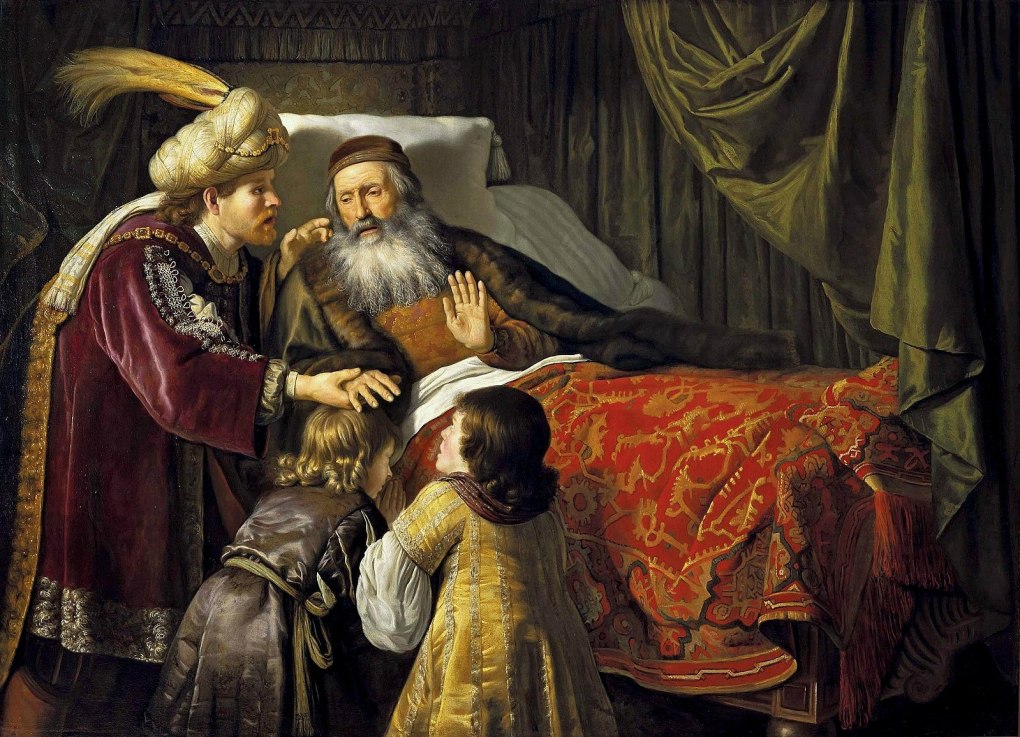
*Jacob Blessing the Sons of Joseph by Jan Victors


Parshat Miketz: Light to See

One word appears throughout the story of Yosef and his brothers – הכר – to recognize. The word is first used at the lowest point in their relationship. In   Parshat Miketz however, it marks a turning point in the brothers’ ability to recognize each other’s distress and take steps toward healing.  

First, when Yosef is taken down to Egypt, the brothers deceptively dip his famed coat in animal blood. They then show it to Yacov as evidence of Yosef’s death and ask “haker na?!” “Do you recognize this coat?” Later Tamar says the exact same words to Yehuda, in an attempt to get him to recognize her suffering and take responsibility for her. In parshat Miketz this word is used again, when the brothers come down to Egypt during a famine looking for sustenance. They find themselves standing before Yosef. However, “Yosef recognized (ויכר) his brothers, but they did not recognize (הכירוהו) him.” The midrash Tanhuma interprets their lack of recognition as referring to the past, when the brothers did not recognize Yosef, meaning they didn’t have mercy on him. Yet here, Yosef rises above the past and recognizes them and has mercy on them. 

Interestingly, the same word is used in the Mishna Brachot’s teaching of when one can begin to say the Shema in the morning: “from when one can distinguish (משיכיר) between blue and white…” Perhaps, “הכר” is used here both literally and figuratively. As the new day begins and daylight dawns, we should also look around and be mindful of those who need some recognition and care. This relates to Hanukkah candles as well. Hanukkah is a time to focus on seeing and recognizing, as we increase the light of the candles each night and banish the darkness. May this be a Chag Urim Sameach and Shabbat Shalom! – Karen Miller Jackson


Parshat Vayeshev: Wishing for Tranqulity?

Parshat Vayeshev opens with the statement that Yacov settled down in Canaan. He had not had an easy life until then: He’d left home to flee Esav, endured years with the swindler Lavan, and suffered the trauma of Dina’s kidnapping and its aftermath. The midrash elaborates that Yakov now hoped to live “b’shalva,” in peace and tranquility. Surely that’s something we can understand.

Chazal, however, viewed Yakov’s desire for “shalva” as problematic. “Yacov wished to live at ease, but the ordeal of Yosef sprang upon him,” says Rashi, citing the midrash. “When tzadikim ask for tranquility, God responds: “The peace of the world-to-come awaits them, yet they also want to dwell at ease in this world?!” This interpretation is based on a seeming connection between Yacov’s desire to settle down, and the subsequent events: intense jealousy between the brothers, the sale of Yosef, and Yacov’s suffering in the belief that Yosef had been killed. 

Yet, there is something bothersome in this commentary. Doesn’t everyone deserve and need tranquility? Should tzadikim never be settled in this world, always doing and moving?

In contrast to the negative view of Yacov’s request for shalva, the Shulchan Aruch cites a custom for women to refrain from work on Hanukkah during the time the candles are lit. The Magen Avraham explains – since “they too were part of the miracle.” This is a time to rest, be thankful, and draw inspiration from the Hanukkah miracle.

Perhaps this is the reconciliation of these two views of the desirability of rest and tranquility: Yacov wanted prolonged tranquility with no end. But endless repose is not the way to live out one’s life. We never fully “retire.” In contrast, women pause on Hanukkah temporarily, at a designated time. Periodic rest and reflection provide the opportunity to recharge ourselves, to renew our creativity, energy and purpose in life. Shabbat Shalom and Hanukkah Sameach! – Karen Miller Jackson


In Praise of Dina: Parshat Vayishlach

Parshat Vayishlach, contains one of the darkest incidents in the story of Yacov’s family: the taking and rape of Dina. Yet, the inclusion of this account in the Torah suggests that it is important not to ignore the topic of sexual abuse and to find ways to talk about it, protect against it and advocate for the victims. 

The commentaries on Dina’s story grapple with two issues which require moral clarity and which are still relevant today: lack of consent and the tendency to blame the victim. Dina goes out, “va’teze,” to see the women of the area. Shechem saw her, took her and “vaye’aneha.” Studying the interpretations of these two words can be a springboard for discussing the importance of consent in sexual relationships. One possible reading of “vaye’aneha” is that he debased her, downplaying the violence and her lack of consent. Ramban, however, based on other occurrences of this word in Tanach, provides a voice of moral clarity: “The Torah tells us that she was forced, and she did not consent to the prince of the country — to her praise.”

Interpreting the word “va’teze,” the midrash calls Dina a “yatzanit,” she liked to go out, seeming to imply that she shared responsibility for what happened to her. The Lubavitcher Rebbe, however, interprets this to her credit: being a yatzanit was a positive attribute in Dinah, since she had the potential to positively influence others. Blaming the victim only further stigmatizes abuse.

Ramban says this story teaches the praise of Dina – לספר בשבחה – in that she remained true to her values as a daughter of Israel. I would add that Dina is also to be praised for giving us her story to raise awareness about abuse, and to talk to our children about healthy relationships. Shabbat Shalom – Karen Miller Jackson


Toldot: Rivka’s Moral Clarity

There is a moral dilemma in Parshat Toldot: Why was it okay for Yacov and Rivka to deceive an older and recently blinded Yitzchak, in order to ensure Yacov received the blessings?! 

When Yitzchak ages and his eyes grow dimmed he decides it is time to give the brachot to his favored son, Esau. The commentaries see deeper meaning in his blindness being mentioned at this point in the narrative. One of Rashi’s explanations is that Yitzchak went blind from the smoke of his daughter-in-laws’ idol worshipping incense. This interpretation is based on the narrative juxtaposition of Yitzchak’s blindness with Esau taking Canaanite wives, bringing bitterness to his parents. The weakness in this interpretation is expressed by the midrash Tanhuma — why then did Rivka not go blind as well?! 

Sforno, takes a different approach and views Yitzchak’s blindness as a result of his turning a blind eye and not protesting Esau’s numerous faults and transgressions over the years. Sforno compares Yitzchak to Eli the kohen in the book of Samuel who refuses to see his sons’ inappropriate behavior. This position supports the idea that Yitzchak’s spiritual blindness did not begin in his old age, but earlier. When the Torah says that Yitzchak loved Esau because ציד בפיו, there was “hunting in his mouth,” the midrash comments – he would entrap and deceive Yitzchak with the words which came out of his mouth. Similarly, Rashi concludes that Yitzchak was made blind to set the stage for Yacov to take the brachot he rightly deserved, initiated by Rivka, who could see clearly regarding Esau and Yacov. 

The commentaries learn from Yitzchak’s blindness: ignoring and rewarding bad character traits has consequences. Rivka had moral clarity and could see who was deserving of the brachot. Shabbat Shalom and Chodesh tov!


Chayei Sarah: What is your Be’er?

Parshat Chayei Sarah begins with the passing of Sarah. This tragedy, following the akedah, must have left Yitzchak feeling drained and broken. Perhaps this explains Yitzchak’s passivity in finding his match. How then did Yitzchak find strength and resilience?

Numerous significant events in Yitzchak’s life take place by a be’er – a well. In the first scene, Yitzchak is not present but his proxy Eliezer has come to Aram Nahariyim to find Yitzchak a wife. Eliezer stops at the “be’er ha-mayim,” where the women draw water and where Eliezer prays to God for guidance and finds Rivka. The midrash points out that the well is the meeting place of various biblical couples, representing potential for new life and hopefulness. 

Next, when Rivka travels to Abraham’s home she encounters Yitzchak who had just returned from a place called “Be’er Le-chai Ro’i.” This is also where previously Hagar goes with Ishmael when they were banished and where Hagar prays to God for protection. Noting this, the midrash teaches that Yitzchak was there to bring back Hagar (aka Ketura) to Abraham after Sarah’s death. Here too, the well represents matchmaking and renewal, healing and resilience.

Wells appear again later, when Yitzchak re-digs the wells of Abraham which had been stopped up by the Philistines. The Sefat Emet interprets these wells as representing spiritual sustenance which the avot brought to the world. So Yitzchak, having renewed himself then had the ability to provide inspiration for others. 

Be’er is referred to by Song of Songs as a “well of living waters.” Yitzchak renewed his life and spiritual strength at the be’er, providing a model for us to find our our own metaphoric “wells” —  sources of renewed energy and strength, so we can grow in kedusha and chesed. Shabbat Shalom