Parshat Ki Tetze: How and Why we Remember

Zachor” – Three times parshat Ki Tetze instructs us to remember a pivotal event in biblical history. When the Torah says “zachor” it wishes to convey a moral and spiritual awareness to carry with us always. 

First, we are instructed to remember (zachor) what God did to Miriam in the desert, when she was punished for speaking lashon ha-ra (slander) against her brother Moshe. Second, when the parsha presents a list of mitzvot regarding how to treat the stranger, orphan, and widow, these commandments are framed by the charge to remember (zachor) that we were once slaves in Egypt.  Third, the parsha ends with the instruction to remember (zachor) what Amalek did to us on the journey out of Egypt – they lacked fear of God and attacked the Jewish people at their weakest. 

Ramban sees deep meaning in the word “zachor” and comments: zachor signifies that these memories — the story of pure evil (Amalek) and the story of evil speech (Miriam) — must be actively remembered and verbally conveyed to future generations, underscoring their seriousness. While other commentators view the command to remember Miriam’s lashon ha-ra as a recommendation, Ramban argues that it is one of the 613 mitzvot. A similar point is applied to the third zachor, remembering that we were slaves in Egypt, which we verbally recall in daily tefillah and at the Passover seder. This zachor compels us to be particularly sensitive to the plight of the vulnerable and reinforces the value of freedom.

Actively remembering these three episodes may have held different meanings for different generations. Today, we can internalize their messages as follows: 1) We remember acts of evil and hatred against us to protect ourselves and in hope of a better future, 2) We must be mindful of how we speak about our brothers and sisters, and 3) We must remember our right to be a free people in our own land. Shabbat Shalom -Karen Miller Jackson


Parshat Shoftim: Great Responsibility

“With great power comes great responsibility.” In Parshat Shoftim, societal leaders—whether judges, prophets, sages, or kings—are commanded to pursue justice and adhere to a strict code of ethical behavior. However, there are times when every individual is called upon to engage in introspection and take responsibility for the welfare of society as well.

Devarim 21 describes the mysterious ceremony, done in biblical times, of “eglah arufah.” When a murder victim is discovered outside a city and the identity of the killer is unknown, the elders of the closest city take an unworked heifer and break its neck. Then there is a two-part tikkun. First, the leaders are called upon to take responsibility, which consists of a declaration: “Our hands did not shed this blood, nor did our eyes see it done,” and then a prayer to God: “Absolve Your people Israel whom You redeemed…” 

What is the purpose of the leaders declaring “our hands did not shed this blood”? Rashi, citing midrash Sifrei asks, “do we really think the elders are murderers?” Rather, they mean that they never encountered this victim, and they did not leave a vulnerable person without help. This ritual underscores the value the Torah places on each and every life and the heavy responsibility on leaders to protect their people. Why, then, do they pray that God absolves all of Israel and not just themselves? When an innocent life is taken and justice is not served, the moral deficiency can reverberate in the nearby city and throughout all of Israel. So all of Israel must pause and reflect on what has occurred. This is why the tefillah seeks redemption for the entire nation. 

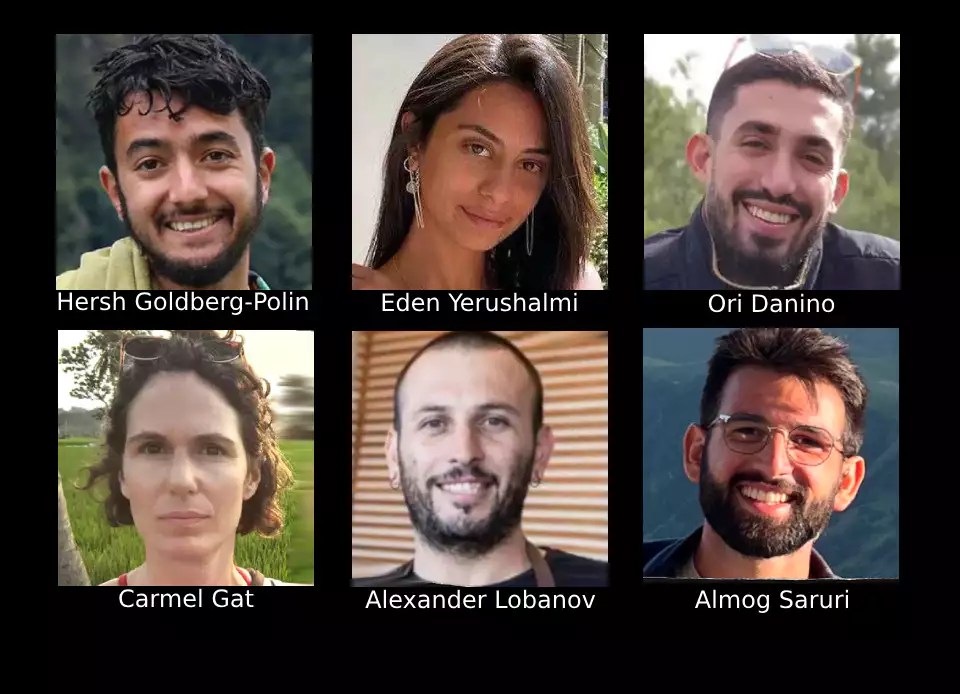
The eglah arufah is no longer practiced, but its core ideas remain relevant—especially this week. May the memories of Alexander, Almog, Carmel, Eden, Hersh, and Ori be a source of societal healing and redemption in our time. Shabbat Shalom -Karen Miller Jackson


Parshat Re’eh: Remembering we are One People

This year, the Jewish people have moved from a place of deep divisiveness to one of remarkable unity. Jewish tradition encourages diversity and debate while also cautioning against the risks of discord and division. Parshat Re’eh reminds us of the importance of maintaining this delicate balance.

“You are children of the LORD your God. You shall not gash yourselves (lo titgodedu) or shave the front of your heads (karha) because of the dead…God chose you… to be His treasured people.” What is the connection between these ancient mourning rituals and our status as God’s children, the chosen people? Rashi explains that the Torah prohibits these forms of mourning since they do not preserve our bodily dignity as the children of God. The Rabbis interpret the prohibition to be something else entirely – lo titgodedu: “Lo ta’asu agudot agudot” – Do not split into different factions. In Jewish law, this is generally applied in the context of communal disputes between rabbinic courts or synagogues in the same community. This issue became more acute with the ingathering of Jews from diverse places to Israel. Poskim discuss how to preserve one’s customs while not splitting into factions.

What is the purpose of this mitzvah? Rashi comments that it should not look like there are two Torahs. According to Rambam it is to prevent great conflict between Jews. Similarly, Yalkut Shimoni interprets the word “karha,” as an allusion to the kind of discord sown by “Korah” – don’t make a “karha” (deep divide) within the Jewish people. Perhaps this is why this prohibition is bracketed by reminders of our status as God’s children, the chosen people.

As Israel considers how to commemorate October 7th, the mitzvah of “lo titgodedu” can serve as a guiding principle – to avoid divisiveness and uphold the unity of our people. Shabbat Shalom -Karen Miller Jackson


Ekev: Uniqueness of Israel

What makes the land of Israel unique? Parshat Ekev offers key insights into the distinctive blessings and challenges that characterize the promised land, then and now.

As Moshe prepares the people for their entry into the land, the significance of Eretz Yisrael, and our relationship with it, is emphasized through several literary allusions. The parsha mentions three times that this is the land which “the Lord brings you to…” instilling a sense of faith and humility. Each of these references is followed by a caution: Do not take the land’s bounty for granted, do not forget God’s goodness, and do not assimilate into surrounding cultures. Additionally, Rabbenu Bahya notes that in Devarim 8, the phrase “the land” appears seven times within four consecutive verses. Israel is a place where the Jewish people can achieve the greatest blessings and accomplishments, but these gifts are not guaranteed—they depend on our actions and faithfulness.

The uniqueness of Eretz Yisrael is further described in Devarim 11:10: “For the land that you are about to enter and possess is not like the land of Egypt…”  In Egypt, says Rashi, the land was irrigated by water from the Nile. Israel is superior in that it “soaks up its water from the heavens,” emphasizing that blessings in Israel are bestowed by God, rather than solely through human effort. The Ramban however, disagrees and argues that Israel is more vulnerable than Egypt because its water supply is directly controlled by God, making it dependent on the people’s moral behavior and spiritual state.

Israel’s uniqueness lies in its inseparable bond with the Jewish nation dwelling within it. Then and now, Israel’s flourishing (agriculturally and in other pursuits), remains intertwined with us, its caretakers. May we not lose sight of our appreciation of the land and may God bless us with rains of security and abundance. Shabbat Shalom -Karen Miller Jackson


Va’etchanan: Shema and Enduring Faith

The unique status of the Shema prayer is not immediately apparent from its original context in parshat Va’etchanan. However, the interpretation of just two words helps us understand why it has become such a cherished prayer and a powerful symbol of enduring hope.

There is a well-known tannaitic debate regarding the words “בְּשָׁכְבְּךָ וּבְקוּמֶךָ” (“when you lie down and when you get up”). Beit Shammai taught that one must literally lie down at night and stand up in the morning while saying Shema. Rabbi Tarfon once followed this opinion and endangered himself while traveling at night. In contrast, Beit Hillel interpreted these words as referring to the times of recitation: “at the time” when people typically lie down (evening) and rise (morning). The law is decided according to Beit Hillel, who understood the essence of Shema as framing our days and nights. It also rejects the notion that the Shema should be a separate moment from life each day. Instead, it suggests that Shema embodies an enduring faith that flows through the everyday moments of our busy lives.

These same words are used to explain why the Oral Torah begins with the question: “From when does one recite the evening Shema?” Why does the Mishna start with the nighttime Shema before discussing the morning Shema? The main proof-text for this order is indeed “when you lie down and when you get up.” As Rav Yehuda Brandes points out, the timing for Shema is determined not by objective astronomical signs, but rather by the subjective daily rhythm of human beings. Moreover, this pattern reflects the rhythm of Jewish history: holding onto faith through the dark nights of persecution and challenges, and then emerging into the light of independence and redemption.
With each passing day, amidst the hovering threats, the Shema remains a steady anchor of faith. We continue to pray that each new day brings light and redemption—for the hostages and for all of Am Yisrael. Shabbat Shalom -Karen Miller Jackson


Parshat Devarim & Tisha B’Av: Response to Historical Trauma

The book of Devarim is also called mishneh Torah, the “repetition” of the Torah. The retelling of one story in particular – the meraglim (spies) – offers deeper insight into the purpose of this final book of the Torah and serves as a foundation for processing historical traumas in a constructive manner.

The first historical narrative Moshe shares with the second generation in the desert is the story of the spies. As Rav Tamir Granot points out, it is not the Exodus, the revelation at Sinai nor the sin of the golden calf. Why this story? Additionally, there are differences between the way this story is told here and how it is presented in Bamidbar. In Devarim, it is not God who initiates the sending of scouts, but rather the nation. And, it is not the spies, the tribal leaders, who spread criticism of the land, but the people. Rav Granot writes that Moshe chose to retell this story because its lessons were most relevant for this generation. Bamidbar’s version emphasized the failings of the leaders. In Devarim, Moshe emphasizes the people’s responsibility over the faults and failings of their leaders. 

A similar approach was taken by the rabbis in retelling the story of the churban, commemorated on Tisha B’Av. Historical sources and the Talmud contain stories of corrupt priests at the end of the Second Temple period. There is also the tale of enmity between Qamtza and Bar Qamtza and the silence of the rabbis who were with them, which led to the destruction of Jerusalem. Our leaders failed us then and some took responsibility for it. Ultimately, the rabbis teach, it was because of sinat chinam – worthless hatred between the people – that God destroyed the Temple.

Moshe’s imperative to us which resonates so deeply today: We need to hold our leaders accountable and learn from past failings. And yet, blame alone won’t get us very far. The most effective response to historical trauma, both then and now, is a call to responsibility for every member of the Jewish people. Shabbat Shalom -Karen Miller Jackson


Parshat Matot-Masei

Parshat Masei (of double parsha Matot-Masei) begins by summarizing Bnei Yisrael’s travels throughout their forty years in the desert as they approach the land of Israel. Many commentaries question why the Torah repeats this list of “masaot” (journeys), when they have already been described earlier in the Torah. Their answers contain wisdom and hope for the current “journey” of the Jewish nation.

The midrash Tanhuma likens this to a parent who takes his/her sick child to various places in search of healing. Afterwards, the parent recounts the experiences they had through each location. So too, God wants Bnei Yisrael to draw strength from hearing about overcoming hardship in their past and be reminded that they can do it again in the future. Rambam, in Guide to the Perplexed, teaches that re-telling the places Israel traveled highlights the miracles God provided for the Jewish people’s survival in the desert. Through preserving the memory of these miracles, future generations will find inspiration and faith. Sforno sees this re-telling as highlighting the goodness of Bnei Yisrael in the desert. He explains that the journeys are repeated “in order to compliment the Jewish people,” who followed God through a vast and dangerous desert. 


We may have arrived at our promised land in 1948, but the Jewish people, in Israel and the diaspora, are still on a journey filled with achievements, loss, miracles, challenges and victories. The biblical repetition of the masaot provides a template for successfully navigating the current journey of the Jewish people: First, we can draw strength from our history, from overcoming past challenges. Second, we should be mindful of small miracles which we may experience over time. Third, we can look back and focus on the positive – we can appreciate our own perseverance and continue to draw strength and faith for the future. Chazak chazak ve’nitchazek. Shabbat shalom -Karen Miller Jackson


Parshat Pinchas: Modeling Positive Change

“Be a light, not a judge. Be a model, not a critic” – Stephen Covey

When is criticism constructive? And when is it destructive and demoralizing? The daughters of Zelophehad, in parshat Pinchas, demonstrate how to lead positive change. They are a much needed model for today.

After the Torah describes how the land of Israel will be divided, the daughters of Zelophehad approach Moshe and request an inheritance in Israel, as they have no brothers to inherit land. The commentaries characterize them as having great “chibbah” (love) for Israel. The Talmud goes even further, describing them as “darshaniyot” (interpreters), tzidkaniyot (righteous) and “chachmaniyot” (wise). How do we see these qualities in their behavior?

The daughters emphasize that their father “died by sin in the midbar,” but not as a part of Korah’s congregation. Rashi explains that they emphasized that while their father sinned, he did not lead others to sin like Korah. Also, Korah spread unfounded criticism and refused to engage in dialogue with Moshe.

The midrash also contrasts the daughters of Zelophehad with the spies, who slandered the Land of Israel and spread negativity among the nation. Their words led to catastrophe for that generation. The midrash views the daughters’ words as the opposite of the language that previously led to disasters in Bamidbar. They are proactive. They embrace dialogue and use positive language by saying: “We want to be part of this too!”

Hashem’s response is “The daughters speak justly,” connoting deep affirmation. After the earlier stories of people who found ways to criticize and sow discord, these five women model proactivity, dialogue, positivity, and love of the Land of Israel. When we speak up for justice or work to effect change let’s follow in the footsteps of b’not Zelophehad. Shabbat Shalom🇮🇱- Karen Miller Jackson


Parshat Balak: Jewish, Zionist and Alone?

Are the Jewish people destined to be isolated and demonized? Has having our own country only exacerbated Antisemitism and Anti-Zionism in the world? One verse in parshat Balak speaks directly to this issue: Can a particularistic Jewish identity coexist with a universalistic relationship with the world?

Bilaam, a non-Jewish prophet, is sent by Balak, king of Moab to curse the Jewish people. Yet, as the Talmud teaches, God turned his attempted curses into blessings. Bilaam, looking down on Bnei Yisrael, says they are “a people that dwells alone; not reckoned among the nations.” This hardly sounds like a blessing. In many ways it encapsulates the repeated struggle of the Jewish people throughout history to preserve their identity, resist assimilation and avoid persecution amongst the nations.

Most commentaries, however, regard this as a blessing for the Jewish people. Rashi teaches that it refers to the future when Israel will dwell safely in our land and not be punished like the other nations. The Malbim and Netziv, writing in Europe post-Enlightenment and amid experiences of Antisemitism, interpreted this verse within their historical context. When Jews are confident in their identity – they dwell in peace. When they assimilate – they are not worthy of being counted. Rabbi Jonathan Sacks provides a transformative reading of this verse: The blessing is for Jews to dwell “apart” – meaning our strength is in our distinctive experience and values. Yet, it is dangerous to remain alone. Through retaining our distinctiveness, we can and should have a positive impact on the other nations: “By being what only we are, we contribute to humanity what only we can give.”

Today, this verse also highlights the delicate balance Israel needs to maintain in the larger world. We need to work with our allies and take their concerns seriously and seek out those who wish to bless us. At the same time, we also need to remain strong and true to our identity and mission as the people of Israel. Shabbat Shalom -Karen Miller Jackson


Chukat: Transforming Fatigue into Commitment

Parshat Chukat marks a transformational moment for Bnei Yisrael as they begin to find their confidence and commitment as a nation, ready to live in their promised land. 

The parsha, as Ibn Ezra writes, has fast-forwarded to the 40th year of desert wanderings, after the first generation has mostly died out. It is a new generation, but it sounds like the same old complaints: “The soul of the people grew discouraged on the journey…” They said: “Why did you make us leave Egypt to die in the wilderness? … We have come to loathe this miserable food.” They sound tired and “hangry.” Rashi teaches that usually the Torah provides the source of the discouragement (kotzer nefesh), yet here it is ambiguous. Hence, says Rashi, it was the journey itself that caused their dejection. However, it stemmed from an impatient desire to go into Israel already. Similarly, the Ha’amek Davar paints the complaint about food in a positive light: like a baby who is tired of drinking his mother’s milk (manna) and is ready for solid food (produce of Israel).

This pivotal shift is reflected in the continuation of the parsha. First, after complaining, they immediately correct themselves and ask forgiveness of Moshe and God. They faltered but their faith was restored. Second, after the disappearance of the miraculous well which supplied them with water, the people proactively sing for water: “Az yashir Yisrael…” At the splitting of the sea the people sang with Moshe and Miriam, while here they were empowered to sing independently. Third, the people fight two wars, against Sichon and Og, where they rely less on miracles and more on their strength and faith. The Ha’amek Davar writes that Chukat is the beginning of Israel’s transformation, from dependence on overt miracles to experiencing God concealed through nature. 

We too, after nine months, may be feeling fatigue. Let’s make it the kotzer nefesh of commitment and eagerness needed to achieve success and hatzlacha for Israel. Shabbat Shalom -Karen Miller Jackson