Korach: Community with Diversity

Community is an essential part of Judaism. Parshat Korach is about the risks of separating oneself from the community or collective, a theme that remains relevant today.

The opening words allude to Korach’s divisiveness: “And Korach took…” It does not say what he took; it only lists a few of his followers. Ibn Ezra interprets this to mean he took others – anyone with a grievance – into his group. Rashi teaches: He purposely took himself out of the community to make a machloket (conflict). Ramban, citing the midrash, comments that Korach did not “take” anything; rather, his heart took control of him. Korach had been harboring his grievances and waited until Moshe’s leadership was weakened to take action. All of these interpretations highlight Korach’s refusal to engage in dialogue and his inability to find common ground with Moshe and Aaron.

How surprising it is then that Korach’s “edah” (congregation) is the source in the Talmud for the requirement to pray in a minyan (quorum) of ten men. The source for minyan is derived from a verbal analogy: Vayikra states that God should be sanctified “among” Bnei Yisrael. The word among is also used when God instructs Moshe to separate from “among” Korach’s “edah,” as attempts to reason with them were futile. The word “edah” is also used in the story of the spies, from which the number ten is derived for minyan. So the basis for communal prayer is derived from two groups of great sinners. 

Perhaps this was not only a literary connection, but rather a deeper point expressed by the rabbis. Separating and not engaging with diverse perspectives can lead to isolation and extremism. By deriving minyan from such imperfect models, the Sages encourage openness and inclusiveness within communities. This can also serve as a model for broader society—embracing diversity and debate while upholding a shared commitment. Shabbat Shalom -Karen Miller Jackson

Beha’alotcha: The Power and Pitfalls of Speech

Our world has been increasingly dominated by negative speech. Online communication has fueled the inability to engage in dialogue with people who think differently, alongside societal trends of “cancel culture” and “post-truth.” At the same time, the Torah teaches that speech is a gift given only to human beings, as seen in Targum Onkelos, who calls Adam in Bereshit “a speaking spirit.” Parshat Beha’alotcha highlights the power of speech to influence others, for both good and bad.

The parsha begins on a hopeful note. The pinnacle of Bnei Yisrael’s preparation to enter the land is expressed in the words we recite on Shabbat morning, “ויהי בנסוע הארון.” Immediately following this, is the story of the “mitonenim,” (bitter complainers) who spread unrest among the people by “complaining evil in the ears of Hashem.” To make this turning point even sharper, the previous verses are bracketed by two upside down letter “nuns.” Perhaps signaling that from this point on their lives would take a significant downturn.

The Ha’amek Davar teaches that the “mitonenim” start a downward spiral of faith for the generation in the desert. They had the greatest divine providence, yet, the provocateurs spread criticism which culminated with the spies who sowed negativity among the whole nation. Rashi comments that the words, “complaining evil in the ears of Hashem,” indicate that they were looking only for a pretext to provoke and stir up hatred, they had no valid criticisms. Hence, the strong punishment by God.

The potential power and pitfalls of speech is a theme which begins in our parsha and runs through sefer Bamidbar. In contrast, when Moshe recounts the travails of the Jewish people in the desert in the opening of Devarim, he models positive, constructive speech. Rashi teaches that Moshe changes the names of places to protect the dignity of Israel. How can we follow Moshe’s example in the way we communicate today? Shabbat Shalom -Karen Miller Jackson


Naso: Blessing the whole Jewish people

Parshat Naso contains the short but powerful priestly blessing. The commentaries on birkat kohanim highlight its ongoing resonance for the Jewish nation.

Who gives the blessings? One verse suggests that the kohanim have the power to bless the people: “This is how you are to bless Bnei Yisrael…” However, it also states: “put My name on Bnei Yisrael, and I will bless them.” Rashbam explains that God is the source of blessings and the kohanim only offer up prayer. Sefer Hachinuch however, comments that the kohanim are the vehicle through which the bracha is transferred from God to the people. He adds that the people have a role as well – to desire the brachot. According to this, everyone has a role to play in causing brachot to flow. 

There are also many interpretations of the content of birkat Kohanim. Abarbanel, 15th century scholar and statesman, explains the three blessings as corresponding to the three elements which a nation needs to flourish: 1) economic protection and success, 2) wisdom and spirituality, and 3) the blessing of strength and peace, internally and externally. Abarbanel, who tried to prevent the expulsion of Jews from Spain, must have had a keen understanding of what it takes to be a successful nation and the importance of having a homeland for Jews, with an army to defend them. 

The brachot seem to be in ascending order and culminate with the blessing of peace. The Ha’amek Davar teaches that this is because shalom is the basis for all other brachot. This concept holds particular importance today, given the challenges we face. The Jewish people are stronger and better positioned to receive God’s blessings when we appreciate the importance of all three aspects of our nation – sustenance, spirituality, and inner solidarity combined with overall security. Shabbat Shalom -Karen Miller Jackson


Bamidbar: On Encampments and Flags

Parshat Bamidbar begins with Bnei Yisrael’s encampments, organized by tribe, each with their own flag. Encampments?! Flags?! Today, these have contributed to polarization, hate and moral distortion in society. How did the biblical encampments differ from what we are currently experiencing?

First, the Torah highlights that Bnei Yisrael should camp each according to his “standard” (diglo), under the “signs” (otot) of their ancestral house. Why this emphasis on tribal identity within the nation? Rashi comments that these unique flags highlight the diversity of the tribes, each one having unique character and potential strengths. The midrash Tanhuma teaches that this layout emphasized the potential for some tribes to influence others. Korah from Kehat was next to Reuven, who they pulled into their attempt to sow discord. The midrash calls this: “woe to the wicked person and woe to his neighbor.” Conversely, Levi, containing Moshe and Aharon, was next to three tribes who became “great in Torah” — “fortunate is the righteous person and fortunate is his neighbor.” Meaning, we are influenced by those we choose to be surrounded by.

The second theme relates to the trait of humility. The journey through the midbar is significant. The desert, says Bamidbar Rabbah, is ownerless space. Hence, the Torah was given in the desert to teach that one needs to humble him/herself to accept it, and it is free and open for all to take part. Shemot Rabbah says the “midbar” is related to “dibbur” (speech). The desert ideally could have been a place for good communication – which requires some humility, the ability to listen and to use speech positively and constructively.

Instead of flags and encampments which promote hate and discrimination, Bamidbar presents us with an ideal – a proud nation whose flags balance unity with diversity, and which encourages constructive communication and seeking positive influences. Shabbat Shalom🇮🇱 -Karen Miller Jackson


Bechukotai: Judaism and Zionism with Confidence

“Our hope is not yet lost. It is two thousand years old. To be a free people in our land, the land of Zion and Jerusalem.” –Hatikvah

Parshat Bechukotai emphasizes the strong and unbreakable bond between the Jewish people, God and the land of Israel. One key word is a reminder that even with Israel’s imperfections, we need to convey our commitment to Zionism with pride and confidence.

Vayikra 26 contains the wondrous blessings and the harsh curses which will come our way if we don’t follow God’s laws. The blessings include prosperity, military strength, security and peace in our land and feeling God’s presence among us. The curses are long and harsh and culminate with a distancing of the Jewish people from God and our land. One image repeats itself throughout the blessings – to walk, specifically to walk upright: “If you walk in my laws, you will be blessed, and God will “walk among you.” The brachot conclude with the declaration that God broke the yoke of our enslavement in Egypt and enabled us to “walk upright.” Why this emphasis on walking upright?

The word for upright – komemiyut – is from the root k.u.m – to get up! The Targum Onkelos translates it as freedom. Rashi says it means to stand upright. Rashbam writes, “when the yoke is removed, he can hold his head high.” Sometimes in order to hold our heads high, we need to be reminded of the long walk of our history, the dangers of bowing our heads and not standing up tall and proud of who we are. 

We pray daily for God to take us komemiyut l’artzenu, upright to our land. In modern Hebrew komemiyut means sovereignty and it appears in the first line of Israel’s declaration of Independence. May we all find ways – wherever we are – to be blessed with the strength to “walk upright” in our Jewish and Zionist identity. Shabbat Shalom -Karen Miller Jackson 


Parshat Behar: Bring Them Home!

Today is day 31 of the Omer and day 231 of praying for the return of the hostages. Parshat Behar highlights the significance and impact of quantifying time.

When the Torah tells us to count time, it uses the language: “count for yourself/yourselves.” This connotes taking responsibility. The Sifrei teaches that in order to fulfill the mitzvah of sefirat ha-omer, each individual has to count for himself. Additionally, the ritually impure zav and zavah, must count the days until they may immerse in a mikveh. Our parsha contains the command to count seven times seven years, until the Jubilee (yovel) year, when debts were forgiven and slaves freed. Here, the beit din counts for the people. 

What do these countings have in common? All three signify a transformation, individually or nationally. Today, the zavah count is preserved in the seven clean days counted by a woman in niddah. As she moves into a state of taharah, there is renewed opportunity for new life or renewed love in the husband-wife relationship. Similarly, the Sefer HaChinuch teaches, as we count the omer days between Pesach and Shavuot we undergo a process of preparation to receive and recommit to the Torah and its values. Yovel, according to Rabbbenu Bahya, is an opportunity to pause and look back at previous generations and focus on a return to our roots, a reset, so to speak. It is a time to undertake a societal tikun, and refocus our commitment to God and the land, and to our origins and national beginning.  
As we count each day in prayer for the hostages, let’s apply the lesson of the yovel year and draw on our common bond with our land and our people, until they please G-d return home soon. Shabbat Shalom -Karen Miller Jackson

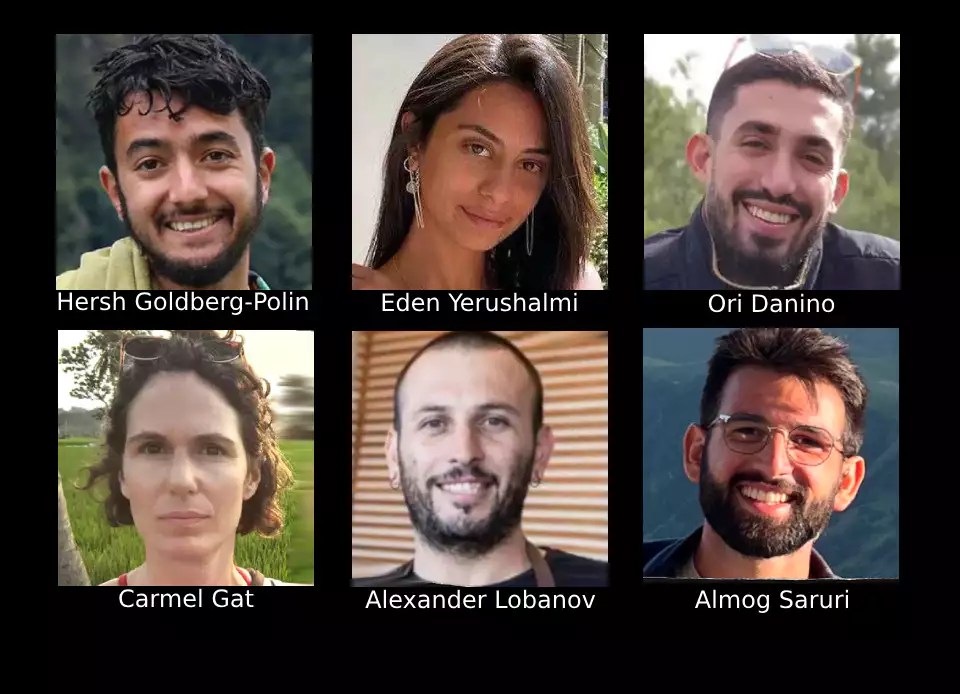
* photo of the 5 tatzpitaniyot hostages from ynet.


Emor: Countering Hate Speech

Parshat Emor teaches an important lesson about language – that how we speak can have a profound impact on our behavior and influence the world around us.

Emor (literally “speak”) begins: “Speak (emor) to the priests and say to them…” Based on this unusual phrasing for the Torah, Vayikra Rabbah teaches that God’s speech is pure and God is modeling “pure” and responsible speech for us. The parsha continues to emphasize the power of language through the command not to desecrate God’s name and the mitzvah of kiddush Hashem, to sanctify God’s name. 

Against this backdrop, it is all the more shocking to read the story of the “megadef,” the blasphemer, at the end of the parsha. The son of an Egyptian man and Israelite woman has an argument with an Israelite. Out of hatred and rage he then pronounces God’s name and curses God. This sin is so grievous in the eyes of Chazal that it is euphemistically referred to as “birkat Hashem,” blessing God, suggesting that even saying the word blasphemy can have a negative impact. Moreover, the Rambam teaches that one who hears blasphemy must do kriya, a sign of mourning, symbolizing the gravity of this prohibition. One unusual feature of this Torah narrative is that all who heard his blasphemy must place their hand on the megadef’s head before he is executed, the biblical punishment for this crime. The Ha’amek Davar explains that this is to compensate for the effects that hearing such profanity may have had on the listeners. 

These sources take on new significance as hate speech surges against Jews and Israel. As Eli Weisel wrote: “Hate is contagious… Ultimately hate is both destructive and self-destructive.” Yet, there are also voices of clarity and support. May the pure and positive voices drown out the hate. Shabbat Shalom -Karen Miller Jackson


Kedoshim: An Antidote to Hate

Parshat Kedoshim contains one of the most important chapters in the Torah according to the commentaries. It also contains mitzvot which are at the forefront of contemporary society and the challenges we face.

After focusing on the holiness of the mikdash and kohanim, Vayikra 19 marks a revolutionary shift where everyone is commanded: “Be holy.” Midrash Sifra teaches that this was one of the sections read out to the whole community during hakhel, emphasizing the potential for all to infuse their lives with holiness. Moreover, it lists many interpersonal mitzvot as the path to holiness. One of these mitzvot – “love your neighbor as yourself,” – was considered by Rabbi Akiva to be the overarching rule of the Torah.

New challenges have arisen accentuating the importance of these mitzvot which strive to enhance human relationships. Smartphones and social media have made it easy and trendy to criticize others publicly. This has led to hurtful and alienating behaviors such as virtue signaling, shaming and canceling. More sinisterly, it has also fueled the spread of fake news, hatred and extremism. One mitzvah in particular speaks to this challenge: “You shall not hate your brother in your heart, rebuke your kinsman, but incur no guilt because of him.” This verse seems to support criticizing others. Yet, the Talmud Arachin limits the scope of “tochecha,” when it teaches that the criticism must stop if it results in public shaming. The sages themselves acknowledge that most of them were incapable of receiving or giving rebuke effectively as it was meant to diminish hatred in one’s heart.

What is the antidote to the spread of falsehood, hatred and anger? Frank Bruni writes that in this era “overwhelmed by grievance,” we need more humility. Even more, Kedoshim provides a moral and practical framework for calling out injustice from a desire to spread holiness instead of hatred. Shabbat Shalom🇮🇱 -Karen Miller Jackson


Achrei Mot: Remember Where You Came From and Where You Are Going

Parshat Acharei Mot contains a unique command which relates to remembering our past in order to preserve our identity and values. This is also an integral part of sefirat ha-omer and how we commemorate Yom HaShoah.

The second half of the parsha contains a number of prohibitions, including:  “You shall not copy the practices of the land of Egypt where you dwelt or of the land of Canaan to which I am taking you…” Rather, we must follow the laws and statutes of God. How should we understand this vague command? This verse precedes the list of arayot, sexual sins. Hence, Ramban understands this as referring to the sexual promiscuity and immorality that was widespread in ancient Egyptian and Canaanite culture, from which we need to distance ourselves. Rashi, however, understands this as a broader warning: By observing the laws of Torah we move away from the generally immoral culture of ancient Egypt and Canaan and aspire to live a holy life.

Similarly, the imperative to remember our point of origin (Egypt) and to move toward holiness or freedom (Matan Torah) is the reason why we count the omer, according to the Sefer Hachinuch. Rabbi Jonathan Sacks zt”l teaches that the omer marks cyclical time (the agricultural year) as well as historical time. While it was common in the ancient near east to mark cyclical time, the Torah is unique and revolutionary in its call to count historical or “covenantal” time. Through counting, we reenact moving from Egypt to Sinai, from enslavement and exodus to revelation and positive liberty. 

This is also the way we approach and commemorate Yom HaShoah. This year in particular, we are reminded of the necessity to remember, to internalize the lessons of history and to pray that this year’s counting brings about true freedom and redemption. Shabbat Shalom -Karen Miller Jackson


Metzora and Pesach: Hope for our Home & Homeland

This week we triumphed over an existential threat that impacted us individually and nationally. Parshat Metzora and Pesach both focus on our homes and homeland as a source of strength, hope and protection. 

The parsha describes the purification process from tzara’at. This was a disease which affected not only a person’s body, but also can appear on one’s clothing and one’s home. However, tzara’at of the home is distinguished from that of the body and clothes as it only can appear once the people enter the land of Israel. While tzara’at is generally thought of as a punishment, when it appears on a home it can be seen in a positive light. Rashi teaches that it was a “besora,” good tidings, or a blessing, since the previous owners of the houses (Canaanites) hid their jewels in the walls which would be uncovered by Bnei Yisrael. Additionally, the kohen oversaw a process of renovation and purification which “attones for,” and renews the home. Establishing a home in Israel may entail hardship, but God provides hidden glimmers of hope and blessings. 

The home also plays a key role in the story of Pesach. Before they leave Egypt, God commands Bnei Yisrael to put blood on their doorposts. Rashi, citing the Mekhilta, explains that the blood was put on the inside of the doorpost, “as a sign for you.” And, God would see the people of Israel involved in performing mitzvot and would then protect them. The blood on the doorposts teaches that by fostering commitment in our individual homes, we will merit God’s national protection.

This Pesach, many homes are incomplete. Some have lost loved ones, some are still healing, some are away defending our homeland and some are still held captive, may Hashem redeem them. May this Pesach bring strength, nechama and renewal to our individual homes and may God see our commitment to our homeland and reward us with protection and salvation. Shabbat Shalom and Chag Kasher ve-Sameach –Karen Miller Jackson