Tazria: Words that Hurt/Words that Heal

One of the most unique traits of humankind is that we are created with the gift of speech and communication. How we use this gift can directly impact perception of ourselves, others and our world. 

The skin disease known as tzara’at, described in parshat Tazria, is associated with lashon ha’ra (evil speech) in Torah: When Miriam speaks badly about her brother Moshe, she gets tzara’at. When Moshe’s hand becomes leprous, Rashi explains that this is because he spoke badly about Bnei Yisrael. Just as the disease spreads across the body, critical and hurtful language spreads negativity and discord, and it can have disastrous consequences.

Speech is also a key element in the Pesach story. When the people were in Egypt, the midrash teaches that they had forgotten their language and that “speech was in exile.” The redemption, the Exodus, is characterized through Israel rediscovering their voice, through speech and song. Hence, Hasidic writings emphasize that Pesach can be read as “peh-sach,” “the mouth speaks.” And, the key mitzvah of the holiday is speaking – telling the story of redemption. This may also relate to Elijah’s connection with Pesach. He is harshly critical of Israel when he proclaims to God, “the Israelites have forsaken Your covenant…” In the Talmud, Elijah returns transformed and corrects false negative perceptions of the people. Rav Kook writes that he “perceives every spark of holiness in this world and redeems it.”  

This imperative of the parsha and Pesach feels particularly resonant for our world today. People have been moving further apart in their beliefs, making it harder to be able to disagree and debate ideas civilly. Also, we have seen how negative speech about the State of Israel quickly reverberates around the world. As it says in Mishlei: “There is blunt talk like sword-thrusts, but the speech of the wise is healing.” Shabbat Shalom -Karen Miller Jackson


Shemini: Conflicting Emotions

The eighth day, which should have been the pinnacle of celebration, was pierced by tragedy. Parshat Shemini describes the ambiguous sin of Nadav and Avihu and their instant death. This is followed by the challenge of recovery for their father Aaron, who wants to grieve, and at the same time, needs to continue to fulfill his leadership role as Kohen. How does one cope with such conflicting emotions and responsibilities? 

After Aaron’s two sons offer up a “foreign fire” to God and are killed, Moshe attempts to console his brother. Aaron’s reaction is heartrending: “And Aaron was silent.” Even harder, Moshe then commands Aaron and his remaining sons that they may not follow the usual mourning rituals since they must continue serving as kohanim. One midrash interprets Aaron’s silence as a statement of faith in the face of the tragic and unexplained loss of his sons. However, some commentaries explain the silence as the only way Aaron could express his pain and inability to mourn properly. 

Aaron’s quiet pain is reinforced a few verses later when Moshe loses his temper and criticizes Aaron’s remaining sons (by extension Aaron too) for not eating the sin-offering (chatat). Aaron reacts by teaching Moshe that it would have been inappropriate to eat that sacrifice. The Talmud Zevachim explains that Aaron was correct to eat only of the sacrifices which were related to the inauguration of the mishkan, whereas it was inappropriate for an onen (mourner) to eat of the regular Rosh Chodesh sin-offering. 
This story is particularly resonant now, as it highlights the challenge and possibility of holding on to conflicting emotions. Amidst the grief, Am Yisrael finds the strength to continue and live. We can feel pride in the valor of our heroic soldiers and be committed to winning this war, and at the same time, we can feel and express sympathy and regret for this week’s tragic loss of life. Shabbat Shalom -Karen Miller Jackson


Tzav: An Attitude of Gratitude

Parshat Tzav, literally “command,” offers a blueprint for embracing duties and responsibilities within the Torah and towards the State of Israel with eagerness and fervor.

A central theme in parshat Tzav is “zerizut,” acting with urgency and enthusiasm, expressed in a number of ways. First, the opening verse: “Command (tzav) Aaron and his sons…” Rashi comments that when this language “tzav” is used it connotes “zerizut,” and should be carried out without delay. Amidst the description of this important service, there is a command to the priests to clean the ashes on the altar each morning before beginning again each day. Many ask why the Kohanim, who do such holy work, also need to sweep up the ashes, a seemingly lowly job?! Nechama Leibowitz quotes Rabbi S.R. Hirsch who compares us all to the kohanim: The ashes from the previous day are removed to convey that we have an opportunity each day to approach mitzvot with “new zest.” 

Similarly, the parsha also describes the korban of thanksgiving, which was brought after a dangerous experience. Today, this is expressed through the recitation of the “hagomel” blessing. Rav Kook explains that it is human nature to take basic goodness for granted. However, after a traumatic experience one is given a new perspective on life and feels an urgency to express gratitude. Also, the Shulchan Aruch teaches that it should ideally be said as soon as possible (within 3 days), indicating it should not be delayed unnecessarily. Here too, there is built into the service in the mishkan and our tefillot, an element of “zerizut.” 

Like the Kohanim in the Mishkan, our people’s response to the “tzav 8” of our day is a true expression of fervor and devotion to Israel. May this be a source of inspiration – in how we approach mitzvot and in our people’s ability to hear the call to safeguard this land. Shabbat Shalom -Karen Miller Jackson


Vayikra: The Heart follows the Giving

Parshat Vayikra teaches the laws of various korbanot. The concept of sacrifices may seem archaic and irrelevant to our lives today. However, the commentaries find deep meaning in the Torah’s description of these offerings. 

The first of the korbanot, the olah (elevation), is introduced as follows: “If a man (adam) from among you offers a sacrifice…” It is less common for the Torah to use the word “adam” for man, instead of “ish.” Rashi based on the midrash teaches that this refers to the first man of creation – Adam, who was the first to bring a sacrifice to God (in the midrash). Just as Adam did not give a gift to God from stolen property, we too must not make an offering based on theft. Adam’s offering was whole-hearted. The act of giving brought him closer to God and elevated his own life. Perhaps this is also an optimistic assessment of the spiritual potential of his descendents. 

A similar idea is expressed about the sin-offering in the Sefer Hachinuch. The korban chatat is brought when a person sins inadvertently. Even when the sin is unintentional, words of regret are not enough to compensate. The act of bringing an offering fulfills the Chinuch’s famous concept of “the heart follows after the actions.” In sinning we move away from God, by giving we move closer. And, the act of giving has a deep imprint on our character. In more modern terms, Gary Chapman has shown that there are five types of love languages in couple relationships. One of the ways some people express love and draw closer is through the giving and receiving of gifts. 

This principle is also at the heart of Purim. Rambam writes that one should spend more money on gifts to the poor than on other Purim mitzvot, since “no joy is greater than the joy of gladdening the hearts of the poor…” Our hearts may be heavier than usual this Purim. May our hearts follow after the act of giving and find some light and joy. Shabbat Shalom and Purim sameach -Karen Miller Jackson


Pekudei: Seeking Order

Parshat Pekudei marks the completion of building the mishkan, a project which is described in detail in the second half of the book of Shemot. Why is so much space given to the order of the mishkan and what relevance can it have for our lives today? 

Many scholars have pointed out the literary and thematic similarities between the creation of the mishkan and the creation of the world. This includes repetition of words such as “seeing,” “completing,” “blessing,” and “sanctifying” the work (melakha) which was done by God in Bereshit and by people in the mishkan. In both accounts the work ceases for Shabbat. As Leon Kass writes, in creation, complete chaos (tohu va’vohu) is transformed by the spirit of God (ruah Elokim) hovering on the water. The next time this term appears in Tanach is when Betzalel, architect of the mishkan, is infused with ruah Elokim. Based on God’s command, he created the mishkan, a sanctuary for daily service of God, providing order for the Jewish people, and potential for re-creation/renewal. 

The midrash Pesiqta Rabbati deepens this parallel when it connects King Solomon’s completion of the Temple in this week’s haftorah reading to creation as well. When Bereshit says that God created the world “la’asot,” to do, it means it was created unfinished, in need of perfection. The completion of the mikdash is likened to the culmination of the creation process. 

Just as in creation, God brought order to the world, the mishkan/mikdash provides a holy space for us to reconnect with order over chaos, and with God and holiness over immorality and empty values. Today, as the world may seem to lack order, and good and evil are at times distorted, we need to find our place of “sanctuary,” where we can rediscover a sense of God’s order and renew ourselves. Shabbat Shalom -Karen Miller Jackson


Vayakhel: What needs to happen for Haredim to join the IDF

“Ask not what your country can do for you – ask what you can do for your country” -John F. Kennedy

Parshat Vayakhel emphasizes the generous contributions to the Mishkan, from everyone – men and women – to the point that Moshe needs to stop them from donating. Deeper analysis of the Torah’s description of contributing to the Mishkan can shed light on the current debate about who should be contributing to defending Medinat Yisrael. 

The Torah emphasizes the generosity of the donations. Moshe instructs the people to “take gifts from among you,” and then encourages everyone, whose “heart is so moved,” to bring gifts to the Mishkan. The Hebrew root n.d.v (to donate) appears numerous times, and as Rabbanit Sharon Rimon points out, the word “lev” (heart) appears fourteen times in this section. The Ramban interprets this verse as referring only to voluntary gifts. This highlights that the Mishkan, the center of Jewish life, was built with heart and a spirit of collective giving. 

Yet, we also know that there was an aspect of contributing to the Mishkan which was mandatory for all. The language of “take” implies that everyone had to give gifts to the Mishkan. Elsewhere, the people are commanded to each give a half-shekel toward the tabernacle, a required tax. So which is it then? Voluntary or mandatory? The Kli Yakar says that the words “take gifts” refer to both required giving (the half shekel) and voluntary giving, which were combined to build the Mishkan. 

The idea that contributions to the Mishkan were a combination of mandatory and voluntary was echoed in our nation’s response to October 7th. Our heroic soldiers were called up with a command, a “tzav 8.” And we also witnessed an unparalleled nedivut (generosity) of heart and spirit, of most others giving what they could. This is what Rabbi Sacks zt”l called a nation built on a covenant of “We,” – “bound by a sense of shared belonging and collective responsibility.”

As we face a need to increase the numbers of soldiers needed to defend our country, how can we deepen the conversation to help foster this sense of national loyalty alongside Zionist pride, so that all Israeli citizens feel they are a part of the “We,” and can embrace the call to serve the Jewish nation? Shabbat Shalom – Karen Miller Jackson

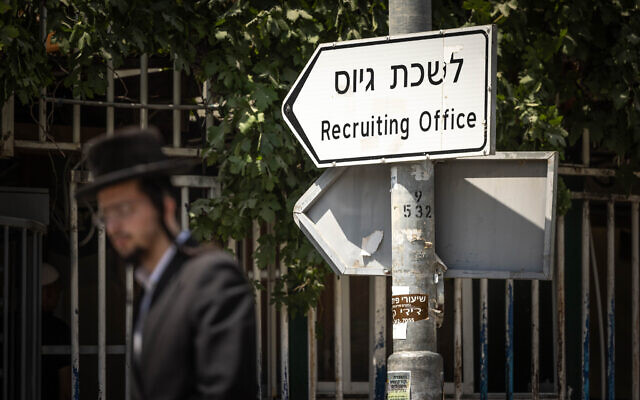
Photo credit: Utra-Orthodox Jews walk outside an army recruitment office in Jerusalem, August 16, 2023. (Chaim Goldberg/Flash90) From TOI News site.


Parshat Ki Tissa: Talmudic thoughts on Suffering

How can we relate to unexplainable suffering? Like many of us, the Talmudic Sages grappled with this most difficult of theological questions and found insights in this week’s parsha.

Parshat Ki Tissa describes one of the greatest failings of Bnei Yisrael – the sin of the golden calf, followed by Moshe’s pleas and prayers, and God’s benevolent forgiveness. Within this narrative, the Torah describes Moshe’s unusual and surprising request of God in Exodus 33: “Let me know Your ways,” and, “Show me Your glory.” God gives Moshe a view of His “back” and His “glory.” However, even Moshe is not given the ability to fully see God’s “face” and comprehend God’s essence. What is Moshe asking of God exactly? The Sages interpret this scene as Moshe asking God how to understand the problem of theodicy in this world, of why the righteous suffer. For them, this was the most difficult and burning question. 

Talmud Berakhot contains various approaches to suffering. Some rabbis believed suffering should prompt introspection and welcomed suffering as a sign of God’s love. Yet, it also shares three stories about Rabbi Yochanan and his students discussing their suffering in which they clearly and repeatedly protest the notion of sufferings of love: “I do not welcome suffering nor its reward.” This was especially relevant to Rabbi Yochanan, who lost ten children. He and his students find some healing by lifting each other up and practicing compassion.  

In the biblical world, suffering was understood to be a direct result of transgression. Rabbinic theology however, provides various approaches to suffering with more resonance for our time. It encourages us to examine our actions for the better, yet, it also sees potential dangers and futility in attempting to understand or explain suffering. Just as Moshe could not fully know God, some suffering is truly beyond our comprehension and inexplicable. Rabbinic sources provide us with space to grapple with this challenge, and hopefully, steps toward some healing. Shabbat Shalom -Karen Miller Jackson


Terumah: From Mishkan to Israel

The word “terumah” (contribution) is mentioned three times in the beginning of parshat Terumah, prompting the commentaries to explore the significance of the type of donations made to build the mishkan. Amazingly, their insights reflect the spirit of commitment and giving which we have seen across Am Yisrael recently.

Rashi explains that there were three distinct donations: two which were “chova” (required) and given equally by everyone, known as the machatzit hashekel, and one which was “nedava” (voluntary), giving as much as their “heart inspires” them. What emerges is two kinds of giving: The initial pair involves giving at a national scale while upholding the equal and noteworthy value of each individual offering. The third form embraces variety in individual contributions. Rav Amital, based on the Maharal, taught that this combination is necessary within Jewish life, a balance between first, “chova” (required commitment) and then, “nedava” (voluntary dedication). 

Similarly, The Lubavitcher Rebbe interprets the different materials of the mishkan as representing Jews with different levels of Torah commitment and religiosity. The mishkan only works if it includes everyone. The mishkan was a great unifier, including even those who think or practice differently. 
Today, Israel exhibits resemblances to these characteristics of the mishkan, underscoring the vital importance of the medinat Yisrael as a center and homeland for the Jewish people. We have witnessed ongoing contributions based on “chova” – young Israelis responding without hesitation to the call to serve. We also see the continuing “nedava” – service, gifts and solidarity from Israelis and Jews around the world who gave with “generosity of the heart.” Terumah is a timely reminder: Let’s preserve this spirit of connection and commitment, required alongside voluntary, and based on unity with diversity. Shabbat Shalom -Karen Miller Jackson


Mishpatim: Truth AND Compassion

Parshat Mishpatim contains laws which contribute to building a moral and compassionate society. Two mitzvot stand out as deserving special consideration within the framework of our contemporary world.

First, “keep far away from falsehood” (Shemot 23:7) – the language implies more than a command to be truthful, one should actively distance oneself from falsehood. The midrash Mekhilta contains a debate about whether this applies only to judges or to everyone. Elsewhere, the Torah clearly commands everyone not to lie. Here, we learn a key principle of Torah is that judges – societal leaders – should strive for truth and justice. Today, perhaps more than ever, lies and fake news are easier to access through social media. World leaders too have embraced lies and made it more acceptable to spread falsehood. In this context, “keep away…” has new resonance.

Second, “Do not oppress the stranger as we were once strangers in the land of Egypt.” (Shemot 23:9) This is one of numerous mitzvot in the parsha about protecting the vulnerable in society. Why does the Torah recall our time in Egypt? The Minchat Chinuch explains that reminding us of the anxiety and suffering our ancestors felt as strangers in Egypt “will move us to compassion for every person in a similar situation.” Drawing on our past experience in caring for the weak and vulnerable is also a core value in Torah.

 
What happens when one of these is praised and the other neglected? Sadly, we are seeing this in today’s “post-truth” world, where altruism is at times held above the truth. Courts, journalists and institutions which should be the embodiment of fairness and truth-seeking have lost objectivity. Perpetrators of evil have won over people’s sympathy. Rabbi Sacks presciently called this trend “altruistic evil,” when injustice and hatred spread under the flag of human rights. Parshat Mishpatim is a call to re-align the values of altruism and truth and to practice compassion when it is truly warranted. Shabbat Shalom and chodesh tov -Karen Miller Jackson


Parshat Yitro: Between Amalek and Yitro

Since October 7th, Israelis have been battling the pure evil which was unleashed on us and which shattered our feeling of relative security. For Jews around the world, October 7th was a similar watershed moment, as the true face and breadth of antisemitism and anti-zionism was revealed. Given this, it is natural to wonder if we have friends and allies in the world. Parshat Yitro reminds us how to balance this worldview and contains a message about antisemitism and Jewish identity.

The parsha begins after Amalek waged war on a vulnerable Israel, as they journey through the desert. Next, it is recounted that Yitro (Moshe’s father-in-law) travels from Midian to meet Moshe at the mountain of God after hearing about “what God had done for Israel.” Following this, Israel encamped at Har Sinai for Matan Torah. The commentaries see deep connections between these events.

The midrash Mekhilta contains a debate regarding the chronology of these events related to the ambiguity of what Yitro heard about. R’ Yehoshua says that he heard about the victory over Amalek. R’ Elazar Hamodai teaches that Yitro heard about the wonders of Matan Torah, which would mean the Torah tells these events out of chronological order. If Yitro arrived after Matan Torah, why is his arrival placed between Amalek and Matan Torah? Ibn Ezra comments that this is to teach that when we mention the hate-attack by Amalek we should also remember that we have genuine friends and admirers, like Yitro. 

Both readings contain a message for contemporary times. First, antisemitism should not define Jewish identity. Rather, it should be built on positive Jewish values, the basis of which is Matan Torah. Second, we need to call out antisemitism clearly and not ignore it. However, we must not let it distort our view of the whole world. We should embrace and encourage support from our non-Jewish friends, the Yitros of our time. Shabbat Shalom – Karen Miller Jackson

*photo with one of the cowgirls who support Israel.