Parshat Devarim: Positive Words

Parshat Devarim, literally “words,” teaches that the language we choose to use can influence people’s motivation levels and feelings of optimism.

Devarim opens with naming several places where the nation traveled in the desert. However, these places were never mentioned in the Torah before. Rashi teaches that this was how Moshe rebuked the generation whose parents sinned in the desert. Moshe alludes to these events indirectly, out of respect for Israel. Instead of using words which were shaming and demotivating, Moshe models how to speak words of criticism in a way which is respectful and can have positive outcomes.

Our choice of words can also have a positive affect on our mindset and well-being. In masechet Pesachim Rabbi Yehoshua b. Levi advises not to use negative language. He bases this on the fact that the Torah teaches the value of speaking positively by the addition of extra letters in the Noah narrative. Rather than calling the animals “impure,” the Torah states, “those that are not pure.” Similarly, Rabbi Joseph Telushkin writes in his book “Rebbe,” that the Lubavitcher Rebbe believed that carefully chosen words could positively influence the emotional state of ourselves and others. For instance, the Rebbe refused to call a hospital a “beit cholim” (house of the sick) but rather called it “beit refuah” (house of healing).

As Tisha B’Av approaches, we learn that the Beit Hamikdash was destroyed because of sinat chinam (baseless hatred). Moreover, the enmity between Qamtza and Bar Qamtza and the silence of the rabbis who were with them led to the destruction of Jerusalem. Parshat Devarim and Tisha B’Av are reminders that speaking respectfully and positively spreads ahavat chinam and optimism in our world. Shabbat Shalom🌷 -Karen Miller Jackson


Parshat Masei: Growth or Destination?

Parshat Masei begins by summarizing Bnei Yisrael’s travels throughout their forty years in the desert. Many commentaries question why the Torah repeats this list of “masaot” (journeys), when they have already been described earlier in the Torah. The answers they provide contain wisdom on finding meaning within our own life’s journey.

The midrash Tanhuma likens the repetition of the journey to a parent who takes his/her sick child to various places in search of healing. Afterwards, the parent recounts the experiences they had through each location. So too, God wants Bnei Yisrael to draw strength from hearing about overcoming hardship in their past and be reminded that they can do it again in the future. Rambam in Guide to the Perplexed teaches that re-telling the places Israel traveled highlights the miracles God provided for the Jewish people’s survival in the desert. Through preserving the memory of these miracles, future generations will find inspiration and faith. Sforno sees this as highlighting the goodness of Bnei Yisrael in the desert. He explains that the journeys are repeated “in order to compliment the Jewish people,” who followed God through a vast and dangerous desert, despite the hardship. 

These interpretations are similar to what psychologist Carol Dweck refers to as the “growth vs. fixed mindset.” Her research demonstrates that the most successful way to navigate life – including disappointments and difficulties – is by taking on new challenges and viewing setbacks as part of the journey. The fixed mindset cares only about the outcome, while the growth mindset finds value in each step of the journey. May the journeys of Bnei Yisrael inspire us to find meaning, strength and growth in our own lives. Chazak chazak ve’nitchazek. Shabbat shalom – Karen Miller Jackson

* photo from waze.com


Parshat Matot: A Parenting Model

In parshat Matot, Moshe is faced with a challenge from within bnei Yisrael. His reaction, and the discussion which follows, provides a model for healthy parenting. 

Sefer Bamidbar opens with the high hopes of entering the land of Israel. Yet, after a series of rebellions, the first generation dies out in the desert. Now, as their children are about to complete this mission, there is a moment of crisis. Two tribes, Reuven and Gad (joined by half of Menashe), request to remain on the east side of the Jordan River, because of its excellent grazing land for their livestock. Why does this seemingly innocent request yield a strong and emotional reaction from Moshe?

Moshe’s words reflect his concerns: that they won’t help their “brothers” fight for the land and that like their fathers, they will “turn the minds” of bnei Yisrael from crossing into Israel. Moshe fears that this will be a repeat of the meraglim. However, as Rabbi Nati Helfgot points out, several literary elements in this “inverted meraglim” story show that this generation is stronger and has taken their parents’ past mistakes to heart. With the spies, 10 men speak negatively and only 2 advocate for settling Israel. Here, only 2 tribes request to stay on the east of Jordan, while 10 tribes will settle Israel. Moreover, the 2 tribes state clearly that they will help fight for Israel, dispelling Moshe’s fears of rebellious motives.  

Moshe’s firm, preemptive response to bnei Reuven and Gad is understandable after the setbacks in the desert. They, in turn, show Moshe that they are different from the spies and display unity and commitment. This dynamic provides a model for parenting as well. Children will always make mistakes. The challenge for parents is finding a balance between standing firm in our values and beliefs, while also striving to be flexible and believing in our children’s ability to change and grow. Shabbat Shalom – Karen Miller Jackson


Pinchas: Learning Leadership from the Women

“Be a light, not a judge. Be a model, not a critic” – Stephen Covey

Parshat Pinchas profiles various types of leadership. Among them, the daughters of Zelophehad demonstrate how to lead positive change. They are a much needed model for today. 

After the Torah describes how the land of Israel will be divided, the five daughters of Zelophehad approach Moshe and request an inheritance in Israel, as they have no brothers to inherit land. The commentaries characterize them as having great “chibah” (love) for Israel. The Talmud goes even further, describing them as “darshaniyot” (interpreters), tzidkaniyot (righteous) and “chachmaniyot” (wise). How do we see these qualities in their behavior?

The daughters emphasize that their father “died by sin in the midbar,” but not as a part of Korah’s congregation. Rashi teaches that they emphasized that while their father sinned, he did not lead others to sin like Korah. Also, Korah spread unfounded criticism and refused to engage in dialogue with Moshe. 

The midrash also contrasts the daughters of Zelophehad with the story of the spies. The spies slandered the Land of Israel and spread negativity among the nation. After their words, the people said they wanted to return to Egypt, leading to catastrophe for that generation. The midrash views the daughters’ words to Moshe as the opposite of the language and behavior that previously led to disasters in Bamidbar. They are proactive. They embrace dialogue and use positive language by saying: “We want to be part of this too!” 

Hashem’s response is “The daughters speak justly.” The midrash sees this as deep affirmation. The Talmud pays them the ultimate compliment: it teaches that the laws of inheritance for daughters are attributed to, and written by, the daughters of Zelophehad. After the earlier stories of people who found ways to criticize and sow discord, these five women model proactivity, dialogue, positivity, and love of the Land of Israel. Shabbat Shalom – Karen Miller Jackson

*photo https://he.wikipedia.org/wiki/%D7%97%D7%99%D7%9C_%D7%A0%D7%A9%D7%99%D7%9D#/media/%D7%A7%D7%95%D7%91%D7%A5:Chel_Nashim_IDF1948.jpg


Parshat Balak: Love over Hate

“I have decided to stick to love… Hate is too great a burden to bear.” -Martin Luther King, Jr. 

Love vs. hate, Blessings vs. Curses. These are some of the themes which run through the commentaries on parshat Balak. The midrash notes linguistic and thematic similarities between the stories of Balaam and Avraham. Both Avraham and Balaam demonstrate “zrizut,” enthusiasm for their mission. In the story of akeidat Yitzchak, Avraham rises early and saddles his own donkey to fulfill the word of God. Balaam too, sets out with enthusiasm to do as Balak has commanded, to curse the nation of Israel. The midrash points out that both these men had servants who certainly would have saddled their donkeys for them, but as Rabbi Shimon bar Yochai teaches, regarding Avraham: “Love upends the social order,” and about Balaam: “Hate upends the social order.” Similarly, Pirkei Avot teaches that one can choose to be a student of Balaam and have an “evil eye” or like a disciple of Avraham, with a “good eye.” Balaam was keen to curse a whole people he did not know, while Avraham sought out opportunities to bless others. Perhaps this is why the midrash teaches that at first God was the only giver of blessings in Bereshit, until God gave the ability to bless others over to Avraham and his descendents.

Each day we have an opportunity to look at the world negatively, with a critical eye and spread hatefulness in the world, or with a good and generous eye and share brachot with others. Perhaps that is why we start the day with Balaam’s curse-turned-blessing, “mah tovu,” to remind us of this choice. 

Hatred is on the rise these days. It has been seen between Jews and fellow Jews, in the form of antisemitism and through the recent tragic bloodshed in Chicago. By following the model of Avraham, “the father of many nations,” we can upend the current social status quo by promoting love over hate. Shabbat Shalom – Karen Miller Jackson
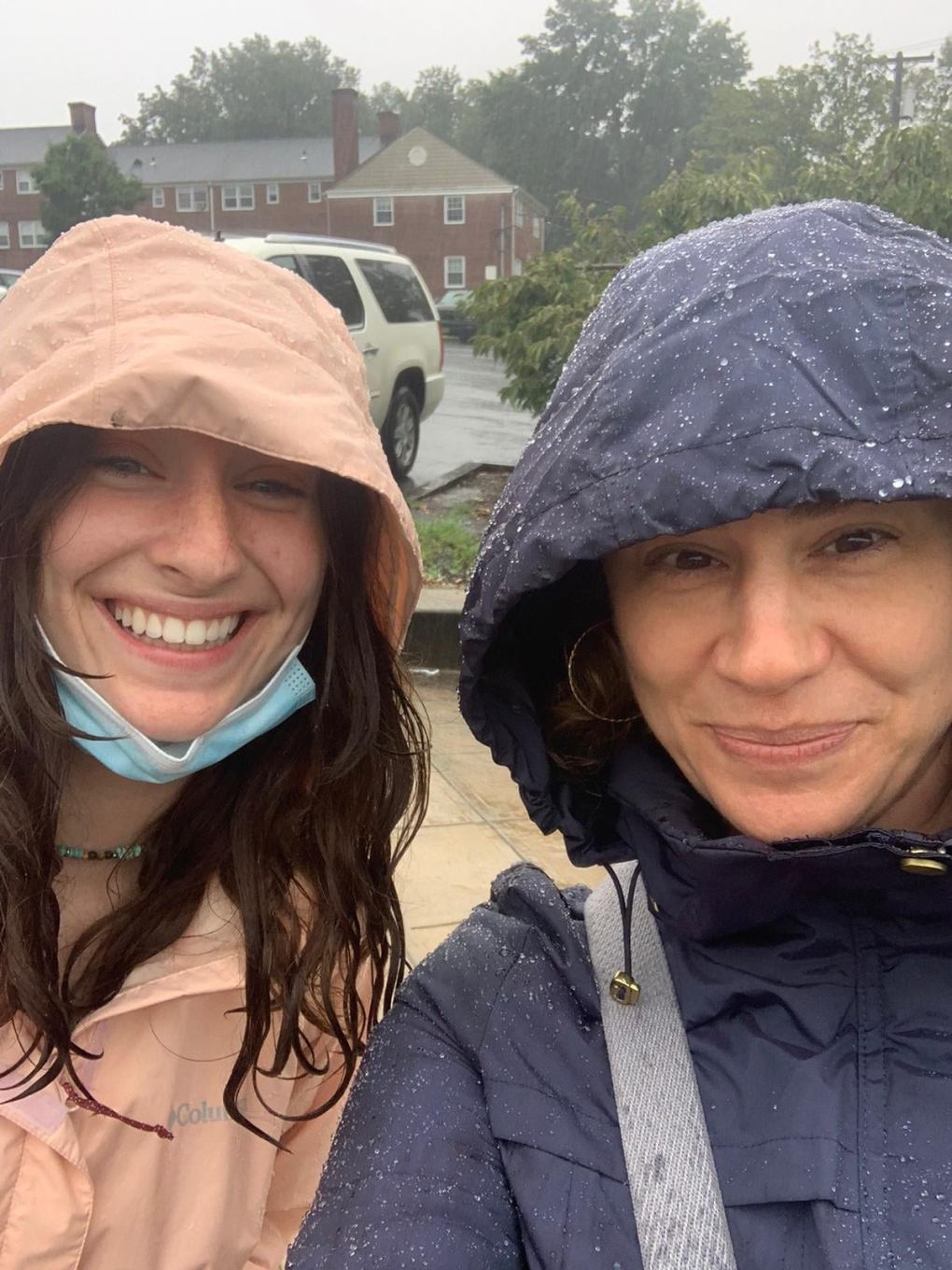
*Ultra-Orthodox youths interrupt a bar mitzvah ceremony at the egalitarian section of the Western Wall on June 30, 2022. (Laura Ben-David)


Chukat: Mayim Chayim (Living Waters)

Parshat Chukat is a parsha of leavetaking and loss, yet it also contains the seeds of renewal and hope for the future. This is reflected in the imagery of the be’er, the well of water which dries up and then flows once again, yet differently. 

The parsha begins in the fortieth year, when the desert generation has mostly died out. Both Miriam and Aaron pass away and Moshe is told he too will not enter the land. The parsha also contains the hopeful image of Bnei Yisrael (the next generation) poised across from Jordan, readying to enter the land of Israel. With Miriam’s death, Bnei Yisrael cry out for water. Later, the people sing to a well which brings forth water. The Tosefta Sotah explains that there was a be’er which accompanied and sustained Israel for forty years in the desert in Miriam’s merit. After she died, the well disappeared and returned in Moshe’s merit. 

However, Ramban suggests that this may be a new be’er. There are numerous elements which support this position. First, this is the first time the people take an active role and sing for water. Second, the song states “Az yashir Yisrael…” As opposed to the splitting of the sea, when the people sang with Moshe and Miriam, here they sang independently. This be’er represents the passing down of tradition alongside new characteristics. This can be applied to Torah too, which is called “mayim chayim.” Each generation receives it and imbues it with new meaning.

This week the Jewish world lost a great Talmud scholar. Rabbi Prof. David Weiss Halivni represented the transition from the old world of Torah erudition to a post Shoah world, with new approaches to critical study of the Talmud. I, like so many others, am grateful to have merited to drink from the well of his brilliant Torah. May his memory and teachings be for a blessing. Shabbat Shalom – Karen Miller Jackson

  • photo from Columbia.edu

Parshat Korach: Power of Community

Community is an essential part of Judaism. Parshat Korach is about the risks of separating oneself from the community, which resonates through today.

Rashi highlights that Korah’s separateness is already expressed in the first verse: “And Korach took…” It does not say what he took; it only lists a few of his followers. Rashi, citing midrash Tanhuma teaches: He purposely took himself out of the community to make machloket (conflict). The story continues with Korah’s claims, refusal to engage in dialogue with Moshe and Aaron and punishment. How surprising it is then that Korah’s “edah” (community) is the source in the Talmud for the requirement to pray in a minyan (quorum) of ten men! (There is also value placed on praying as part of a tzibbur – of men and women). 

The source for minyan in the Talmud is derived from a verbal analogy in Torah. Vayikra states that God should be sanctified “among” Bnei Yisrael. The word among is also used when God instructs Moshe to separate from “among” Korah’s community (edah), as attempts to reason with them were futile. The word edah is also used in the story of the spies, from which the number ten is derived for minyan. So the basis for communal prayer is derived from two groups of great sinners. 

Perhaps this was not only a literary connection, but rather a deeper point expressed by the rabbis. Separating and not engaging with diverse perspectives can lead to isolation and extremism. By deriving minyan from such imperfect models, the Sages encourage openness and inclusiveness within communities. This allows for people of varying religious commitments, or who feel less worthy, to take part in communal prayer. Shabbat Shalom -Karen Miller Jackson


Parshat Shlach: On “Influencers”

Parshat Shlach is most known for containing the sin of the meraglim (spies). Yet, the entire generation was punished. What was their fault and what lessons can be drawn from this tragic story for our world today?

Biblical interpreters point out that the narrative of the meraglim did not occur in a vacuum. This is not the beginning of the people’s faithlessness. It is part of a series of stories of criticism and resentment in Bamidbar, which begins with small groups and spreads throughout the nation. Rashi teaches that the meraglim narrative follows the story of Miriam’s punishment for speaking lashon ha’ra to show that the spies should have learned the dangers of slander, yet they did not. The Ha’amek Davar sees the failings of the spies as going further back to the “mitonenim,” (provocateurs) who start a downward spiral of criticism which culminates with the spies who spread negativity among the nation.

However, these interpretations risk portraying the people as being easily swayed by the meraglim and therefore lacking some degree of agency. Caleb and Joshua rejected the negative reports and said “let us go up!” Why weren’t they listened to? Rabbi Yehuda Brandes suggests that the nation’s unmitigated support for the ten spies, complete disregard for the words of Caleb, and immediate cries of hopelessness, show that the spies were feeding off the fears and faithlessness of the people. Bnei Yisrael were not just swayed but had an active role in escalating the negative reports and were therefore punished severely. The people influenced the spies as much as the spies influenced the people.

In our era of digital connectivity, negativity and resentment can spread particularly rapidly. Complacency allows them to breed. The recent spate of violence against healthcare workers in Israel and of gun violence in the US are a call to spread positive and constructive voices in the world. Shabbat Shalom -Karen Miller Jackson


Beha’alotcha: On Setbacks and Success

What wisdom does Parshat Beha’alotcha contain on how to view life’s setbacks and successes? 

The parsha describes Israel’s spiritual heights alongside displays of their faithlessness and bitterness. The language of going up appears several times. When Aaron “goes up” (beha’alotcha) to light the menorah, the midrash Tanhuma explains that this gesture signifies God’s exalting of us, Israel. Later, the lifting up of the cloud indicated it was time to “go up” to the land of Israel. And then come the inspiring words we say every Shabbat upon opening the Aron Kodesh, bracketed by two upside down letter “nuns”: 

“וַיְהִ֛י בִּנְסֹ֥עַ הָאָרֹ֖ן וַיֹּ֣אמֶר מֹשֶׁ֑ה קוּמָ֣ה ה’…”

Yet, this theme is interrupted when Israel begins to complain bitterly, spreading negativity and leading to punishment. 

Why was the immediately preceding section bracketed by two upside down letter “nuns”? The Talmud teaches that these “nuns” signal that this section was placed here to pause between the calamities of Israel. The bitter complainers actually followed an earlier failing, when Israel ran away from God at Sinai. The pause provides optimism amidst a series of difficult setbacks. 

The letter “nun” reinforces this idea. The Talmud asks: Why in the acrostic Ashrei prayer is there no verse beginning with “nun”? One answer: the nun is the first letter in the word for the downfall of Israel in a verse from Amos, “She has fallen (naflah) and will rise no more.” Yet, the Sages taught that it should read: “She will fall no more,” a source of optimism. Failures and setbacks will occur, the question is how to overcome them. 

Beha’alotcha provides a healthy perspective: Recognize that life is filled with setbacks as well as successes, try to find points of optimism amidst failure and try to use disappointment as an opportunity and source of growth. Shabbat Shalom – Karen Miller Jackson

Wavin’ (the Israeli) Flag

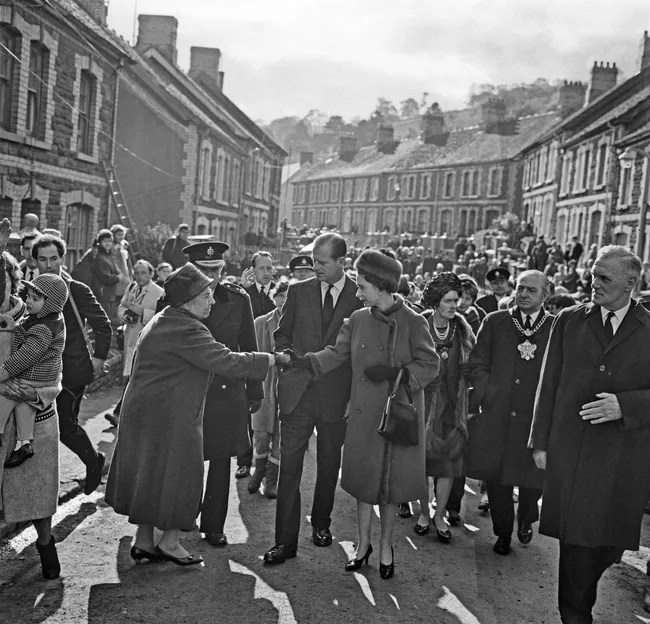
Flags are on the news and on our minds this week. Flags also play a prominent role in Bamidbar. Parshat Naso continues to describe the layout of the camp of Israel, where the people were situated according to their  standard (דגלו), under the signs (אתת) of their ancestral house. What is the significance of the emphasis on the flags?

Biblical interpreters differ on whether there were twelve flags or whether the tribes were united under four flags. Rashi suggests that each tribe had a different color flag which corresponded to the breastplate of the kohen, and the different colors highlighted the diversity of the nation of Israel. Other commentaries view the flags as an expression of military pride and prowess. Abarbanel – who understood politics and diplomacy well – explains that the tribes were placed next to each other and traveled together in four groups. Judah’s group (whose symbol was a lion) was placed at the head and Dan’s (whose symbol was an eagle) was in the rear, because they were the strongest and would deter the enemy from attacking. 

The layout of the flags also surrounded the mishkan, drawing on the holiness of the Shechinah. This is reinforced by a midrash brought by Dr. Avivah Zornberg, which teaches that the flags originated at Matan Torah. When God descended on Har Sinai the people saw myriads of angels with different banners. They too longed to have their own flags as a symbol of God’s love for them, hence, they were arranged by flags in the desert.  

Flags should symbolize national pride alongside holiness and devotion, not hate and destruction. May we continue to fly our Israeli flag from a place of pride, strength and love rather than from hatred. May we not have to see flags of hate here. Finally, may we experience the love of the banner of Torah this Shavuot, just as Israel experienced at Har Sinai. Shabbat Shalom & Chag Sameach – Karen Miller Jackson