Parshat Bereshit: Valuing LIfe

Parshat Bereshit introduces the idea that all humankind was created b’tzelem Elokim, in the image of God. Ancient and modern interpreters alike view this as a foundational concept about the value of life. 

Rabbi Akiva is cited in Pirkei Avot as teaching that “beloved is the person created in God’s image.” The awareness that we are created in God’s image is a reminder of God’s love for humankind. In another midrash Hillel Hazaken cites this concept as the halakhic source for the mitzvah to care for our physical bodies as he was on his way to wash at the bathhouse. Yet another midrash explains that when we “shame” others, we are in fact shaming the likeness of God. So, the midrashic conception of tzelem Elokim ranges from the imperative to physically care for our bodies, to acting humanely and with love toward others. In other sources, creativity and procreation are seen as enhancing the divine image, while murder is the ultimate diminishing of tzelem Elokim in this world.  

Two contemporary rabbis and great thinkers expand on these ideas. Rabbi Yitz Greenberg defines tzelem Elokim as meaning that humans are created with infinite value, equality and uniqueness which should be used to enhance human relationships and improve the world. Rabbi Yuval Cherlow writes that the concept of the Divine image is the basis for all interpersonal mitzvot, and also teaches us to relate to the physical body and pleasure positively, within the framework of Jewish law. 

Now in particular, as we grapple with loss and with loved ones struggling with emotional well-being, “tzelem Elokim” reminds us of the preciousness of every life and the duty to protect and save lives. May we all find ways to see the tzelem Elokim in ourselves and others. Shabbat Shalom.

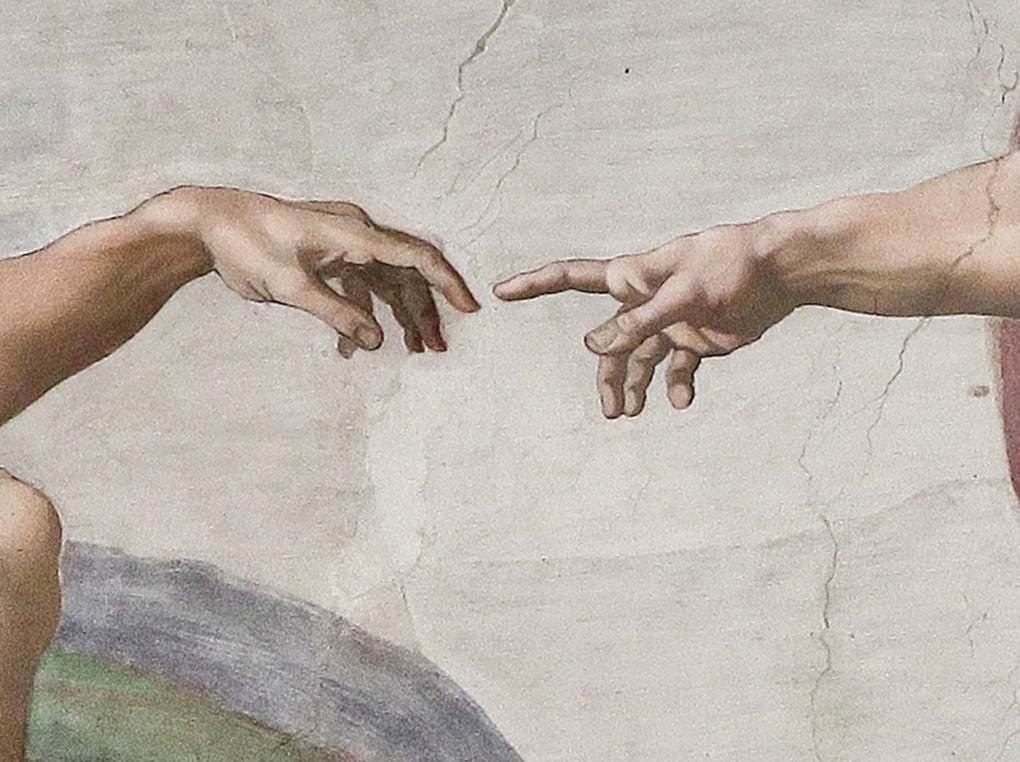
Creation of Adam by Michelangelo


Healthy Sexuality

Parshat Ki Tetze opens with a disturbing law: when a Jewish man goes to war and desires a foreign woman among the captives, he may take her home on the condition that he waits one month during which her beauty is neglected and must then marry or free her. When seen in its biblical milieu and through the eyes of the midrashic rabbis, this law teaches us a lesson about healthy approaches to sexuality and the necessity of consent, and is particularly relevant for Israeli society this week.

The Torah emphasizes the soldier’s physical desire: He takes her based solely on her physical appearance: he “sees” her, “desires” her. She is known as “eshet yefat to’ar,” a beautiful woman. The woman has no voice or choice. The Torah’s concession to human weakness in allowing this woman to be taken would be unthinkable today and would be deemed a war crime. However, in the context of antiquity, the idea of putting constraints on victorious soldiers was revolutionary and significantly limited wartime rape. The midrash further discourages this behavior. Noting the incongruous placement of this law next to a law regarding polygamy and then the rebelious son (ben sorer u-moreh), the midrash teaches, “one sin leads to another sin.” Meaning, taking the eshet yefat to’ar into one’s house will cause conflict and a catastrophic breakdown of family relationships. It might be permitted, but it is toxic for everyone involved.

The Torah and the midrash were beacons of morality in a world where a female captive had no rights, which thank G-d is no longer the case. They remind us that sexual relations without consent has disastrous effects, and healthy sexuality goes beyond mere physical attraction.


Miketz: An End to the Darkness

The contrast between the beauty of Jews celebrating the first night of Hanukkah on Bondi Beach and the horrific acts that followed compels us to ask: how do we respond to such darkness?

Joseph, too, in Parshat Miketz, is immersed in darkness – thrown into a pit, brought down to Egypt, and forgotten in prison for two long years. Yet the Rabbis teach that it is precisely at this moment, when all hope seems lost, that God “puts an end (ketz) to the darkness.” The Torah draws a linguistic link between the end of Joseph’s imprisonment – miketz – and Pharaoh’s awakening from his dream – vayikatz Pharaoh. That awakening creates the opening through which Joseph, interpreter of dreams, can emerge from confinement. Recognizing the hand of God at work, Joseph publicly acknowledges this when Pharaoh asks him to interpret the dreams, and he declares that it is God who will provide the interpretation through him.

The timing of this parsha is significant. Parshat Miketz often coincides with Hanukkah, which celebrates the Jewish people’s triumph over the darkness of assimilation and antisemitism. It is for this reason that the Hanukkah lights are placed outside the home or by the window, visible in the public sphere. Joseph and Hanukkah share a central theme: the courage to express faith publicly – faith in God and in the future of the Jewish people.

In the modern era, the men and women of Chabad have embodied this ideal fully, around the world. The Lubavitcher Rebbe pioneered public menorah lightings, from the White House in 1974 to global ceremonies broadcast by satellite in 1990. Like Joseph and the Hasmoneans before them, they stood tall in their faith and made it visible to the world. That is precisely what Rabbi Schlanger and the Australian Jewish community were doing on Bondi Beach – bringing light into public space – before darkness struck. In their memory, our response must be the same: to strengthen our faith, stand firmly in who we are, and continue bringing light into the world. Shabbat Shalom and Hanukkah Sameach -Karen Miller Jackson 


Vayishlach: Responding to Antisemitism

A number of commentaries understand Yaacov’s encounter with the ish in Parshat Vayishlach as symbolizing the Jewish people’s struggles with their adversaries throughout history. If so, what guidance might this episode offer us in confronting today’s vehement strain of antisemitism?

Already before their birth, God tells Rivka that Yaacov and Esav are the founders of two nations. Midrashic tradition identifies Esav/Edom with Rome, and later commentators link him with Christianity. Thus, when Yaacov wrestles with the ish, the midrash interprets this figure as Esav’s guardian angel—a representative of the forces that would oppose Israel throughout the ages. Ramban famously describes this conflict as a remez l’dorot—a hint to the ongoing struggles between the children of Yaacov and the children of Esav until Yaacov ultimately prevails. These interpretations reflect the historical experiences of commentators who lived under oppression at the hands of their own “Esav.”

But today, with our own homeland and army, we stand in a new chapter of Jewish history—one that invites renewed interpretation and application of this story. When the ish blesses Yaacov with a new name, Yisrael, the commentaries highlight its significance. Rashi explains that this name embodies serarah, meaning noble leadership and moral strength. Yaacov, associated with concealment and vulnerability, becomes Yisrael: forthright, resilient, confident, and unafraid to stand tall in the world.

We, too, are living through a moment of struggle, facing a resurgence of antisemitism and anti-Zionism. Yet, strengthened by a return to our land and sovereignty, we face these challenges not from a place of insecurity or uncertainty, but as Yisrael—anchored in identity, purpose, and pride. Shabbat Shalom -Karen Miller Jackson


Vayetze: On Sacred Spaces

The word makom (place) appears repeatedly at the start of Parshat Vayetze as Jacob sets out on his journey: “He came upon the place (ba-makom)…” What is this place? Its very ambiguity becomes a key to understanding Judaism’s vision of sacred space, from Jacob’s world to our own.

Rashi identifies the makom with the site of the Binding of Isaac—“Abraham looked up and saw the place (ha-makom) from afar”—later known as Mount Moriah, where the Temple would later be built. In Devarim, the Mishkan is likewise called the makom. The midrash therefore associates Jacob’s encounter with Jerusalem. 

Yet there is a tension: Jacob renames the site Beit-El, formerly Luz—seemingly far from Jerusalem. Commentators struggle to reconcile this. A striking midrash offers a creative resolution: The ladder connecting heaven and earth in Jacob’s dream was actually the mechanism that allowed Jacob to be physically in one location while spiritually linked to the Temple Mount: “The ladder stood in Beersheba, and the middle of its slope reached opposite the Temple.” 

This preserves the centrality of the holiness of Jerusalem while teaching one may direct heart and prayer toward it from afar. Moreover, Ha-makom becomes one of the rabbinic names for God. When we study Torah, do justice, live by Jewish values and pray facing Jerusalem, says the midrash, any space can draw sanctity from Ha-makom. This is also the meaning of makom today. Synagogues in New York and London that hosted events which support and celebrate Israel—and faced protest for doing so—were embracing Jacob’s legacy. What the critics fail to grasp is that Jewish sacred spaces, wherever they stand, are inseparable from the pull of Jerusalem. The heart of Israel beats within every synagogue and community that turns toward Ha-makom. That is Jacob’s legacy, and it remains our mission today. Shabbat Shalom – Karen Miller Jackson


Toldot: Promoting Truth

What is meant by the verse in Micah, “Give truth to Jacob”? The commentaries discuss this question in Parshat Toldot, where the themes of truth and deception are front and center. The question feels especially urgent today, as we—the children of Yaacov—struggle to make truth heard and to dispel the deceptive narratives told about Israel.

The Torah describes Yaacov as “a plain (tam) man, dwelling in tents,” which Rashi contrasts with Esav, who regularly misled his father about his true character. This is striking, given that it is Yaacov who appears to act deceptively. He acquires the birthright at Esav’s moment of weakness, and later follows Rivka’s plan to disguise himself before Yitzchak. When Yitzchak, who is going blind, asks him directly who he is, Yaacov answers, “I am Esav, your firstborn.” Yitzchak later tells Esau that his brother came with mirma—cunning—and took the blessing. Still, Rashi works to preserve Yaacov’s integrity. He repunctuates the verse so that Yaacov is not technically lying: “I am [bringing you food]; Esav is your firstborn,” and defines mirma as cleverness rather than deceit.

Other commentaries take a different approach: even if the blessing was truly destined for Yaacov, the way he received it carried consequences. In one midrashic tradition, Rachel deceives Yaacov on his wedding night to spare Leah’s shame and reminds him that he once deceived his own father, measure for measure. And when Esav cries out “a great and bitter cry,” Bereshit Rabbah says that this is echoed generations later when Mordechai cries out in Shushan under Haman’s decree to wipe out the Jewish people.

Yaacov was a man of truth. When he acted with duplicity it was to ensure the future of the Jewish people, yet there were long-term consequences. Today, when the world so readily absorbs falsehoods about our people, we renew our mission to “give truth to Yaacov”—to stand for the integrity and truth of the Jewish people. Shabbat Shalom and chodesh tov!🇮🇱 -Karen Miller Jackson


Parshat Chayei Sarah: Finding our “Wells”

Parshat Chayei Sarah opens with the passing of Sarah. This loss, following the akedah, must have left Yitzchak feeling drained and broken. Perhaps this helps explain his passivity in finding a wife. The question, then, is how Yitzchak found the strength to rebuild and move forward.

Significantly, many key moments in Yitzchak’s life unfold at a be’er — a well. In the first scene, Yitzchak is absent, but his proxy Eliezer travels to Aram Naharayim in search of a wife for him. Eliezer stops at the be’er ha-mayim, where the women draw water, and there he prays for divine guidance and encounters Rivka. The midrash notes that wells are meeting places of biblical couples, symbolizing new beginnings, healing, and hope.

Later, when Rivka journeys to Abraham’s home, she meets Yitzchak as he is coming from Be’er Lachai Ro’i — the place where Hagar, after being banished, prayed to God and found sustenance. The midrash teaches that Yitzchak was there to bring back Hagar (aka Keturah) to Abraham after Sarah’s death. Once again, the well represents restoration and renewal.

Wells appear again when Yitzchak re-digs the wells of Abraham that had been stopped up by the Philistines. The Sefat Emet interprets these wells as symbols of spiritual life — channels of divine blessing that the avot brought into the world. In reopening them, Yitzchak becomes a model of spiritual resilience, drawing strength from his parents’ legacy and renewing it for future generations.

Israel is thankfully emerging from a time of loss, exhaustion, and uncertainty. It is time for us, too, to uncover our own “wells” — sources of faith, strength, and hope — to find renewal, healing, and resilience once more. Shabbat Shalom -Karen Miller Jackson


Parshat Vayera: Politics of Hope and New York

After a campaign that, on the surface, seemed to champion care for the weak but in reality carried strong undercurrents of hatred and anger—particularly toward Israel—Parshat Vayera offers an urgent moral wake-up call for New York’s future.

The Torah juxtaposes the stories of Abraham and Lot, inviting us to compare them. Abraham, recovering from his brit milah in the heat of the day, waits eagerly to welcome guests into his tent. After performing the mitzvah of hachnasat orchim, he escorts his visitors toward Sodom. Soon after, Lot sits at the city gate and also welcomes guests — a behavior he learned from living in Abraham’s home, the midrash teaches.

Yet the differences are striking. Lot’s guests are met by the violent hostility of Sodom’s people, a society built on selfishness and cruelty. Even within Lot’s home, according to the midrash, kindness is divided. When he offers his guests salt, his wife scoffs: “Must you bring this bad habit from Abraham’s house?” In contrast to the shared compassion of Abraham and Sarah, Sodom represents a fractured society — one that turns generosity into weakness and hatred toward the stranger into a civic value.

Pirkei Avot teaches that a Sodom-like character trait is the attitude of “mine is mine, and yours is yours.” On the surface, this may sound fair and balanced, but in truth it reflects a society built on indifference and “othering,” devoid of collective responsibility. The midrash captures this moral decay through the story of Lot’s daughter, who is punished simply for feeding a poor man. This was Lot’s world—a society of pretense and cruelty—whereas Abraham was chosen by God for embodying tzedaka and mishpat, compassion and justice. 

Rabbi Sacks zt”l, whose fifth yahrzeit falls this week, called this an ideology of “altruistic evil” — hatred justified in the name of virtue. He warned against the politics of anger and urged instead a politics of hope. May hope, truth, and moral strength triumph over anger in the days ahead. Shabbat Shalom -Karen Miller Jackson


Parshat Lech Lecha: Hearing the Call of Good over Evil

We hear nothing about Avraham’s faith or righteousness before God calls to him, “Lech lecha.” So why was he chosen? The midrashim fill in the story, portraying Avraham’s moral clarity and spiritual courage, yet the pshat itself offers a quieter but powerful lesson—about standing up with faith and conviction for Jews and Israel today.

Bereshit Rabbah teaches that Avraham once saw a palace in flames and cried out, “How can it be that this palace has no leader?” God replied, “I am the master of this palace.” Avraham’s faith was born through questioning, through refusing to accept a world that made no moral sense. As Rabbi Sacks zt”l wrote: “For Abraham, faith began in cognitive dissonance. There is only one way of resolving this dissonance: by protesting evil and fighting it… It is as if God were saying to Abraham: I need you to help Me to put out the flames.”

Avraham’s distinctiveness may also be alluded to when he is later called “ha-ivri,” which means “the Hebrew” or “from the other side.” One midrashic opinion explains: “The entire world stood on one side, and he on the other.” This image feels especially relevant today, reminding us to speak truth and uphold moral clarity even when it defies popular opinion.

Perhaps the plainest reason God chose Avraham was because he responded to God’s call “Lech lecha…” Avraham answers the call fully even though it involves uncertainty and sacrifice. This too, is the story of the Jewish people and their love and commitment to Israel through the ages. As the world watches the elections in New York this coming week, we can learn from Avraham about the power of each individual to stand up and voice moral clarity about good and evil. Shabbat Shalom -Karen Miller Jackson


Parshat Noah: Windows & The World

Why does God command Noah to build a “tzohar” (opening) on the ark? The tevah was meant to enclose and protect those inside so they could survive the flood. What purpose, then, would an opening serve? The interpretations of the tzohar provide a model for how we might view our own homes and places of prayer today.

The word tzohar appears only once in Tanach, making it difficult to define. Rashi, citing midrash, offers two explanations: (1) a window, or (2) a precious stone that emitted light. Both explain how Noah and his family—confined in the ark for a year—had light and could distinguish between day and night. Yet the difference is telling: a stone brings light inward but offers no view outward, while a window lets light in and allows one to look out and connect with the world beyond. Hizkuni identifies this tzohar as the very window through which Noah sent the raven, a moment marking his first reconnection with the outside world. 

Windows also carry symbolic meaning in our prayer spaces and homes. Talmud Berachot, based on Daniel, teaches that one should pray in a bayit with windows—a law later codified in halakha. Some rishonim explain that natural light or a view of the heavens enhances kavanah (concentration). Rav Kook adds that a person who has the most heartfelt  prayers, but is disconnected from the outside world is not achieving the full purpose of tefilla. By davening in a room with a view of the outside, a person will be inspired to positively influence and do good in the world s/he inhabits. 

Like Noah’s tevah, our homes and shuls are a space to protect and nurture ourselves, to build up our faith and inner light. Yet if we never look outward, our spiritual lives remain incomplete. The window reminds us that faith is not only about shelter, but about shining light into the world beyond. Shabbat Shalom -Karen Miller Jackson


Bereshit: Faith and Gratitude

“Each and every blade of grass has a special song of its own.” – Naomi Shemer, based on Rebbe Nachman of Breslav

In the midst of the creation narrative, before humankind even enters the scene, parshat Bereishit offers a lesson about the power of faith and gratitude, one we have witnessed so vividly in each and every hostage who, thank God, has returned home. 

In the retelling of creation in Bereishit, chapter 2, just before Adam is formed, the Torah states: “When no shrub of the field was yet on earth and no grasses of the field had yet sprouted, because God had not sent rain upon the earth and there were no human beings to till the soil.” Why did God withhold the rain? And why are two reasons given for why the vegetation had not grown? Rashi connects these two explanations: God withheld the rain because there were not yet human beings who could be makir tov (to appreciate the rain). Only once Adam sensed the world’s need for sustenance did he pray for rain, and it was that prayer that brought the grasses and trees to life.

Rashi’s insight highlights several key ideas. First, Adam prays not only for himself, but for the sake of the world. Second, tefilla cultivates within us the capacity to be makir tov — to feel and express gratitude to God and to others for the good we receive. Finally, the world itself reached its completion — the grasses only began to grow — when Adam prayed. Our very sustenance, and the flourishing of the world, depend on our tefillot.

This message finds powerful expression in the chatufim, who have shown almost superhuman strength, faith, and gratitude. With radiant smiles, wrapped in Israeli flags, and in their renewed embrace of mitzvot like tefillin and tefilla. Their example is not only a source of inspiration but also a wellspring of strength — one that will help us recreate, renew, and heal Israeli society. Shabbat Shalom – Karen Miller Jackson


Parshat Ha’azinu & Sukkot: Strength from Former Hostages

The poetic parsha of Ha’azinu, which we will read just before Sukkot, reminds us of the blessings God has bestowed upon the people of Israel throughout history. By recalling both our failures and our faith, Ha’azinu becomes a verbal act of hakarat hatov, gratitude for all the good God has granted us.

The Midrash Sifrei teaches that this song encompasses the past, present, and future of the Jewish people. Ramban adds that it is both our testimony about God’s benevolence to us and God’s testimony about Israel—that even when we stray, God will forgive and return to us.

The mitzvah of sitting in the sukkah carries a similar message. The Torah commands us to dwell in sukkot “so that future generations will know that I caused the Israelites to dwell in booths” after the Exodus (Vayikra 23). Yet the Torah never describes these sukkot explicitly, leading to a rabbinic debate about whether they were physical booths, or the ananei hakavod—the Clouds of Glory—symbolizing divine protection. Whether they were actual shelters or the miraculous clouds, the sukkah teaches that it is precisely in moments of fragility and uncertainty that we are reminded to rely on God’s care.

We have also learned this lesson from many former hostages—may the remaining ones come home soon. In his book, Eli Sharabi describes how, at his most vulnerable, in the dark, cramped, airless tunnels of Gaza, he drew strength from the words of Kiddush and Shema. Ha’azinu and the sukkah together remind us that as we emerge from this month of chagim, when we feel most attuned to God’s presence, we can strive to hold on to these reminders of faith and protection throughout the year ahead. Shabbat Shalom -Karen Miller Jackson