
Pesach: Elijah at the Seder

As the seats at this year’s seder table fill up again with family and friends, one more guest is always traditionally invited to seders all over the world – Elijah. A look at the portrayal of Eliyahu ha-navi in Tanach and midrash shows why this beloved character plays a key role on Seder night.

There are two characterizations of Eliyahu in Jewish sources. In the books of Kings, Eliyahu is a prophet who performs miracles and attempts to restore the Jewish people’s faith in God. However, he becomes intolerant of their transgressions and is zealous for God, so he is taken up to heaven in a whirlwind. This is contrasted with the depiction of Eliyahu in rabbinic literature, as miraculously appearing to Jews throughout the generations. Eliyahu is at times the harbinger of redemption, like when he stands at the entrance to the cave and informs Rashbi and his son that it is safe to emerge after hiding from the Romans. He also resolves debates and spreads peace among the sages. Additionally, his chair is at the center of the brit milah ceremony, marking the continuing of the covenant with God from generation to generation. 

The mishna Eduyot ends with the opinion that Eliyahu returns to bring peace to the world, particularly within family relationships based on another biblical source. The prophet Malachi concludes by saying that before the coming of redemption, God will send Eliyahu to reconcile or increase love of parents with children and children with parents.”

When we pour a cup of wine for Eliyahu ha-navi and invite him to our seder, we are highlighting that the seder is a time of potential – for redemption, for nurturing family relationships, for peace and for passing on Jewish tradition from one generation to the next. Chag Sameach! – Karen Miller Jackson


Metzora: Positive Speech

Parshat Metzora does not state explicitly whether tzara’at is a punishment, and if so what for. However, the commentaries understand tzara’at to be a punishment for lashon hara (speaking ill of others). I would like to share the following explanation for this, provided by the great Tanach scholar Nechama Leibowitz z”l, whose 25th yahrzeit was this past week. 

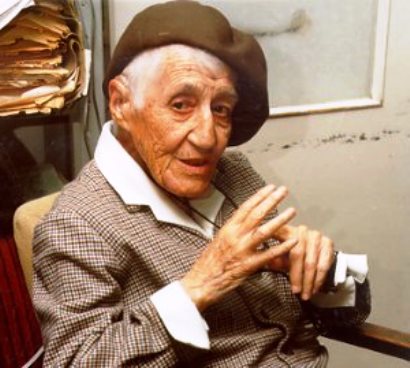
Nechama, as she was fondly called by her students, combined literary analysis with deep reading of midrash and medieval commentaries in her teaching. In her parsha books, which are a staple in many Modern Orthodox homes, she cites two other biblical stories and their interpretations, which link tzara’at with speaking lashon ha’ra. When tzara’at appears on Moshe’s hand in Shemot, it follows him speaking negatively about bnei Yisrael. In Bamidbar, when Miriam speaks badly about Moshe, she gets tzara’at. These literary connections support the association between tzara’at and slander.

The midrash reinforces this by reading the name “Me-tzo-ra” (one afflicted with tzara’at) as connected to “motzi-shem-ra,” spreading evil talk. The Talmud explains that the person afflicted with tzara’at must be isolated because speaking lashon ha’ra has potential dangers for human relationships and society. By remaining alone for at least seven days a person has time to internalize this. 

Negative speech can become viral and spread negativity like tzara’at. Conversely, positive speech leads to goodness and redemption. We can encourage, console, and strengthen each other through speech. Metzorah is read just before Pesach this year, when the haggada and its discussion is the paradigm of positive speech. The Hasidic masters read the word Pesach as “peh-sach,” the mouth speaks. In Egypt there was an “exile of speech”, an inability to express ourselves truly and positively. Pesach is the time of redemption of speech, speech which leads to friendships, strong communities, faith and commitment between God and the Jewish people. With prayers for healing and strength. Shabbat Shalom – Karen Miller Jackson


Parshat Tazria (& Hachodesh): Renewal

Is there such a thing as a spiritual ailment? Parshat Tazria suggests that perhaps there is. Tzara’at was a disease which affected not only a person’s body, but also can appear on one’s clothing and one’s home. The interpretations of the biblical description of tzara’at resonate and provide hope after a difficult week in Israel. 

While tzara’at of the skin has been interpreted by some as a physical ailment, the other 2 cases of tzara’at have no medical basis. Perhaps for this reason, Maimonides writes that they are not physical but rather supernatural. Rambam interprets the types of tzara’at as 3 levels of warning or distance from God: the lesion appears first on one’s house, then on one’s clothing and finally on the person him/herself. This view understands tzara’at as punishment or an indicator of a person’s spiritual state. 

However, tzara’at is also connected with goodness and renewal. The Torah teaches that when the people enter the land of Israel they will have tzara’at on their houses. Surprisingly, Rashi teaches that this was a “besora,” good tidings! This is a blessing since the previous owners of the houses hid their jewels in the walls which would be uncovered by Bnei Yisrael. In anticipation of hardship, God provided hidden glimmers of hope and blessings. Additionally, the kohen oversaw a process of renovation and purification which “attones for” and renews the home. 

The antidote to tzara’at provided the ability to emerge renewed and closer to Hashem. This highlights that there will be times of hardship and suffering, especially in the land of Israel, and there will also be renewal and blessings. This cycle – of darkness followed by light – is also reflected in the phases of the moon in parshat HaChodesh, read this Shabbat as well. As we mourn the recent immeasurable loss of life in Israel, we pray that it will be followed by good tidings, blessings and spiritual renewal. Shabbat Shalom – Karen Miller Jackson 


Parshat Shmini: Too Much Holiness?

The Torah mentions the sin of Nadav and Avihu four times, the first of which appears in this week’s parsha, Shmini. It is through the story of their death — which lacks a clear reason — that the commentaries define what it means to live a life of kedusha.

On the 8th day of the inauguration of the mishkan, as the Shechinah was about to descend, Aaron’s sons Nadav and Avihu offer up a “foreign fire” and are instantly killed by God. Their sin is not exactly clear and is further confused by another later account in Achrei Mot, which describes them drawing “too close before God.” Given this ambiguity, the sages suggest various interpretations of what they did wrong, including: sacrificing a korban which was not commanded, teaching Torah in front of their teacher Moshe, entering the sanctuary naked, performing their duties while drunk, refusing to marry or have children.

Some of these interpretations highlight a blurring of boundaries, acting without inhibitions, which portrays their behavior negatively. Others see more positive motivation. The midrash Sifra teaches that they added love upon love of God. Meaning they wanted to stay close to the Divine presence, to live a wholly spiritual life and did not want to return to the physical and material world. The Lubavitcher Rebbe refers to this as having only the attribute of running toward the spiritual, without also returning to the everyday to uplift others. Having both is real kedusha.

This was also the approach of Rabbi Akiva: A leader, a great scholar, who had a close encounter with God and who believed that caring for each and every person is the essence of Torah and kedusha. This week we lost several precious Jewish people. May their memory be for a blessing by following in the footsteps of Rabbi Akiva and spreading kedusha by seeing and caring for others. Shabbat Shalom ~ Karen Miller Jackson 


Tzav: Approach with Enthusiasm

Parshat Tzav, and Vayikra in general, contains many details about the korbanot and daily service in the mishkan. It is not always immediately apparent what relevance these details can have in our lives today. Yet, the biblical interpreters provide insights into these descriptions which have relevance within and well beyond the boundaries of the mikdash. 

One of the themes of parshat Tzav is “zerizut,” acting with urgency and enthusiasm. This is seen in a number of ways in the parsha. First, the opening verse: “Command (tzav) Aaron and his sons…” Rashi comments that when this language “tzav” is used it connotes “zerizut,” and should be carried out without delay. Amidst the description of this important service, there is a command to the priests to clean the ashes on the altar each morning before beginning again each day. Many ask why the kohanim, who do such holy work, also need to sweep up the ashes, a seemingly lowly job?! Nechama Leibowitz quotes Rabbi S.R. Hirsch who compares us all to the kohanim: The ashes from the previous day are removed to convey that we have an opportunity each day to approach mitzvot with “new zest.” 

Similarly, the parsha also describes the korban of thanksgiving, which was brought after a dangerous experience. Today, this is expressed through the recitation of the “hagomel” blessing. Rav Kook explains that after a traumatic experience one is given a new perspective on life and feels an urgency to express gratitude. Also, the Shulchan Aruch teaches that it should ideally be said as soon as possible (within 3 days), indicating it should not be delayed unnecessarily. Here too, there is built into the service in the mishkan and our tefillot today, an element of “zerizut.” 

Mindfulness about starting each day anew and the recitation of birkat hagomel are today’s way of carrying on the “tzav,” to approach mitzvot or express gratitude without delay and with enthusiasm. Shabbat Shalom -Karen Miller Jackson


Shabbat Zachor: Open Hearts to the World

The Shabbat before Purim is known as Shabbat Zachor (one of 4 special Shabbatot beginning in the month of Adar). In addition to parshat Vayikra, the Torah reading this Shabbat includes the imperative “zachor,” to remember what Amalek did to the Jewish people. Why must this memory be expressed out loud and publicly? 

There is a clear thematic connection between Purim and Amalek. The megilla refers to Haman as “Agagi,” which is interpreted as descending from Agag, king of Amalek in Tanach. Amalek in the Torah was the epitome of evil, preying on the weak and vulnerable Israel who had just left Egypt. The rabbinic sages develop this further and characterize Haman as the archetype of antisemitism and baseless hatred. Purim marks our survival and victory over Haman. Yet, before we begin the full-blown celebrations, we pause and remember Amalek’s evil and cruelty. Rambam explains that the purpose of reading parshat Zachor each year is to not only remember the story but to rouse our emotions and to ensure that such evil behavior does not recur in the world. By remembering verbally, we internalize the message of condemning evil. 

Two other occurrences in the Torah of the command “zachor” reinforce the significance of verbalizing to remember. The Torah states “Remember the Shabbat day,” and the Talmud teaches that this is fulfilled through saying the words of kiddush out loud. Similarly, the mitzvah to tell the story of the Exodus on seder night, is one of the ways to fulfill the mitzvah to remember yetziat mitzrayim.

The Torah uses repetitive language with regard to Amalek, “Remember” and “Do not forget.” The midrash Sifrei interprets this as: “Remember” – with one’s mouth and “Do not forget” – with one’s heart. Just before we celebrate, this is an opportunity to be aware of and speak up about the cruelty happening in the world and ensure that our hearts are open. Shabbat Shalom and Purim Sameach! -Karen Miller Jackson


Pekudei: Prayers for Ukraine

The sanctity of life is a topic at the forefront of world news this week. The idea that all humanity is a unique and holy creation is also touched on in this week’s parsha, Pekudei. 

The parsha contains details on the kelim (vessels) used in the mishkan. One of these objects is the kiyor, the basin, from which Moshe and Aaron are commanded to wash their hands and feet. This practice, referred to by the rabbis as “kedushat yadayim ve’raglayim,” the sanctifying of hands and feet, was also done by kohanim each morning in Temple times. Some halachic authorities view this as the source of the mitzvah to wash one’s hands (netilat yadayim) every morning upon waking. The Kitzur Shulchan Aruch explains that this is because each morning, upon waking, we are likened to a “new creation.” This highlights the kedusha and potential of each person, each day. In this context, it seems to relate only to the particular, the Jewish people.

However, the Torah’s description of the building of the mishkan contains numerous parallels to the story of the creation of the world, inserting a universal element into the meaning of the mishkan. In creation, God bestows holiness upon all humanity, who are created בצלם and בדמות, in the image of God. This seeming tension between the particular and universal within Jewish thought is felt in the Mishna (Sanhedrin 4:5), which says: “Anyone who sustains a life [in Israel], it is as if he saved an entire world.” Some manuscripts do not contain the word “Israel”, implying that this is universal: saving any person’s life is saving an entire world. This is also Rambam’s approach. 

As the world watches the destruction and suffering in Ukraine, these sources are a reminder that God created the whole world and every human being. Following Rambam and the Mishna, we can pray for peace and be mindful that each and every life is an entire world. Shabbat Shalom – Karen Miller Jackson


Parshat Vayakhel: Meaningful Work

Work is a central theme in parshat Vayakhel’s description of the building/making of the mishkan and the objects within it. This work is referred to mainly as “melakha,” and sometimes as “avodah.” What do these different Hebrew words for work connote and how can this relate to our own work or daily tasks today?

The word melakha which features prominently in Vayakhel, is also a keyword in Bereshit, where God’s “work” – the creation of the world – is called melakha. Another parallel: Both the work of creation and the mishkan cease for Shabbat. Also, the archetype for “work” which is not permitted on Shabbat (the 39 melakhot) is derived in the midrash Mekhilta from the repetition of the command to keep Shabbat in parshat Vayakhel. These parallels suggest that melakha is a type of work which consists of creativity, ingenuity and beauty, such as in God’s creation of the world and in humankind’s ability to create in this world (ie. the mishkan). The word avodah however, has a different connotation. It is used in the decription of the work the Jews did as slaves in Egypt. Moreover, it is also used in rabbinic literature to refer to serving God through either sacrifices or prayer. 

The commentaries question why the work in the mishkan is referred to as both melakha and avodah? The Kil Yakar comments: The word avodah, which connotes serving one’s Master, is used to describe the humbling work of serving God. Melakha, however, is the work which connects heaven and earth, which empowers human creativity in the Divine image of the ultimate creation, the world. Human work contains both aspects.

Work can feel like an obligation or service. But it can also be an expression of creativity, innovation and passion. May we find ways to imbue daily tasks with meaning, while also bringing out our passions and creativity. Shabbat Shalom – Karen Miller Jackson


Ki Tissa: Learning from Shattered Luchot

What can be learned about leadership from Moshe’s reaction to the golden calf? Is it ever acceptable for leaders to speak or act out of anger? The commentaries on parshat Ki Tissa provide some insight.

When Israel commits the sin of the golden calf, the Torah states that Hashem became angry, so to speak, and Moshe calmed God’s anger. God tells Moshe “leave Me be so that My anger may blaze forth against them.” Yet, after succeeding in turning back God’s anger, Moshe seems to lose control upon coming down the mountain and seeing for himself the people celebrating with the calf. The parallel between God and Moshe’s anger is reinforced by the Torah’s use of the same words: ויחר אף. Next, Moshe throws down the first set of luchot (tablets) and shatters them.

Was Moshe’s shattering of the luchot condoned by God? One view is that not only was Moshe right to break the luchot, but God even agreed with this act. God tells Moshe to make a second set of luchot, with the same words as on the first ones which he had shattered, אשר שברת. This is interpreted in Talmud Shabbat with a wordplay – strength to you (yashar kochecha) for shattering them. Here, God affirms Moshe’s action. A more critical view is found in Devarim Rabbah, where God reprimands Moshe for breaking the luchot. Since Moshe broke the luchot from a place of fury, God punishes Moshe by having him re-make the second set of tablets. Here, Moshe’s greatness is in accepting this.

The Talmud also teaches that the broken luchot were kept in the same ark as the new luchot, due to their sanctity. Perhaps it was also to serve as a warning. The image of carrying the broken luchot can be a reminder to modern leaders as well, who hopefully strive to be like Moshe, that they have a responsibility to not react from anger nor spread enmity, but rather to model good character and temperament toward each other and the world. Shabbat Shalom – Karen Miller Jackson


The Tefillah Paradox: Standardized or Spontaneous?

Tefillah is such a significant part of our lives. 1 Yet, it contains a paradox – on the one hand, the times we pray and the words we say are prescribed by halakha. On the other hand, tefillah is meant to be heartfelt and filled with kavanah. How does one approach such standardized devotion while retaining continuous intention? The sources of the mitzvah of tefillah reflect this tension and offer some potential insight into this dilemma.

To read more… https://www.matan.org.il/en/the-tefillah-paradox-standardized-or-spontaneous/