
Mikdash Habits

“Meaningful change does not require radical change. Small habits can make a meaningful difference…” -James Clear

There is one word which stands out at the beginning and end of parshat Tetzaveh: “tamid” (continual). The parsha begins with the command to keep the ner tamid burning continually. After describing the priestly garments, it concludes with the mitzvah of continual daily sacrifice – the korban tamid. The mention of the korban tamid is especially curious here, since the Torah lists all of the different types of korbanot in the book of Bamidbar. What is the significance of framing parshat Tetzaveh with the 2 mitzvot which are considered “tamid”?

Rashi interprets both appearances of the word “tamid” as being daily rituals. Rashi defines “tamid” of the ner tamid as lighting “each and every night.” Regarding the korban tamid, Rashi comments – מיום אל יום – from day to day, without missing a day of sacrifice in between. There is great value placed here on daily practices. The midrash further develops this when it compares the continual lighting of the lamp to daily Torah study, which guides people toward mitzvot, acts of lovingkindness and a life of meaning and shields them from stumbling in the dark, leading to transgressions. 

These interpretations all emphasize that it is the small yet daily practices and rituals – uninterrupted and with continual commitment – which have a big effect on building positive behaviors and spiritual growth. This is also the point made by several modern authors on the advantages of establishing daily habits.

Perhaps, this is the theme which frames parshat Tetzaveh, which precedes the sin of the golden calf. Whether it comes to pre-empt or as the antidote to this great stumbling of the Jewish people, this placement suggests that it is the small yet meaningful daily habits and mitzvot which have the greatest effect on how we live our lives. Shabbat Shalom – Karen Miller Jackson


Terumah: The heart of Jewish life

The mishkan (and later the mikdash) was the heart of Jewish life, where God’s presence resided. The Torah refers to the mishkan as “mishkan ha-edut.” To what does it give testimony?

The midrash Tanhuma suggests 2 possibilities. 1) The mishkan is testimony to the Jewish people’s emunah and acceptance of Torah. This makes sense as this week’s parsha, Terumah, contains the command to build the mishkan which follows Matan Torah. 2) The mishkan was physical testimony to the nations of the world that God forgave Israel after the sin of the golden calf. This reading assumes that the command to build the mishkan took place after the chet ha’egel. Here the mishkan bears witness that God rescinded the decree to destroy Israel after Moshe pleads for Israel. The mishkan signified to Israel and the world, or possibly both, that the brit between Israel and God continues and thrives.

What happens to this testimony after the destruction of the Beit Hamikdash? The Talmudic sages provide two possibilities for where God’s presence may reside in Babylonian exile, where there was no mikdash but there were examples of a “mikdash me’at,” mini-mikdash. Rabbi Yitzchak taught that God resides in the Beit Knesset or Beit Midrash, where the community gathers to pray and learn Torah. Rabbi Elazar taught that the Shechinah resides in the home of his teacher, also filled with Torah. The synagogue, the beit midrash, the home, where Jewish people gather, study and perform mitzvot – these places became the heart of Jewish life in the post-Temple times.

Today too, especially in the face of increasing antisemitism, these centers are an extension of the command to build the mikdash and convey meaning for both Israel and the world. Continuing to study, pray and gather – wherever we can – is the strongest expression and testament of vibrant Jewish life and continual bond between God and Israel. Shabbat Shalom🌸- Karen Miller Jackson


Parshat Mishpatim: From Matan Torah to Social Justice

What comes after Matan Torah, the spiritual experience of Divine revelation? It is somewhat surprising that what follows is parshat Mishpatim, which contains many laws (“mishpatim”) based on rational and intellectual reasoning for a just and well-run society. Why do these laws, which should come naturally to all societies, follow the unique and miraculous experience of Matan Torah?

This question is reinforced by Rashi who teaches that these laws were also given at Sinai. Rashi’s comment is based on the midrashic teaching that the word ואלה, “and these,” comes to add something to what came previously. Why is it necessary to say these laws (such as damages, murder, theft, kind treatment of the poor, strangers and widows) were also given by God at Sinai? This highlights a deep connection between the awe-inspiring experience of Matan Torah and the basic justice which should make up the fabric of society. The Lubavitcher Rebbe provides another perspective. The Rebbe explains that other nations may come to these laws through intellectual reasoning. However, the only way to ensure true justice will be carried out is if it flows from the Torah and our recognition that “mishpat,” societal justice, is based on faith and is part of the Sinai experience as well. 

Another possible explanation: One can’t separate spiritual devotion to Torah and God from advocating for justice in society. Mishpatim – the imperative to protect the weak and vulnerable – is the direct continuation of the revelation at Sinai. This synthesis can be seen in the work of Rabbi Simcha Krauss z”l, who passed away last week. His dedication to finding resolutions for the plight of agunot was a model of seeking mishpat which flows from and is the essence of Torah. יהי זכרו ברוך. Shabbat Shalom – Karen Miller Jackson

Parshat Yitro: A Deeper Response to Colleyville

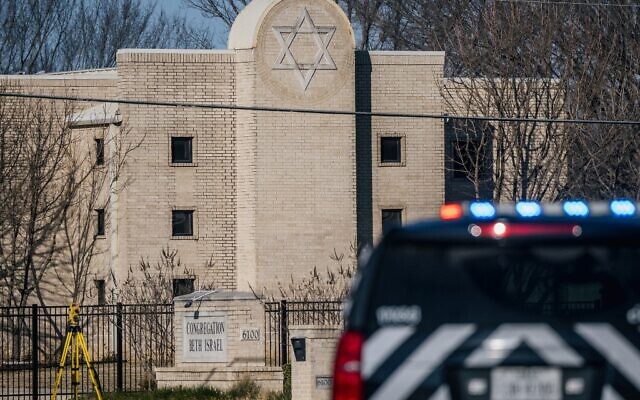
The attack on a synagogue in Colleyville, Texas last Shabbat has left us to yet again process the rise of antisemitism in the US and the world. Parshat Yitro sheds some light on how we can think about this.

Various commentaries question the chronology of events in parshat Yitro. The parsha begins after Amalek waged war on a vulnerable Israel, as they journey through the desert. Next, it is recounted that Yitro (Moshe’s father-in-law) travels from Midian to meet Moshe after hearing about “what God had done for Israel.” Following this, Israel encamped at Har Sinai for Matan Torah. 

The midrash Mekhilta contains a debate regarding the chronology of these events related to the ambiguity of what Yitro heard about. R’ Yehoshua says that he heard about the victory over Amalek. R’ Elazar Hamodai teaches that Yitro heard about the wonders of Matan Torah, which would mean the Torah tells these events out of chronological order. If Yitro arrived later on, why is his arrival placed between Amalek and Matan Torah? Ibn Ezra comments that this is to teach that when we mention the hate-attack by Amalek we should also remember that we have genuine friends and admirers, like Yitro. We must not let experiences of antisemitism jaundice our view of the whole world.

If the true sequence of events was that Matan Torah happened immediately after the war with Amalek, what lessons can be drawn from this? Antisemitism should not define Jewish identity. Rather, it should be built on positive Jewish values, the basis of which is Matan Torah. These interpretations highlight that antisemitism needs to be fought on two fronts: Call out antisemitism but don’t let it distort our view of the world and foster Jewish identity not as a reaction to antisemitism but based on positive Jewish values. Shabbat Shalom – Karen Miller Jackson

Parshat Beshalach: Women Leading the Song?

Parshat Beshalach contains a song of gratitude sung by the Jewish people after the miraculous splitting of Yam Suf. According to the peshat, Moshe led the men in singing Az Yashir, while Miriam led the women in a short song. However, one particular line points to the women’s involvement and leadership in Az Yashir as well.

The verse, “This is my God (zeh Eli) and I will glorify Him,” is interpreted as the peak of revelation for the Jewish people. Rashi interprets the word “this” to mean the people pointed to God’s glory. Rashi continues citing another midrash: the “maidservants saw at Yam Suf what even the prophets never saw,” meaning everyone, even the lowliest maidservant, received this highest level of revelation at Yam Suf. 

Another midrashic tradition highlights the women’s unique ability to recognize God in challenging times. The Talmud teaches that in the merit of the “nashim tzidkaniyot” (righteous women), the Jews were redeemed from Egypt. These women bravely continued to give birth in the face of Pharaoh’s harsh decrees. They birthed their babies in the fields and had faith that God would protect the children. God performed miracles for them and provided angels to nurse them. As a reward for the righteous women’s actions and commitment, their children followed in their footsteps and were the first to recognize and point to God’s presence at the Sea and proclaim “Zeh Eli.” 

This has been a challenging week in Israel, from the tragic loss of chayalim to continued disruptive covid wave. When we read Az Yashir, may it be a tefillah that when we God-willing one day cross to the other side of these uncertain waters, we can follow in the footsteps of the righteous women and children and say “Zeh Eli,” as we recognize God and express gratitude for our redemption. Shabbat Shalom – Karen Miller Jackson
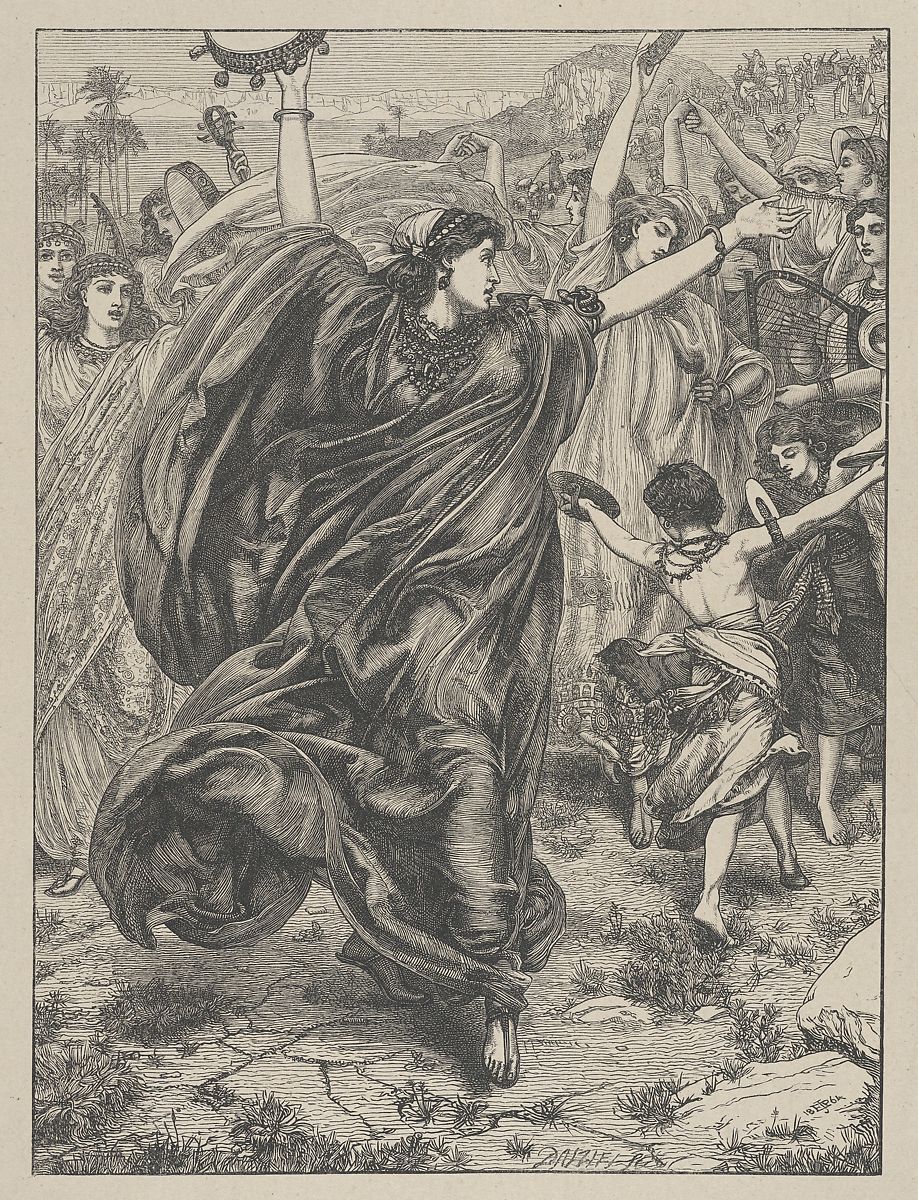
*Miriam, by Sir Edward John Poynter from The Metropolitan Museum of Art


On Welcoming and Accepting

How welcoming should we be to converts? And what approach should we take with young Jews who are ambivalent about their commitment to Torah and mitzvot? One commentary on parshat Bo provides a refreshing perspective on these questions.

Parshat Bo contains the laws of the Passover sacrifice, and the Sefer HaChinuch uses this as an opportunity to explain a principle about keeping mitzvot. When the Torah commands us not to break the bones of the korban Pesach the Sefer Hachinuch famously comments: “after one’s actions, follows the heart.” Meaning, that even if a person has negative thoughts or lack of motivation, by doing good and doing mitzvot – actions or habits, no matter how small and whether or not one understands them – his/her thoughts will be stirred toward positive feelings and enthusiasm toward Torah and faith in God. This relates to the Sefer Hachinuch’s purpose as a halakhic commentary of unknown authorship from 13th century Spain which provides meaning for the mitzvot. In the introduction he writes that one impetus for this commentary was to inspire his son and friends and “awaken their hearts.” 

A similar approach is taken to converts by Hillel in the Talmud, when he is approached by 3 non-Jews who wished to convert but with a significant caveat. One wouldn’t accept the oral Torah, another would convert on the condition that he be appointed kohen gadol and the third wanted the Torah to be taught “on one foot.” Each time Hillel converted them and after they were welcomed they began to observe and learn. This led them to correct their original demands and reinforced Hillel’s decision. 

The message of Sefer HaChinuch and Hillel: sometimes the way to Torah and God is through accepting ambivalence and partial commitment. Just as this was a successful approach historically, it is even more relevant today. Shabbat Shalom – Karen Miller Jackson


Parshat Va’era: Abuse and the Hardening of the Hearts

When someone inflicts widespread, deep and recurring damage on others, are they able to repent? Is teshuvah always open to us, irrespective of the severity and repetitiveness of our actions? Parshat Va’era raises this issue, and the commentators provide answers with particular relevance today. 

Before Moshe goes to Pharaoh the second time, God says explicitly, “I [G-d] will harden Pharaoh’s heart.” How could Pharaoh be punished if he was unable to choose whether or not to sin? Does this mean that for some sinners, the gates of repentance are locked?

The midrash teaches that Pharaoh had free will and the option to repent during the first five plagues. Yet, after he was given ample opportunity to repent and refused to do so, G-d subsequently denied him the possibility of teshuvah. This midrash keys into a subtle difference in language in the Torah. For the first 5 plagues it states “Pharaoh’s heart stiffened,” while after that it states that “God hardened his heart.” Why should someone lose the possibility of repenting? Rambam and Ramban both comment that Pharaoh had free will but then lost it as a consequence of his own actions. Pharaoh’s sins — the abuse and enslavement of an entire people — were so serious that God removed his ability to repent. 

This week, Israeli media reported numerous cases of abusers. Most prominently, Chaim Walder died by suicide after his abuse was made public and judgement was passed in rabbinic court. I couldn’t help wondering whether repentance is possible for those who inflict widespread and recurring damage on others. Perhaps the hearts of sinners are never fully hardened, unless Hashem so decides. 

At the same time, as reports of abuse recur and our initial shock wears off, we must not let our own hearts harden – by becoming indifferent to the victims. We must help past victims, work harder to prevent these crimes and create a better future for our children. Shabbat Shalom – Karen Miller Jackson


What’s in a name?

Parshat Shemot, literally “names,” contains a contrast between characters who are referred to by name alongside others who are unnamed. The parsha opens by listing the names of Yacov’s sons who went down to Egypt. Yet, the Torah then avoids using names when it refers to “a new king,” “a man from the house of Levi,” “daughter of Levi,” “daughter of Pharaoh,” and others. The midwives are referred to both by name (Shifra and Puah) and as “the midwives,” and Bat Pharaoh names the baby, Moshe. With this mixture of naming and anonymity, what can be learned about the value of using names in parshat Shemot?

Here are three approaches. Sforno teaches that the children of Yacov are named because they lived up to their “names” or good character and family values. However, the generation enslaved in Egypt were not worthy of mentioning by name, hence the anonymity. The midrash, in contrast, extracts the opposite message from the beginning of Shemot: one of the main reasons Bnei Yisrael were redeemed from Egypt was that they kept their Hebrew names in exile. The midrash assumes the next generation carried on at least some of the values of Yacov. Lastly, Rashi teaches that naming is an act of love: by listing the names of b’nei Yacov in Shemot, God conveys love for Israel and reassurance of redemption in the face of hardship.

Today, psychologists have shown that using names can be an effective tool for managing emotions. Dr. Daniel Siegel uses the phrase “name it to tame it” — by referring to emotions by name, one can better navigate stressful situations and create closer relationships. How appropriate that parshat Shemot emphasizes the power of naming in the midst of difficult times, as a reminder that referring to others or emotions by name can bring about redemption. Shabbat Shalom – Karen Miller Jackson


Parshat Vayechi: Parenting Different Personalities

What wisdom does Parshat Vayechi contain on parenting different personalities?

As Yacov’s life draws to an end he gathers his sons together. First, Yacov’s intention is to tell them “what is to befall you in days to come.” After speaking to each individual son the Torah says: “these were his parting words. He blessed them, blessing each one with a parting word appropriate to him.” What was the purpose of Yacov’s final speech?

This question perplexed the biblical interpreters especially since some of Yacov’s words sound unlike brachot. Ibn Ezra argues that these were words of prophecy, not blessings. Yet, the harshest words said to Shimon and Levi seem to be about the past, not the future: “Cursed be their anger. I will divide them in Jacob and scatter them in Israel.” Commentaries understand this as rebuke for their previous willingness to kill Yosef and their violent revenge on the city of Shechem after the taking of Dina. 

A psychologically insightful interpretation is offered by the Or Hachaim who writes that in fact all of these words were blessings. Even the harsh words to Shimon and Levi were given as brachot. By scattering them throughout the tribes and giving Levi the peaceful service in the mikdash, this channeled their anger and aggressive tendencies. In fact, Or Hachaim teaches, Yacov blessed each son appropriately for him. Every soul has its own individual potential and Yacov intended his bracha to maximize the potential and strengths of each child. 

Appropriately, parshat Vayechi is also the source of the custom to bless our children on Friday nights. It reminds us that each child is an individual and we continue to bless them in the hope that they internalize our positive values, maximize their potential and channel their middot for the good. Shabbat Shalom – Karen Miller Jackson

*Jacob Blessing the Sons of Joseph by Jan Victors


Parshat Miketz: Light to See

One word appears throughout the story of Yosef and his brothers – הכר – to recognize. The word is first used at the lowest point in their relationship. In   Parshat Miketz however, it marks a turning point in the brothers’ ability to recognize each other’s distress and take steps toward healing.  

First, when Yosef is taken down to Egypt, the brothers deceptively dip his famed coat in animal blood. They then show it to Yacov as evidence of Yosef’s death and ask “haker na?!” “Do you recognize this coat?” Later Tamar says the exact same words to Yehuda, in an attempt to get him to recognize her suffering and take responsibility for her. In parshat Miketz this word is used again, when the brothers come down to Egypt during a famine looking for sustenance. They find themselves standing before Yosef. However, “Yosef recognized (ויכר) his brothers, but they did not recognize (הכירוהו) him.” The midrash Tanhuma interprets their lack of recognition as referring to the past, when the brothers did not recognize Yosef, meaning they didn’t have mercy on him. Yet here, Yosef rises above the past and recognizes them and has mercy on them. 

Interestingly, the same word is used in the Mishna Brachot’s teaching of when one can begin to say the Shema in the morning: “from when one can distinguish (משיכיר) between blue and white…” Perhaps, “הכר” is used here both literally and figuratively. As the new day begins and daylight dawns, we should also look around and be mindful of those who need some recognition and care. This relates to Hanukkah candles as well. Hanukkah is a time to focus on seeing and recognizing, as we increase the light of the candles each night and banish the darkness. May this be a Chag Urim Sameach and Shabbat Shalom! – Karen Miller Jackson