Parshat Balak: Love over Hate

“I have decided to stick to love… Hate is too great a burden to bear.” -Martin Luther King, Jr. 

Love vs. hate, Blessings vs. Curses. These are some of the themes which run through the commentaries on parshat Balak. The midrash notes linguistic and thematic similarities between the stories of Balaam and Avraham. Both Avraham and Balaam demonstrate “zrizut,” enthusiasm for their mission. In the story of akeidat Yitzchak, Avraham rises early and saddles his own donkey to fulfill the word of God. Balaam too, sets out with enthusiasm to do as Balak has commanded, to curse the nation of Israel. The midrash points out that both these men had servants who certainly would have saddled their donkeys for them, but as Rabbi Shimon bar Yochai teaches, regarding Avraham: “Love upends the social order,” and about Balaam: “Hate upends the social order.” Similarly, Pirkei Avot teaches that one can choose to be a student of Balaam and have an “evil eye” or like a disciple of Avraham, with a “good eye.” Balaam was keen to curse a whole people he did not know, while Avraham sought out opportunities to bless others. Perhaps this is why the midrash teaches that at first God was the only giver of blessings in Bereshit, until God gave the ability to bless others over to Avraham and his descendents.

Each day we have an opportunity to look at the world negatively, with a critical eye and spread hatefulness in the world, or with a good and generous eye and share brachot with others. Perhaps that is why we start the day with Balaam’s curse-turned-blessing, “mah tovu,” to remind us of this choice. 

Hatred is on the rise these days. It has been seen between Jews and fellow Jews, in the form of antisemitism and through the recent tragic bloodshed in Chicago. By following the model of Avraham, “the father of many nations,” we can upend the current social status quo by promoting love over hate. Shabbat Shalom – Karen Miller Jackson

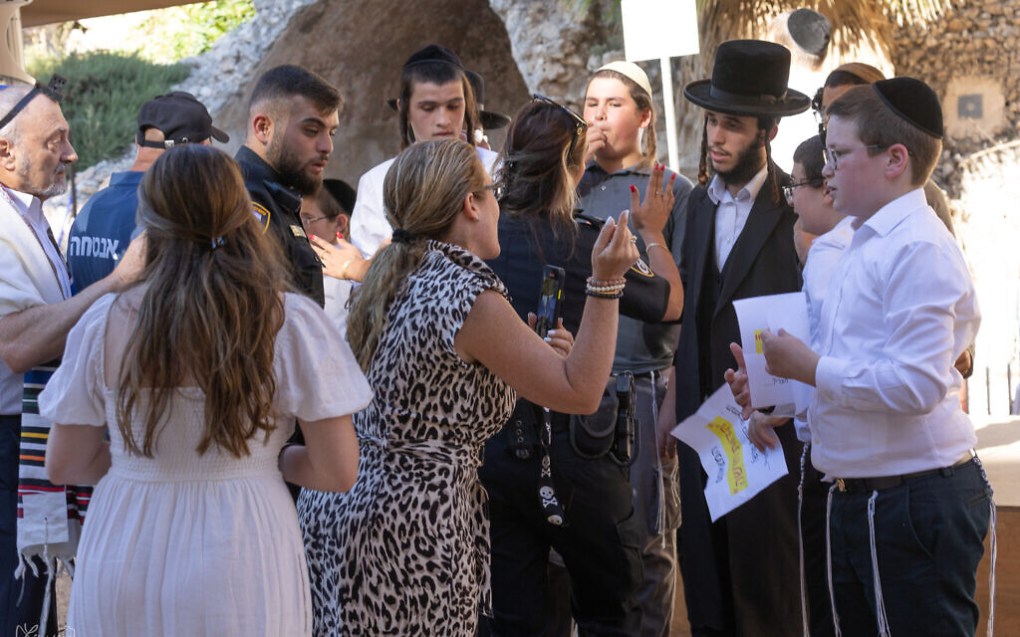
*Ultra-Orthodox youths interrupt a bar mitzvah ceremony at the egalitarian section of the Western Wall on June 30, 2022. (Laura Ben-David)


Terumah: The heart of Jewish life

The mishkan (and later the mikdash) was the heart of Jewish life, where God’s presence resided. The Torah refers to the mishkan as “mishkan ha-edut.” To what does it give testimony?

The midrash Tanhuma suggests 2 possibilities. 1) The mishkan is testimony to the Jewish people’s emunah and acceptance of Torah. This makes sense as this week’s parsha, Terumah, contains the command to build the mishkan which follows Matan Torah. 2) The mishkan was physical testimony to the nations of the world that God forgave Israel after the sin of the golden calf. This reading assumes that the command to build the mishkan took place after the chet ha’egel. Here the mishkan bears witness that God rescinded the decree to destroy Israel after Moshe pleads for Israel. The mishkan signified to Israel and the world, or possibly both, that the brit between Israel and God continues and thrives.

What happens to this testimony after the destruction of the Beit Hamikdash? The Talmudic sages provide two possibilities for where God’s presence may reside in Babylonian exile, where there was no mikdash but there were examples of a “mikdash me’at,” mini-mikdash. Rabbi Yitzchak taught that God resides in the Beit Knesset or Beit Midrash, where the community gathers to pray and learn Torah. Rabbi Elazar taught that the Shechinah resides in the home of his teacher, also filled with Torah. The synagogue, the beit midrash, the home, where Jewish people gather, study and perform mitzvot – these places became the heart of Jewish life in the post-Temple times.

Today too, especially in the face of increasing antisemitism, these centers are an extension of the command to build the mikdash and convey meaning for both Israel and the world. Continuing to study, pray and gather – wherever we can – is the strongest expression and testament of vibrant Jewish life and continual bond between God and Israel. Shabbat Shalom🌸- Karen Miller Jackson


Parshat Yitro: A Deeper Response to Colleyville

The attack on a synagogue in Colleyville, Texas last Shabbat has left us to yet again process the rise of antisemitism in the US and the world. Parshat Yitro sheds some light on how we can think about this.

Various commentaries question the chronology of events in parshat Yitro. The parsha begins after Amalek waged war on a vulnerable Israel, as they journey through the desert. Next, it is recounted that Yitro (Moshe’s father-in-law) travels from Midian to meet Moshe after hearing about “what God had done for Israel.” Following this, Israel encamped at Har Sinai for Matan Torah. 

The midrash Mekhilta contains a debate regarding the chronology of these events related to the ambiguity of what Yitro heard about. R’ Yehoshua says that he heard about the victory over Amalek. R’ Elazar Hamodai teaches that Yitro heard about the wonders of Matan Torah, which would mean the Torah tells these events out of chronological order. If Yitro arrived later on, why is his arrival placed between Amalek and Matan Torah? Ibn Ezra comments that this is to teach that when we mention the hate-attack by Amalek we should also remember that we have genuine friends and admirers, like Yitro. We must not let experiences of antisemitism jaundice our view of the whole world.

If the true sequence of events was that Matan Torah happened immediately after the war with Amalek, what lessons can be drawn from this? Antisemitism should not define Jewish identity. Rather, it should be built on positive Jewish values, the basis of which is Matan Torah. These interpretations highlight that antisemitism needs to be fought on two fronts: Call out antisemitism but don’t let it distort our view of the world and foster Jewish identity not as a reaction to antisemitism but based on positive Jewish values. Shabbat Shalom – Karen Miller Jackson