
Parshat Matot-Masei: Israel and Diaspora Jews — One Family?

Can one truly love Israel from afar? Do Israeli and Diaspora Jews still see themselves as one family? Parshat Matot-Masei speaks directly to these questions.

As Bnei Yisrael prepare to enter the land, a moment of crisis arises: Reuven, Gad, and half of Menashe request to settle east of the Jordan for its rich grazing land. Their request seems practical, yet Moshe responds sharply: “Shall your brothers go to war while you stay here?” It becomes clear that he fears a repeat of the meraglim story and worries these tribes will weaken national resolve. Additionally, when the tribes make this request, they prioritize their cattle before their children. Rashi explains that Moshe subtly rebukes them by reversing the order of their words, teaching that children must always come first. As Rabbi Sacks observed, Jewish communities have endured throughout history by “putting children and their education first.”

In essence, Moshe sets two conditions for living outside the land: they must fight alongside their brothers and foster a strong and positive Jewish identity. The tribes agree, demonstrating unity and commitment. This narrative reminds us that love for Israel carries responsibility—solidarity, support, and a shared destiny.

As I write to you from the U.S., I wonder if, after nearly two years of war and Israel’s remarkable resilience, perhaps it is time to ask what we can do for our Diaspora family. This week, I witnessed a local shul conducting a terror drill and met with communal leaders who expressed both unwavering support for Israel and deep concern over the rise in antisemitism and anti-Zionism. The American Jewish community is fighting a battle too—not only for Israel’s reputation but for its own spiritual survival and sense of security. It was a powerful reminder: we are one people, one family. Now, perhaps more than ever, is the moment to stand with them, as they have stood with us. Shabbat Shalom -Karen Miller Jackson

Parshat Yitro: Between Amalek and Yitro

Since October 7th, Israelis have been battling the pure evil which was unleashed on us and which shattered our feeling of relative security. For Jews around the world, October 7th was a similar watershed moment, as the true face and breadth of antisemitism and anti-zionism was revealed. Given this, it is natural to wonder if we have friends and allies in the world. Parshat Yitro reminds us how to balance this worldview and contains a message about antisemitism and Jewish identity.

The parsha begins after Amalek waged war on a vulnerable Israel, as they journey through the desert. Next, it is recounted that Yitro (Moshe’s father-in-law) travels from Midian to meet Moshe at the mountain of God after hearing about “what God had done for Israel.” Following this, Israel encamped at Har Sinai for Matan Torah. The commentaries see deep connections between these events.

The midrash Mekhilta contains a debate regarding the chronology of these events related to the ambiguity of what Yitro heard about. R’ Yehoshua says that he heard about the victory over Amalek. R’ Elazar Hamodai teaches that Yitro heard about the wonders of Matan Torah, which would mean the Torah tells these events out of chronological order. If Yitro arrived after Matan Torah, why is his arrival placed between Amalek and Matan Torah? Ibn Ezra comments that this is to teach that when we mention the hate-attack by Amalek we should also remember that we have genuine friends and admirers, like Yitro. 

Both readings contain a message for contemporary times. First, antisemitism should not define Jewish identity. Rather, it should be built on positive Jewish values, the basis of which is Matan Torah. Second, we need to call out antisemitism clearly and not ignore it. However, we must not let it distort our view of the whole world. We should embrace and encourage support from our non-Jewish friends, the Yitros of our time. Shabbat Shalom – Karen Miller Jackson

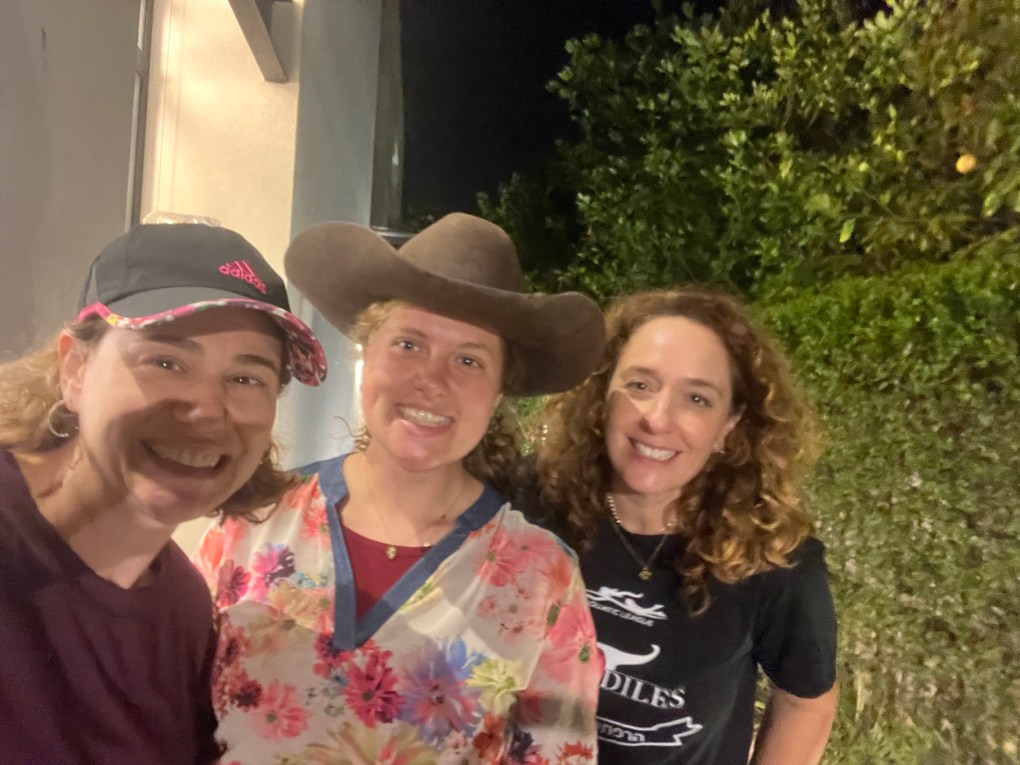
*photo with one of the cowgirls who support Israel.