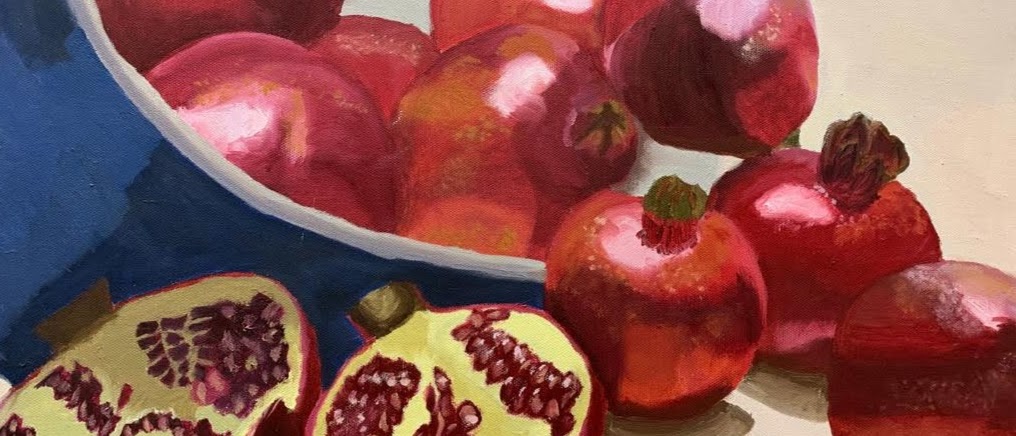

Parshat Balak: A Nation of Lions and Lionesses

“Am Kelavi Yakum”  -Bamidbar 23:24

This verse, a timeless symbol of Jewish perseverance, fittingly became the name of Israel’s war with Iran—in which we truly rose with pride and strength like a lion. Strikingly, in Parshat Balak, Bilaam employs the image of a lion twice, and Rashi offers two very different, yet equally resonant, interpretations.

On the words “Here is a people that rises like a lion,” Rashi comments: “When they rise from sleep in the morning, they show themselves strong as a lion to ‘snatch’ the mitzvot—tallit, Shema, and tefillin—with enthusiasm.” In the next chapter, on the verse “They crouch and lie down like a lion…?” Rashi, citing Targum Onkelos, offers a very different image: “They will be settled in their land in strength and might.” Why such contrasting interpretations?

The second Rashi feels especially resonant in our times. These lions of “strength and might” symbolize national sovereignty and military power. They are the lions and lionesses who have defended the State of Israel, astonishing the world with their resilience, ingenuity, and unwavering determination. Yet Rashi’s first interpretation is no less compelling. Rising each morning to “snatch” mitzvot reminds us that our national strength is rooted in the spiritual courage of generations past—Jews who risked everything just to lay tefillin, whisper Shema Yisrael, and cling to mitzvot with quiet resolve.

This dual image captures the essence of today’s lions and lionesses – heroes who rise each morning with purpose. We see them on the battlefield, in the skies, and behind computer screens. We see them in lone soldiers who leave everything behind to serve their people, in tireless advocates working for the release of the hostages, in the miluim wives holding their families together, and in those who, despite profound grief, wake each day committed to healing and strengthening Israeli society. Shabbat Shalom -Karen Miller Jackson
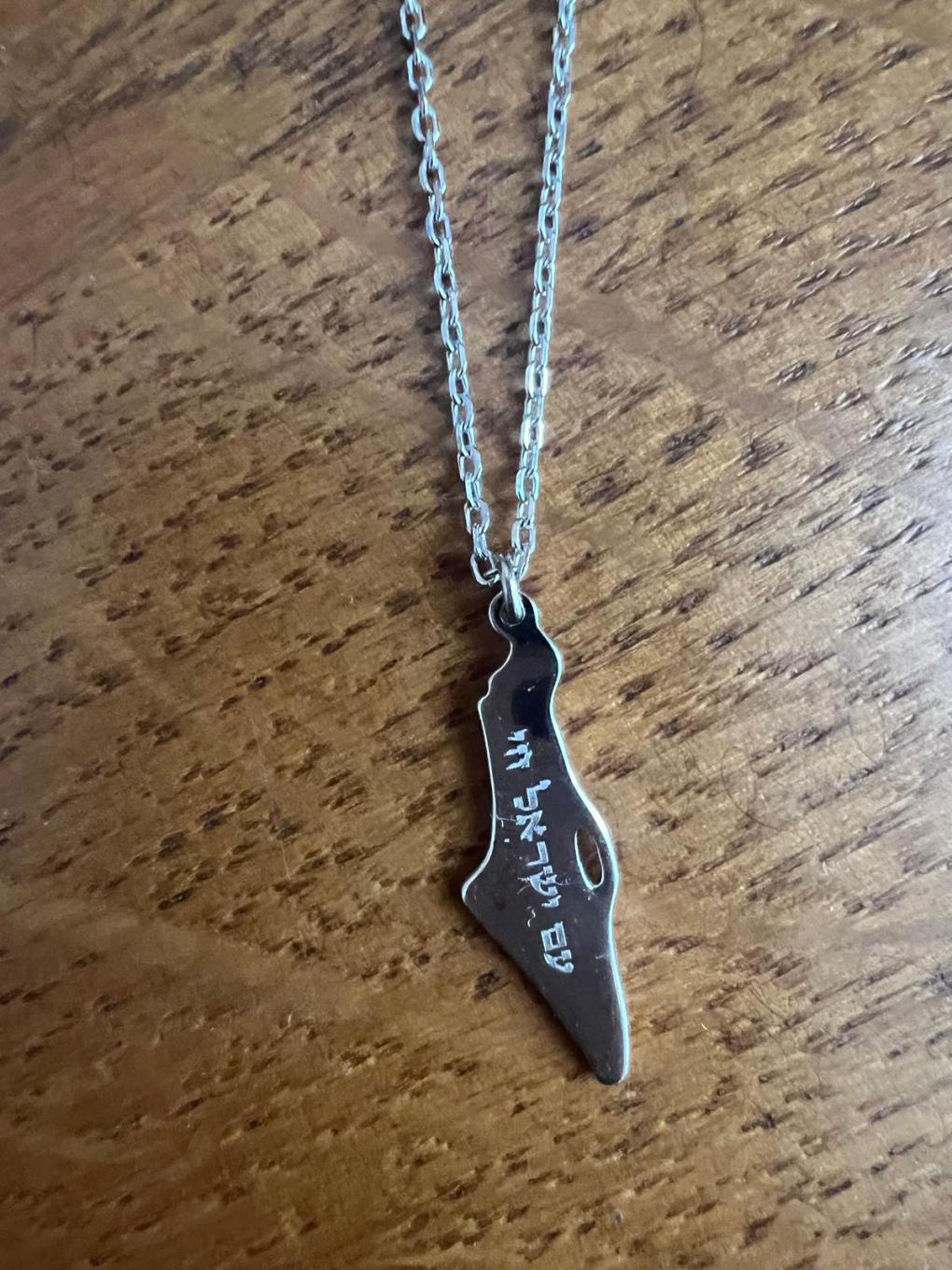
Parshat Balak: Jewish, Zionist and Alone?

Are the Jewish people destined to be isolated and demonized? Has having our own country only exacerbated Antisemitism and Anti-Zionism in the world? One verse in parshat Balak speaks directly to this issue: Can a particularistic Jewish identity coexist with a universalistic relationship with the world?

Bilaam, a non-Jewish prophet, is sent by Balak, king of Moab to curse the Jewish people. Yet, as the Talmud teaches, God turned his attempted curses into blessings. Bilaam, looking down on Bnei Yisrael, says they are “a people that dwells alone; not reckoned among the nations.” This hardly sounds like a blessing. In many ways it encapsulates the repeated struggle of the Jewish people throughout history to preserve their identity, resist assimilation and avoid persecution amongst the nations.

Most commentaries, however, regard this as a blessing for the Jewish people. Rashi teaches that it refers to the future when Israel will dwell safely in our land and not be punished like the other nations. The Malbim and Netziv, writing in Europe post-Enlightenment and amid experiences of Antisemitism, interpreted this verse within their historical context. When Jews are confident in their identity – they dwell in peace. When they assimilate – they are not worthy of being counted. Rabbi Jonathan Sacks provides a transformative reading of this verse: The blessing is for Jews to dwell “apart” – meaning our strength is in our distinctive experience and values. Yet, it is dangerous to remain alone. Through retaining our distinctiveness, we can and should have a positive impact on the other nations: “By being what only we are, we contribute to humanity what only we can give.”

Today, this verse also highlights the delicate balance Israel needs to maintain in the larger world. We need to work with our allies and take their concerns seriously and seek out those who wish to bless us. At the same time, we also need to remain strong and true to our identity and mission as the people of Israel. Shabbat Shalom -Karen Miller Jackson


Parshat Balak: Aspiring in Jewish Spaces

“Ma Tovu,” the tefilla inscribed on the walls of many synagogues around the world and recited by many Jews upon entering shul in the morning, appears in parshat Balak. How do these words represent our aspirations for Jewish spaces? 

Bilaam, a non-Jewish prophet, is sent by Balak, king of Moab to curse the Jewish people. Instead, Bilaam ultimately blesses Bnei Yisrael: “How fair are your tents, O Jacob, Your dwellings, O Israel!” The Talmud (Bava Batra) interprets the fairness of the tents as follows: Bilaam saw that the tents of Israel were set up so that windows and doors did not directly face one another, providing privacy and separation. Perhaps this is why the tents are the tents of Jacob, emphasizing individual tribes and family identities. The second half however, refers to the “klal” the collective of Israel. “Mishkenotecha” – according to the midrash refers to the mishkan, where all of Israel comes together to worship Hashem. The two parts of “Ma Tovu” reflect the importance of preserving our identity within our ohel, with like-minded people, while also not losing contact with the klal, with Jews of different affiliations and ideologies.

Why, however, are these words which focus on Jewish homes, shuls and communities said by Bilaam, a non-Jew who wishes to curse us? The Talmud teaches that it highlights his true intention was to specifically curse the centers of Jewish life, which God then turned into blessings. Perhaps, there is a more positive reason – it encourages us to foster relationships with the non-Jewish world outside our Jewish spaces. Just as Bilaam’s intention to curse was turned to blessing, so too, should we work on shifting negative sentiments into positive views of the Jewish people. 

“Ma Tovu” is a 3-part statement of aspiration for our Jewish spaces: to establish strong Jewish identity, to acknowledge the good in other parts of Klal Yisrael and to foster positive relations with the non-Jewish world around us. Shabbat Shalom -Karen Miller Jackson


Parshat Balak: Love over Hate

“I have decided to stick to love… Hate is too great a burden to bear.” -Martin Luther King, Jr. 

Love vs. hate, Blessings vs. Curses. These are some of the themes which run through the commentaries on parshat Balak. The midrash notes linguistic and thematic similarities between the stories of Balaam and Avraham. Both Avraham and Balaam demonstrate “zrizut,” enthusiasm for their mission. In the story of akeidat Yitzchak, Avraham rises early and saddles his own donkey to fulfill the word of God. Balaam too, sets out with enthusiasm to do as Balak has commanded, to curse the nation of Israel. The midrash points out that both these men had servants who certainly would have saddled their donkeys for them, but as Rabbi Shimon bar Yochai teaches, regarding Avraham: “Love upends the social order,” and about Balaam: “Hate upends the social order.” Similarly, Pirkei Avot teaches that one can choose to be a student of Balaam and have an “evil eye” or like a disciple of Avraham, with a “good eye.” Balaam was keen to curse a whole people he did not know, while Avraham sought out opportunities to bless others. Perhaps this is why the midrash teaches that at first God was the only giver of blessings in Bereshit, until God gave the ability to bless others over to Avraham and his descendents.

Each day we have an opportunity to look at the world negatively, with a critical eye and spread hatefulness in the world, or with a good and generous eye and share brachot with others. Perhaps that is why we start the day with Balaam’s curse-turned-blessing, “mah tovu,” to remind us of this choice. 

Hatred is on the rise these days. It has been seen between Jews and fellow Jews, in the form of antisemitism and through the recent tragic bloodshed in Chicago. By following the model of Avraham, “the father of many nations,” we can upend the current social status quo by promoting love over hate. Shabbat Shalom – Karen Miller Jackson

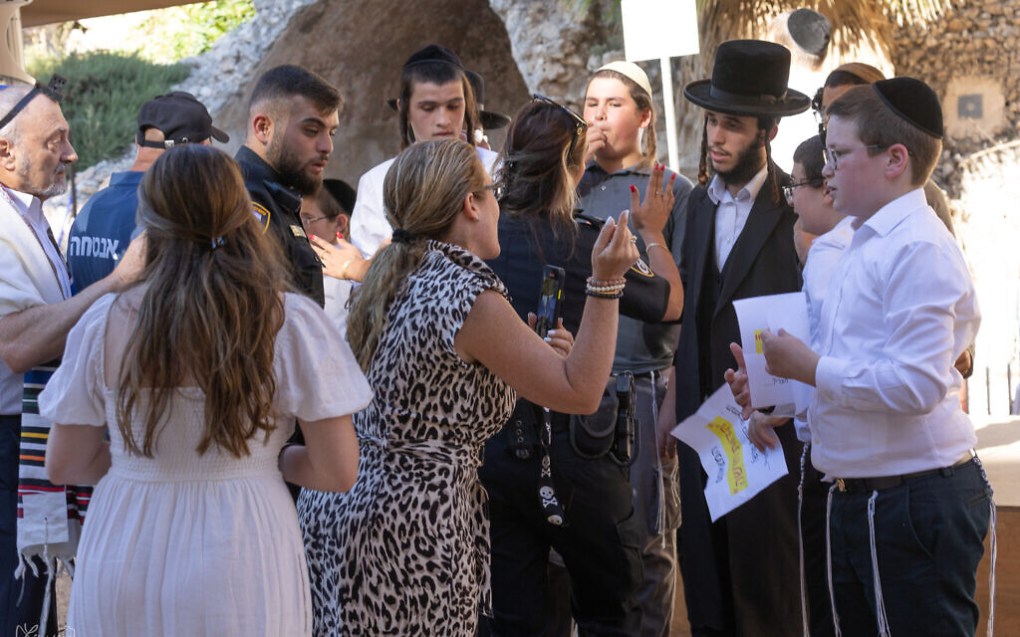
*Ultra-Orthodox youths interrupt a bar mitzvah ceremony at the egalitarian section of the Western Wall on June 30, 2022. (Laura Ben-David)