
Chukat: Transforming Fatigue into Commitment

Parshat Chukat marks a transformational moment for Bnei Yisrael as they begin to find their confidence and commitment as a nation, ready to live in their promised land. 

The parsha, as Ibn Ezra writes, has fast-forwarded to the 40th year of desert wanderings, after the first generation has mostly died out. It is a new generation, but it sounds like the same old complaints: “The soul of the people grew discouraged on the journey…” They said: “Why did you make us leave Egypt to die in the wilderness? … We have come to loathe this miserable food.” They sound tired and “hangry.” Rashi teaches that usually the Torah provides the source of the discouragement (kotzer nefesh), yet here it is ambiguous. Hence, says Rashi, it was the journey itself that caused their dejection. However, it stemmed from an impatient desire to go into Israel already. Similarly, the Ha’amek Davar paints the complaint about food in a positive light: like a baby who is tired of drinking his mother’s milk (manna) and is ready for solid food (produce of Israel).

This pivotal shift is reflected in the continuation of the parsha. First, after complaining, they immediately correct themselves and ask forgiveness of Moshe and God. They faltered but their faith was restored. Second, after the disappearance of the miraculous well which supplied them with water, the people proactively sing for water: “Az yashir Yisrael…” At the splitting of the sea the people sang with Moshe and Miriam, while here they were empowered to sing independently. Third, the people fight two wars, against Sichon and Og, where they rely less on miracles and more on their strength and faith. The Ha’amek Davar writes that Chukat is the beginning of Israel’s transformation, from dependence on overt miracles to experiencing God concealed through nature. 

We too, after nine months, may be feeling fatigue. Let’s make it the kotzer nefesh of commitment and eagerness needed to achieve success and hatzlacha for Israel. Shabbat Shalom -Karen Miller Jackson
Korach: Community with Diversity

Community is an essential part of Judaism. Parshat Korach is about the risks of separating oneself from the community or collective, a theme that remains relevant today.

The opening words allude to Korach’s divisiveness: “And Korach took…” It does not say what he took; it only lists a few of his followers. Ibn Ezra interprets this to mean he took others – anyone with a grievance – into his group. Rashi teaches: He purposely took himself out of the community to make a machloket (conflict). Ramban, citing the midrash, comments that Korach did not “take” anything; rather, his heart took control of him. Korach had been harboring his grievances and waited until Moshe’s leadership was weakened to take action. All of these interpretations highlight Korach’s refusal to engage in dialogue and his inability to find common ground with Moshe and Aaron.

How surprising it is then that Korach’s “edah” (congregation) is the source in the Talmud for the requirement to pray in a minyan (quorum) of ten men. The source for minyan is derived from a verbal analogy: Vayikra states that God should be sanctified “among” Bnei Yisrael. The word among is also used when God instructs Moshe to separate from “among” Korach’s “edah,” as attempts to reason with them were futile. The word “edah” is also used in the story of the spies, from which the number ten is derived for minyan. So the basis for communal prayer is derived from two groups of great sinners. 

Perhaps this was not only a literary connection, but rather a deeper point expressed by the rabbis. Separating and not engaging with diverse perspectives can lead to isolation and extremism. By deriving minyan from such imperfect models, the Sages encourage openness and inclusiveness within communities. This can also serve as a model for broader society—embracing diversity and debate while upholding a shared commitment. Shabbat Shalom -Karen Miller Jackson


Beha’alotcha: The Power and Pitfalls of Speech

Our world has been increasingly dominated by negative speech. Online communication has fueled the inability to engage in dialogue with people who think differently, alongside societal trends of “cancel culture” and “post-truth.” At the same time, the Torah teaches that speech is a gift given only to human beings, as seen in Targum Onkelos, who calls Adam in Bereshit “a speaking spirit.” Parshat Beha’alotcha highlights the power of speech to influence others, for both good and bad.

The parsha begins on a hopeful note. The pinnacle of Bnei Yisrael’s preparation to enter the land is expressed in the words we recite on Shabbat morning, “ויהי בנסוע הארון.” Immediately following this, is the story of the “mitonenim,” (bitter complainers) who spread unrest among the people by “complaining evil in the ears of Hashem.” To make this turning point even sharper, the previous verses are bracketed by two upside down letter “nuns.” Perhaps signaling that from this point on their lives would take a significant downturn.

The Ha’amek Davar teaches that the “mitonenim” start a downward spiral of faith for the generation in the desert. They had the greatest divine providence, yet, the provocateurs spread criticism which culminated with the spies who sowed negativity among the whole nation. Rashi comments that the words, “complaining evil in the ears of Hashem,” indicate that they were looking only for a pretext to provoke and stir up hatred, they had no valid criticisms. Hence, the strong punishment by God.

The potential power and pitfalls of speech is a theme which begins in our parsha and runs through sefer Bamidbar. In contrast, when Moshe recounts the travails of the Jewish people in the desert in the opening of Devarim, he models positive, constructive speech. Rashi teaches that Moshe changes the names of places to protect the dignity of Israel. How can we follow Moshe’s example in the way we communicate today? Shabbat Shalom -Karen Miller Jackson


Bamidbar: On Encampments and Flags

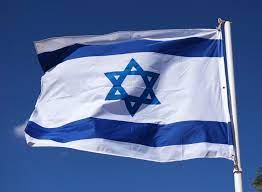
Parshat Bamidbar begins with Bnei Yisrael’s encampments, organized by tribe, each with their own flag. Encampments?! Flags?! Today, these have contributed to polarization, hate and moral distortion in society. How did the biblical encampments differ from what we are currently experiencing?

First, the Torah highlights that Bnei Yisrael should camp each according to his “standard” (diglo), under the “signs” (otot) of their ancestral house. Why this emphasis on tribal identity within the nation? Rashi comments that these unique flags highlight the diversity of the tribes, each one having unique character and potential strengths. The midrash Tanhuma teaches that this layout emphasized the potential for some tribes to influence others. Korah from Kehat was next to Reuven, who they pulled into their attempt to sow discord. The midrash calls this: “woe to the wicked person and woe to his neighbor.” Conversely, Levi, containing Moshe and Aharon, was next to three tribes who became “great in Torah” — “fortunate is the righteous person and fortunate is his neighbor.” Meaning, we are influenced by those we choose to be surrounded by.

The second theme relates to the trait of humility. The journey through the midbar is significant. The desert, says Bamidbar Rabbah, is ownerless space. Hence, the Torah was given in the desert to teach that one needs to humble him/herself to accept it, and it is free and open for all to take part. Shemot Rabbah says the “midbar” is related to “dibbur” (speech). The desert ideally could have been a place for good communication – which requires some humility, the ability to listen and to use speech positively and constructively.

Instead of flags and encampments which promote hate and discrimination, Bamidbar presents us with an ideal – a proud nation whose flags balance unity with diversity, and which encourages constructive communication and seeking positive influences. Shabbat Shalom🇮🇱 -Karen Miller Jackson


Parshat Bamidbar: Diversity within Communities

Parshat Bamidbar describes the layout of the camp of the twelve tribes around the mishkan. This is a springboard to contemplate the value of community, without uniformity. 

The Torah states that Bnei Yisrael should camp according to his “standard” (דגלו), under the “signs” (אתת) of their ancestral house. Rashi comments that these unique flags highlight the diversity of the tribes. The midrash Tanhuma teaches that this layout determined which tribes could influence each other. Korah from Kehat was next to Reuven, who they pulled into their attempt to sow discord. The midrash calls this: “woe to the wicked person and woe to his neighbor.” Conversely, Levi, containing Moshe and Aharon, was next to three tribes who became “great in Torah” — “fortunate is the righteous person and fortunate is his neighbor.” Meaning, we are influenced by our neighbors and those we choose to be surrounded by. Yet, the people encamped together. 

A similar idea arises in the context of communal prayer. The Talmudic source for minyan is based on a verbal analogy in Torah. Vayikra states that God should be sanctified “among” Bnei Yisrael. The word “among” is also used when God instructs Moshe to separate from “among” Korah’s rebellious community (edah). The word edah is also used in the story of the spies, from which the number ten is derived for minyan. The basis for communal prayer is derived from two groups of wrongdoers. Furthermore, Rambam writes that communal tefilla is always heard by God, even when there are sinners among them. The Kuzari takes a more positive approach to diversity within communal prayer. He writes that the strengths and weaknesses of each individual can be balanced out when praying together – the individual is like one limb within the necessary whole of the community, the body. 

These sources encourage openness and inclusiveness within communities and allows for people of varying religious commitments, or who feel less worthy, to feel a part of communal prayer. Shabbat Shalom -Karen Miller Jackson


Bamidbar: Redemptive Counting

The Book of Bamidbar is also called by the rabbis “Chumash HaPekudim,” (loosely) the Book of Numbers, since it contains two lengthy censuses of Bnei Yisrael. Counting people is sometimes viewed positively in Tanach, while other times it is considered a sin. Why is there such a varied view of counting people in Jewish sources? 

Bamidbar opens with God commanding Moshe to count the males who are of age to be soldiers, in preparation for entering the land of Israel. Rashi comments: “Because of God’s love for Israel, He counts them often…” This is in contrast to when King David counts the people. The book of Divrei Hayamim states that God was displeased with this counting. What was the difference? 

In Bamidbar God commands the counting, whereas later, David counted from his own initiative. Moreover, Sforno explains that in Bamidbar they were counted “with names,” highlighting each individual for their unique contribution to the nation. Thinking of people as numbers is dangerous, as we know too well from Jewish history. One last interpretation: Ramban notes that there is a significant difference in language between Bamidbar and Divrei Hayamim. In Bamidbar, the word used for counting is from the root פקד, which can also mean redemption. In the David narrative it is ספר, which only means to count. Ramban explains that counting should be done rarely and only when necessary, for positive, redemptive purposes. David’s counting was not for any good reason.

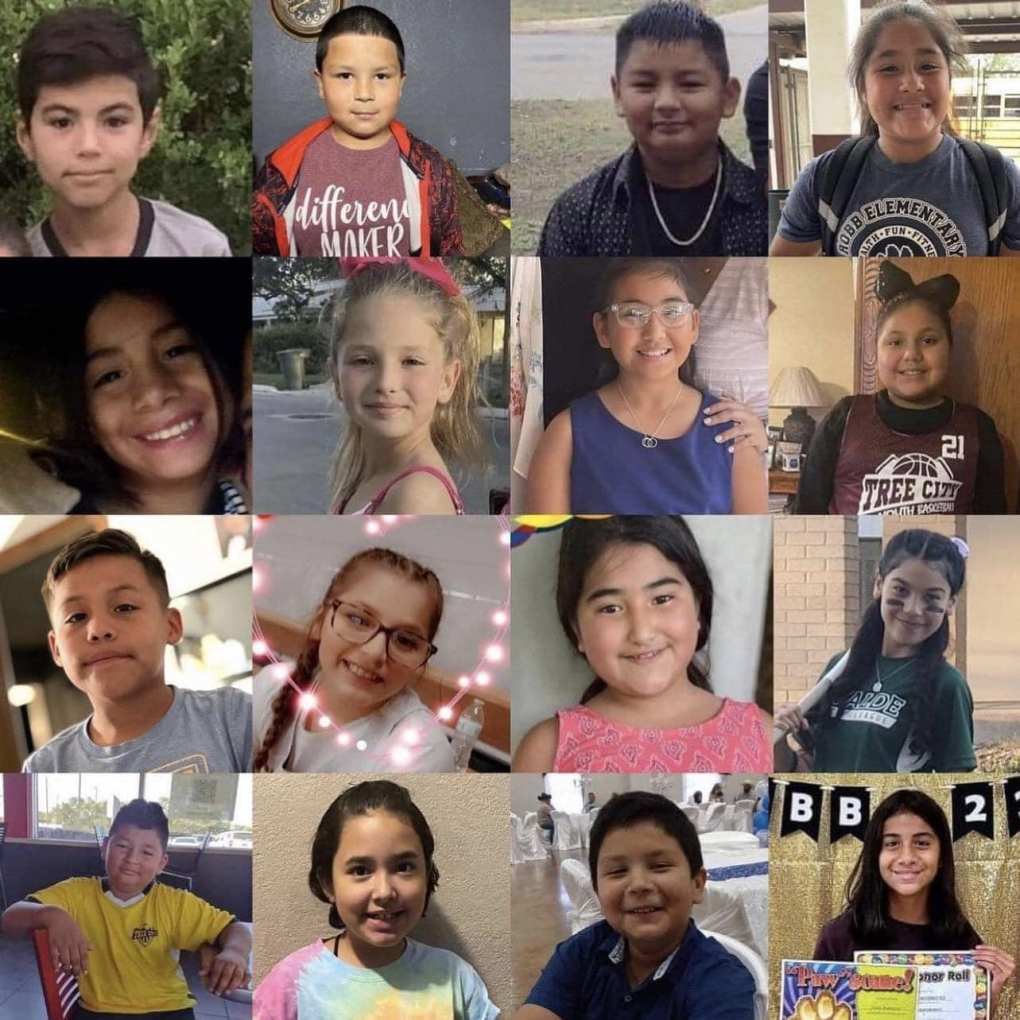
Unfortunately, this is a particularly relevant message, as we try to process the news of so many young lives lost this past week. The parsha is a reminder that each one has a name and is an entire world. May our countings be only for redemptive purposes. Shabbat Shalom and Yom Yerushalayim sameach -Karen Miller Jackson