Behar-Bechukotai: Stand Upright for Israel

This week was a whirlwind: the inspiring bravery of Yuval Rephael, the painful rhetoric of some Israeli leaders, and a tragic antisemitic attack in Washington, DC. One word in Parshat Behar-Bechukotai offers timely insight into how we confront antisemitism and draw the line between legitimate critique and harmful condemnation of Israel.

Vayikra 26 outlines the blessings and curses that hinge on our faithfulness to God’s laws. The blessings include prosperity, military strength, security, peace in our land, and the feeling of God’s presence among us. The curses are lengthy and severe, ending in estrangement from God and our land. One image recurs throughout the blessings: the act of walking, and specifically, walking upright. “If you walk in My statutes,” God says, “I will walk among you.” The blessings conclude with a powerful reminder: God broke the yoke of our enslavement in Egypt and enabled us to “walk upright.” Why this emphasis?

The Hebrew word komemiyut – uprightness – comes from the root k.u.m, meaning to rise or stand. The Targum Onkelos translates it as freedom. Rashi explains it as standing tall, and Rashbam adds, “when the yoke is removed, one can hold their head high.” Sometimes, to hold our heads high, we must remember the long walk of our history, and the dangers of bowing our heads instead of standing tall and proud in who we are.
We pray daily for God to bring us komemiyut l’artzenu – upright to our land. In modern Hebrew, komemiyut connotes sovereignty, and it appears in the very first line of Israel’s Declaration of Independence. As we mark Yom Yerushalayim, may we each find the courage – wherever we are – to walk and speak uprightly in our Jewish and Zionist identity. May the memories of Yaron Lischinsky and Sarah Lynn Milgrim be for a blessing. Shabbat Shalom -Karen Miller Jackson

Parshat Behar-Bechukoti

“Od yavo shalom aleinu” – Mosh Ben Ari

Why does this week’s double parsha, Behar-Bechukotai, contain not one but two blessings for peace and security in the land of Israel? The answers are especially resonant for Israel today. 

God promises that if we follow God’s laws and mitzvot, we will receive God’s blessings. Rashi sees significance in the order of the brachot: produce, prosperity and only then, peace. Rashi teaches that the blessings conclude with peace to teach that shalom is equivalent to all the other blessings. Without peace, other blessings can’t last. Rav Aharon Lichtenstein z”tl notes the similarity between this Rashi and the final mishna in Shas which reads: God has no vessel containing blessing other than peace, as it says, ‘God gives strength to His people; God blesses His people with peace.’ (Tehillim 29)” Concluding the entire Mishna on this note emphasizes that peace is the ultimate blessing, from which all other blessings flow. 

Similarly, the amidah prayer ends with a request for peace in the paragraph “sim shalom” or “shalom rav.” This is how we take-leave of Hashem in tefilla. Our requests for different blessings in the amidah culminates in the most significant one of all – peace for all of Israel. 

Why then does the parsha contain a double blessing for peace when it states: “You will dwell securely in your land,” and immediately following this, “I will grant peace in the land?” The Or ha-Hayyim explains that each of the two brachot for peace has its own purpose. One blessing is for peace between Israel and its enemies and the other blessing is for Am Yisrael in particular, so that there should not be internal divisiveness among the Jewish people and so that God will plant within us a seed of mutual tolerance. Today especially, may God bless Israel with both external and internal shalom. Shabbat Shalom -Karen Miller Jackson

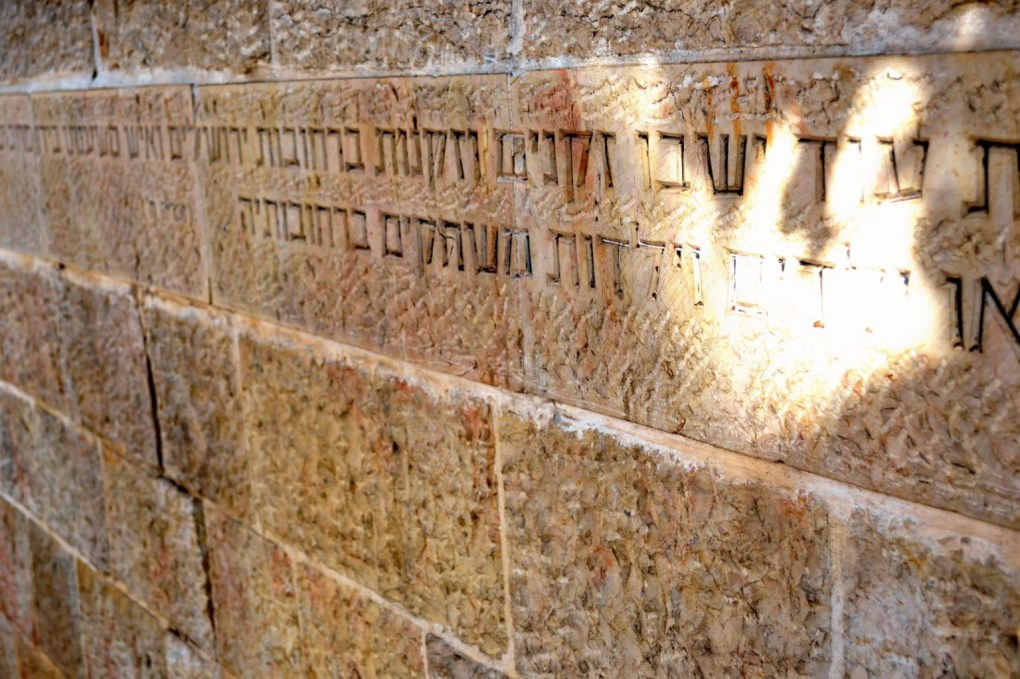
*photo from Jerusalem’s old city https://thekotel.org/he/124644/