

How do we imbue our girls with a sense of confidence and self-worth? How do we teach the value of modesty (inward and outward) while encouraging young women to pursue their talents and dreams? How can women feel more connected to communal prayer? Miriam, in parshat Beshalach, provides a model.
According to Rashi based on the Mekhilta, after the splitting of the sea, Moshe leads the men in singing “az yashir” and Miriam leads the women. Some commentaries understand this to mean that Miriam led the same “az yashir” for the women and the Torah just recorded a shortened version. However, the slight difference in language and other new elements suggests that Miriam’s song was unique and distinct.
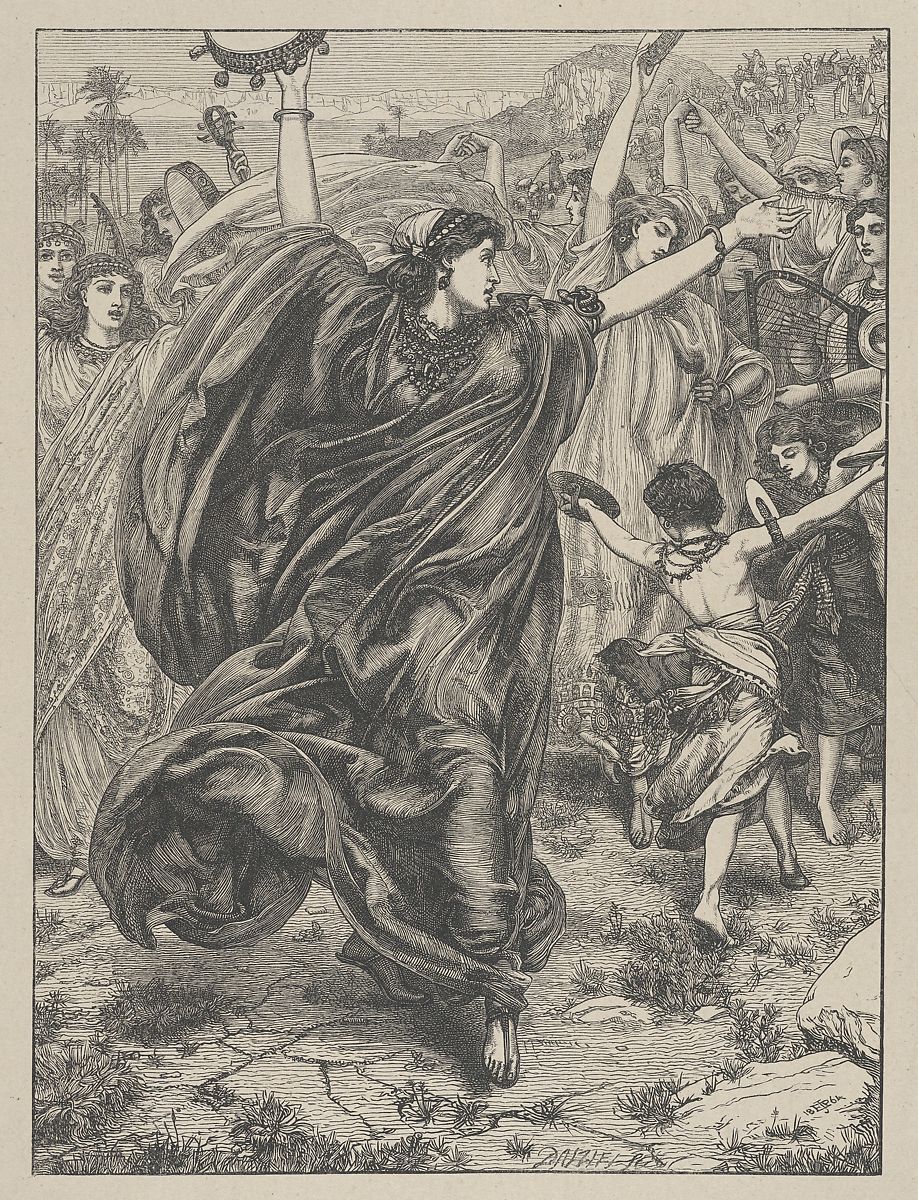
First, Moshe says “I will sing (ashira) to God” and Miriam says “Sing (shiru) to God.” In addition to singing, Miriam took a tambourine in her hand and all the women came out after her “betupim u’vimcholot,” with tambourines and dances. Where did they get musical instruments in the middle of the desert? The midrash Mekhilta teaches that the women, while still in Egypt, believed deeply that God would redeem them, and therefore they prepared tambourines, anticipating that they would be celebrating miracles in future. The nation sang a song of gratitude, but the women added a unique element to the song – tupim u’vimcholot, a musical celebration reflecting deep faith. Miriam inspired the women of her generation to find their voices and express themselves in religious life. Following Miriam’s example, by creating opportunities for girls and women to express themselves, the whole Jewish people will be enriched.
In biblical times, the women’s faith and gratitude were so great that they too wanted to express this in song. Today too, as girls and women are searching for more connection, this model of women alongside men, empowered yet distinctive, can be a source of inspiration in our communities. Shabbat Shalom – Karen Miller Jackson
- image: The Songs of Joy, James Tissot c. 1896-1902, thejewishmuseum.org
 Karen Miller Jackson