V’zot Ha-bracha: This Simchat Torah

“This is the blessing…” Moshe’s final act is to bless the people of Israel in Parshat V’zot Ha-bracha, which is always read on Simchat Torah. Given the emotions surrounding this day, the Torah concludes with a message that feels particularly appropriate.

The midrashim provide two beautiful ideas about the power of blessings: 1) The Sifrei Devarim sees a link to the previous parsha, which was filled with rebuke of Israel, followed by Moshe’s blessings. This teaches that one who gives harsh criticism should always follow it up with words of comfort. 2) The midrash Tanhuma looks back at the giving of blessings in Bereshit which were mixed – some positive, and some highlighting the negative. In contrast, Moshe’s brachot to the people here, were given with an “ayin yafeh,” a good eye, accentuating the positive in others.

One more lesson can be drawn from the final words of the Torah, praising Moshe upon his death: “That Moshe did before the eyes of all Israel.” Rashi comments: “This refers to the fact that his heart inspired him to shatter the tablets before their eyes (following the sin of the Golden Calf),” after which God congratulates Moshe. The Lubavitcher Rebbe asks why, after the blessings and praise, does Rashi bring up this incident which seems disparaging of Israel? In fact, says the Lubavitcher Rebbe, the mention of breaking the tablets is meant positively. It opened up the possibility of teshuva, of renewal for Am Yisrael. Moreover, while the first luchot came from God, the second luchot represents God’s commending Moshe and the people’s aspiring and choosing wholeheartedly to accept the Torah.    

This Simchat Torah let’s hope for blessings for Israel and the Jewish people: That we can give words of comfort, see each other with a “good eye,” and that we carry the memory of all that has broken and find healing and redemption. May it be a Chag Sameach! -Karen Miller Jackson


I also want to thank you for joining me for this year of Power Parsha and for your meaningful feedback. This coming year will focus on “Hope, Positivity and Optimism in the Parsha.” Please think of a friend or two who might like to receive Power Parsha and send them this link! Also if you already receive Power Parsha, no need to sign up again:-) Here is a link to send friends:

To subscribe to “Power Parsha” a short dvar Torah on Hope, Positivity and Optimism in the Parsha via whatsapp: https://chat.whatsapp.com/CKLpCygJaBf20sKbNmRV1u or via email here: https://karenmillerjackson.com/

Naso: Blessing the whole Jewish people

Parshat Naso contains the short but powerful priestly blessing. The commentaries on birkat kohanim highlight its ongoing resonance for the Jewish nation.

Who gives the blessings? One verse suggests that the kohanim have the power to bless the people: “This is how you are to bless Bnei Yisrael…” However, it also states: “put My name on Bnei Yisrael, and I will bless them.” Rashbam explains that God is the source of blessings and the kohanim only offer up prayer. Sefer Hachinuch however, comments that the kohanim are the vehicle through which the bracha is transferred from God to the people. He adds that the people have a role as well – to desire the brachot. According to this, everyone has a role to play in causing brachot to flow. 

There are also many interpretations of the content of birkat Kohanim. Abarbanel, 15th century scholar and statesman, explains the three blessings as corresponding to the three elements which a nation needs to flourish: 1) economic protection and success, 2) wisdom and spirituality, and 3) the blessing of strength and peace, internally and externally. Abarbanel, who tried to prevent the expulsion of Jews from Spain, must have had a keen understanding of what it takes to be a successful nation and the importance of having a homeland for Jews, with an army to defend them. 

The brachot seem to be in ascending order and culminate with the blessing of peace. The Ha’amek Davar teaches that this is because shalom is the basis for all other brachot. This concept holds particular importance today, given the challenges we face. The Jewish people are stronger and better positioned to receive God’s blessings when we appreciate the importance of all three aspects of our nation – sustenance, spirituality, and inner solidarity combined with overall security. Shabbat Shalom -Karen Miller Jackson


Parshat Vayechi: Blessings and Chizuk

There are two scenes of Yaacov blessing his children or grandchildren in parshat Vayechi. Both times we feel Yaacov’s tension and concern about whether or not his descendents will live up to their potential and be a blessing. Both times the next generation rises to accept their destiny.

When Yaacov is about to bless Yosef’s sons, Menashe and Efraim, he suddenly asks, “Mi eleh?” “Whose are these?” Rashi explains – Yaacov saw that in the future some of their descendents would not be worthy of a bracha. Rabbi Benny Lau suggests that this was because they looked Egyptian and Yaacov wondered, how are these related to me? Yet, Yaacov decides to bless them nonetheless and they become part of the twelve tribes. Appropriately, this is the source for the blessing we give our children on Friday nights.

Next, in Bereshit 49, Yaacov calls his sons to gather at his bedside twice. Rashi explains that the repetition is due to the fact that Yaacov wished to reveal the future to them, however the Divine presence departed from him. The midrash elaborates: Yaacov feared that his children might have a “machloket,” or cause to reject God. His children reassured him they have no machloket by saying “Shema Yisrael (Yaacov’s other name), the Lord is our God, the Lord is One.” Yaacov, in his relief, answered “Baruch shem…,” “Blessed be the name of God’s glorious kingdom forever and ever.” Here, the Shema is a sign of children giving chizuk to their parents.

 We continue to bless our children in the hope that they internalize our positive values and maximize their potential. Like Yaacov, we have been blessed with a generation of children who have affirmed their incredible commitment to the Jewish people and who are a source of strength and inspiration for Israel. May the memory of those we have lost be for a blessing. May Hashem protect our soldiers and bring them home victorious soon. Chazak, chazak ve’nitchazek. Shabbat Shalom -Karen Miller Jackson


Parshat Balak: Love over Hate

“I have decided to stick to love… Hate is too great a burden to bear.” -Martin Luther King, Jr. 

Love vs. hate, Blessings vs. Curses. These are some of the themes which run through the commentaries on parshat Balak. The midrash notes linguistic and thematic similarities between the stories of Balaam and Avraham. Both Avraham and Balaam demonstrate “zrizut,” enthusiasm for their mission. In the story of akeidat Yitzchak, Avraham rises early and saddles his own donkey to fulfill the word of God. Balaam too, sets out with enthusiasm to do as Balak has commanded, to curse the nation of Israel. The midrash points out that both these men had servants who certainly would have saddled their donkeys for them, but as Rabbi Shimon bar Yochai teaches, regarding Avraham: “Love upends the social order,” and about Balaam: “Hate upends the social order.” Similarly, Pirkei Avot teaches that one can choose to be a student of Balaam and have an “evil eye” or like a disciple of Avraham, with a “good eye.” Balaam was keen to curse a whole people he did not know, while Avraham sought out opportunities to bless others. Perhaps this is why the midrash teaches that at first God was the only giver of blessings in Bereshit, until God gave the ability to bless others over to Avraham and his descendents.

Each day we have an opportunity to look at the world negatively, with a critical eye and spread hatefulness in the world, or with a good and generous eye and share brachot with others. Perhaps that is why we start the day with Balaam’s curse-turned-blessing, “mah tovu,” to remind us of this choice. 

Hatred is on the rise these days. It has been seen between Jews and fellow Jews, in the form of antisemitism and through the recent tragic bloodshed in Chicago. By following the model of Avraham, “the father of many nations,” we can upend the current social status quo by promoting love over hate. Shabbat Shalom – Karen Miller Jackson

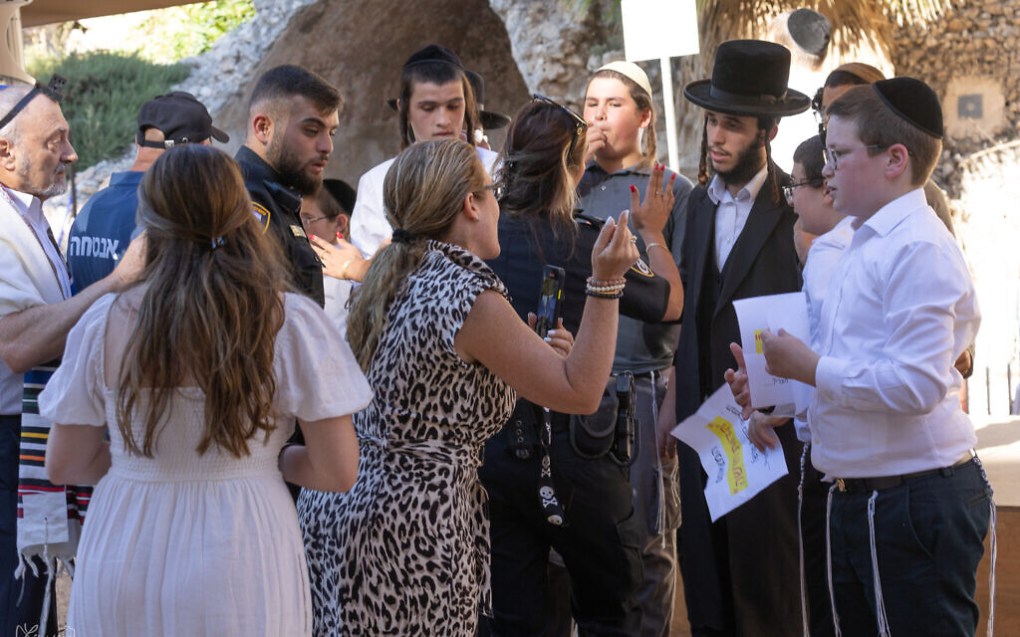
*Ultra-Orthodox youths interrupt a bar mitzvah ceremony at the egalitarian section of the Western Wall on June 30, 2022. (Laura Ben-David)