
Parshat Shoftim: Great Responsibility

“With great power comes great responsibility.” In Parshat Shoftim, societal leaders—whether judges, prophets, sages, or kings—are commanded to pursue justice and adhere to a strict code of ethical behavior. However, there are times when every individual is called upon to engage in introspection and take responsibility for the welfare of society as well.

Devarim 21 describes the mysterious ceremony, done in biblical times, of “eglah arufah.” When a murder victim is discovered outside a city and the identity of the killer is unknown, the elders of the closest city take an unworked heifer and break its neck. Then there is a two-part tikkun. First, the leaders are called upon to take responsibility, which consists of a declaration: “Our hands did not shed this blood, nor did our eyes see it done,” and then a prayer to God: “Absolve Your people Israel whom You redeemed…” 

What is the purpose of the leaders declaring “our hands did not shed this blood”? Rashi, citing midrash Sifrei asks, “do we really think the elders are murderers?” Rather, they mean that they never encountered this victim, and they did not leave a vulnerable person without help. This ritual underscores the value the Torah places on each and every life and the heavy responsibility on leaders to protect their people. Why, then, do they pray that God absolves all of Israel and not just themselves? When an innocent life is taken and justice is not served, the moral deficiency can reverberate in the nearby city and throughout all of Israel. So all of Israel must pause and reflect on what has occurred. This is why the tefillah seeks redemption for the entire nation. 

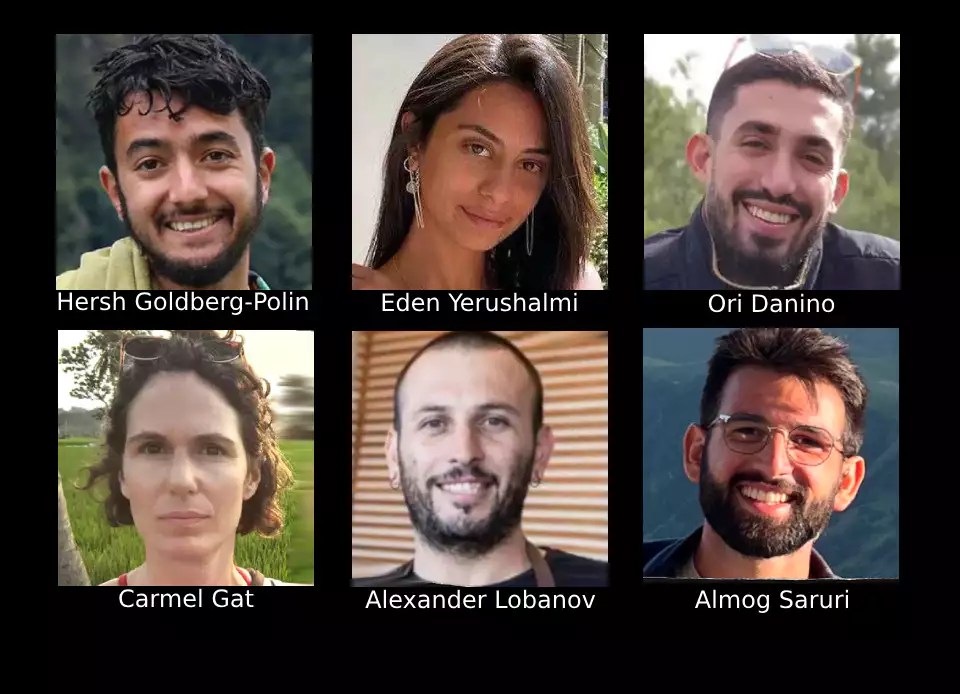
The eglah arufah is no longer practiced, but its core ideas remain relevant—especially this week. May the memories of Alexander, Almog, Carmel, Eden, Hersh, and Ori be a source of societal healing and redemption in our time. Shabbat Shalom -Karen Miller Jackson


Parshat Re’eh: Remembering we are One People

This year, the Jewish people have moved from a place of deep divisiveness to one of remarkable unity. Jewish tradition encourages diversity and debate while also cautioning against the risks of discord and division. Parshat Re’eh reminds us of the importance of maintaining this delicate balance.

“You are children of the LORD your God. You shall not gash yourselves (lo titgodedu) or shave the front of your heads (karha) because of the dead…God chose you… to be His treasured people.” What is the connection between these ancient mourning rituals and our status as God’s children, the chosen people? Rashi explains that the Torah prohibits these forms of mourning since they do not preserve our bodily dignity as the children of God. The Rabbis interpret the prohibition to be something else entirely – lo titgodedu: “Lo ta’asu agudot agudot” – Do not split into different factions. In Jewish law, this is generally applied in the context of communal disputes between rabbinic courts or synagogues in the same community. This issue became more acute with the ingathering of Jews from diverse places to Israel. Poskim discuss how to preserve one’s customs while not splitting into factions.

What is the purpose of this mitzvah? Rashi comments that it should not look like there are two Torahs. According to Rambam it is to prevent great conflict between Jews. Similarly, Yalkut Shimoni interprets the word “karha,” as an allusion to the kind of discord sown by “Korah” – don’t make a “karha” (deep divide) within the Jewish people. Perhaps this is why this prohibition is bracketed by reminders of our status as God’s children, the chosen people.

As Israel considers how to commemorate October 7th, the mitzvah of “lo titgodedu” can serve as a guiding principle – to avoid divisiveness and uphold the unity of our people. Shabbat Shalom -Karen Miller Jackson


Parshat Devarim & Tisha B’Av: Response to Historical Trauma

The book of Devarim is also called mishneh Torah, the “repetition” of the Torah. The retelling of one story in particular – the meraglim (spies) – offers deeper insight into the purpose of this final book of the Torah and serves as a foundation for processing historical traumas in a constructive manner.

The first historical narrative Moshe shares with the second generation in the desert is the story of the spies. As Rav Tamir Granot points out, it is not the Exodus, the revelation at Sinai nor the sin of the golden calf. Why this story? Additionally, there are differences between the way this story is told here and how it is presented in Bamidbar. In Devarim, it is not God who initiates the sending of scouts, but rather the nation. And, it is not the spies, the tribal leaders, who spread criticism of the land, but the people. Rav Granot writes that Moshe chose to retell this story because its lessons were most relevant for this generation. Bamidbar’s version emphasized the failings of the leaders. In Devarim, Moshe emphasizes the people’s responsibility over the faults and failings of their leaders. 

A similar approach was taken by the rabbis in retelling the story of the churban, commemorated on Tisha B’Av. Historical sources and the Talmud contain stories of corrupt priests at the end of the Second Temple period. There is also the tale of enmity between Qamtza and Bar Qamtza and the silence of the rabbis who were with them, which led to the destruction of Jerusalem. Our leaders failed us then and some took responsibility for it. Ultimately, the rabbis teach, it was because of sinat chinam – worthless hatred between the people – that God destroyed the Temple.

Moshe’s imperative to us which resonates so deeply today: We need to hold our leaders accountable and learn from past failings. And yet, blame alone won’t get us very far. The most effective response to historical trauma, both then and now, is a call to responsibility for every member of the Jewish people. Shabbat Shalom -Karen Miller Jackson


Parshat Devarim: Words of Optimism

Parshat Devarim, literally “words,” teaches that the language we choose to use can influence people’s motivation levels and feelings of optimism. 

Devarim opens with naming several places where the nation traveled in the desert. However, these places were never mentioned in the Torah before. Rashi teaches that this was how Moshe rebuked the generation whose parents sinned in the desert. Moshe alludes to these events indirectly, out of respect for Israel. Instead of using words which were shaming and demotivating, Moshe models how to speak words of criticism in a way which is respectful and can have positive outcomes. 

Our choice of words can also have a positive affect on our mindset and well-being. Rabbi Yehoshua b. Levi, in Talmud Pesachim, advises not to use negative language. He bases this on the fact that the Torah teaches the value of speaking positively by the addition of extra letters in the Noah narrative. Rather than calling the animals “impure,” the Torah states, “those that are not pure.” Similarly, Joseph Telushkin writes in his book “Rebbe,” that the Lubavitcher Rebbe believed that carefully chosen words could positively influence the emotional state of ourselves and others. For instance, the Rebbe refused to call a hospital a “beit cholim” (house of the sick) but rather called it “beit refuah” (house of healing).

A similar idea can be found in the discussion about the blessing “Yotzer Or,” said before Shema, in Talmud Berakhot. The bracha is based on the words of Isaiah 45: “Who forms light and creates darkness, Who makes peace and creates evil.” However, the phrase “creates evil” is replaced with a euphemism, “Who creates all things,” says the gemara, so as to not mention the word evil in tefilla. 

As we mourn the Temple which was destroyed over baseless hatred, parshat Devarim and the “Yotzer Or” blessing are reminders that speaking respectfully and positively spreads ahavat chinam and optimism in our world. Shabbat Shalom -Karen Miller Jackson


Parshat Devarim: Positive Words

Parshat Devarim, literally “words,” teaches that the language we choose to use can influence people’s motivation levels and feelings of optimism.

Devarim opens with naming several places where the nation traveled in the desert. However, these places were never mentioned in the Torah before. Rashi teaches that this was how Moshe rebuked the generation whose parents sinned in the desert. Moshe alludes to these events indirectly, out of respect for Israel. Instead of using words which were shaming and demotivating, Moshe models how to speak words of criticism in a way which is respectful and can have positive outcomes.

Our choice of words can also have a positive affect on our mindset and well-being. In masechet Pesachim Rabbi Yehoshua b. Levi advises not to use negative language. He bases this on the fact that the Torah teaches the value of speaking positively by the addition of extra letters in the Noah narrative. Rather than calling the animals “impure,” the Torah states, “those that are not pure.” Similarly, Rabbi Joseph Telushkin writes in his book “Rebbe,” that the Lubavitcher Rebbe believed that carefully chosen words could positively influence the emotional state of ourselves and others. For instance, the Rebbe refused to call a hospital a “beit cholim” (house of the sick) but rather called it “beit refuah” (house of healing).

As Tisha B’Av approaches, we learn that the Beit Hamikdash was destroyed because of sinat chinam (baseless hatred). Moreover, the enmity between Qamtza and Bar Qamtza and the silence of the rabbis who were with them led to the destruction of Jerusalem. Parshat Devarim and Tisha B’Av are reminders that speaking respectfully and positively spreads ahavat chinam and optimism in our world. Shabbat Shalom🌷 -Karen Miller Jackson