Parshat Va’era and Yuval Raphael

What common message emerges from Yuval Raphael’s story and the Exodus?

Parshat Va’era begins with the declaration: “I am God…and I will remember My covenant with My people.” This is followed by the ten plagues,  transforming Bnei Yisrael’s circumstances and revealing the hand of God to them and Pharaoh. Before this, the Israelites endured slavery and suffering in Egypt, for which the Torah provides no explicit reason. Commentators offer differing perspectives on this.

During the “covenant between the pieces” in Bereshit, God tells Avraham about the future enslavement and redemption of his descendants. Nechama Leibowitz notes that while their descent to Egypt was certain, the children of Jacob had a choice about how they would live when in Egypt. They chose to settle deeply there, as reflected in the term “va-ye’ahazu bah” (they procured property). Therefore, some interpreters suggest their suffering was a consequence of neglecting their traditions and destiny.

Others view the experience not as punitive but instead as a source of educational and developmental lessons. The Torah frequently commands empathy for the stranger, rooted in our memory of being strangers in Egypt. Leon Kass writes that this internalization of the experience of suffering is transformed into a core value of our national identity—compassion for the vulnerable. The Ha’amek Davar views the Egyptian experience as refining and strengthening the national character of Israel, building our resilience for future challenges.

Yuval Raphael, a Nova survivor, endured unimaginable trauma. Yet, like so many Jews in history, she found hope and strength, transforming tragedy into a source of purpose. This resilience reflects the enduring Jewish ability to turn suffering, from Egypt through today, into growth and hope. Shabbat Shalom -Karen Miller Jackson

  • photo from Jerusalem Post

Shemot: Pinning Our Hope on Am Yisrael

Reading parshat Shemot, with its emphasis on names and identity, during this momentous week, offers both solace and hope. 

The Ramban calls the book of Shemot “The Book of Redemption.” Even before the oppression begins, the keys to redemption are already present. The opening verse repeats the names of the children of Jacob who went down to Egypt, even though these names were already listed at the end of Bereishit. Rashi explains that God lists them again to “show how dear they were to God — like the stars, which God brings out and in by number and name.” This highlights the balance the Jewish people must maintain between their individual and collective identities, even when they do not always align. Rav Amital zt”l, a survivor of the Shoah, writes that being part of Am Yisrael means balancing the “number” — our collective purpose — with the “name” — our unique individual identity and beliefs.

Yet, the story continues with an increase in number but not in name. While the children of Israel proliferate greatly in number, their individual names are absent. They are referred to as “midwives,” “a man from the house of Levi,” “daughter of Levi,” and “daughter of Pharaoh.” Biblical interpreters see this shift between named and nameless figures as a reflection of the strengthening or weakening of Jewish identity in exile. A powerful midrash teaches that one of the main reasons Bnei Yisrael were ultimately redeemed from Egypt was that they preserved their Hebrew names. This act of remembering — holding fast to our names, values, and aspirations — has been a cornerstone of Jewish survival and resilience.

The coming weeks will be filled with emotional reflections on both numbers and names. “Ve’eileh Shemot” reminds us to honor the names of the individual heroes we have lost as we try to move forward, into what we pray will be a time of redemption for the Jewish nation. Shabbat Shalom -Karen Miller Jackson


Vayakhel: What needs to happen for Haredim to join the IDF

“Ask not what your country can do for you – ask what you can do for your country” -John F. Kennedy

Parshat Vayakhel emphasizes the generous contributions to the Mishkan, from everyone – men and women – to the point that Moshe needs to stop them from donating. Deeper analysis of the Torah’s description of contributing to the Mishkan can shed light on the current debate about who should be contributing to defending Medinat Yisrael. 

The Torah emphasizes the generosity of the donations. Moshe instructs the people to “take gifts from among you,” and then encourages everyone, whose “heart is so moved,” to bring gifts to the Mishkan. The Hebrew root n.d.v (to donate) appears numerous times, and as Rabbanit Sharon Rimon points out, the word “lev” (heart) appears fourteen times in this section. The Ramban interprets this verse as referring only to voluntary gifts. This highlights that the Mishkan, the center of Jewish life, was built with heart and a spirit of collective giving. 

Yet, we also know that there was an aspect of contributing to the Mishkan which was mandatory for all. The language of “take” implies that everyone had to give gifts to the Mishkan. Elsewhere, the people are commanded to each give a half-shekel toward the tabernacle, a required tax. So which is it then? Voluntary or mandatory? The Kli Yakar says that the words “take gifts” refer to both required giving (the half shekel) and voluntary giving, which were combined to build the Mishkan. 

The idea that contributions to the Mishkan were a combination of mandatory and voluntary was echoed in our nation’s response to October 7th. Our heroic soldiers were called up with a command, a “tzav 8.” And we also witnessed an unparalleled nedivut (generosity) of heart and spirit, of most others giving what they could. This is what Rabbi Sacks zt”l called a nation built on a covenant of “We,” – “bound by a sense of shared belonging and collective responsibility.”

As we face a need to increase the numbers of soldiers needed to defend our country, how can we deepen the conversation to help foster this sense of national loyalty alongside Zionist pride, so that all Israeli citizens feel they are a part of the “We,” and can embrace the call to serve the Jewish nation? Shabbat Shalom – Karen Miller Jackson

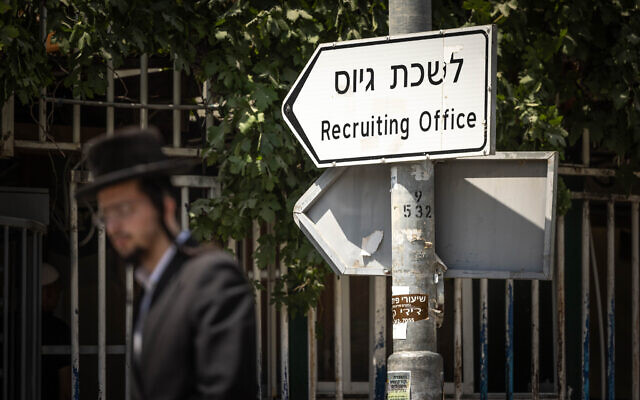
Photo credit: Utra-Orthodox Jews walk outside an army recruitment office in Jerusalem, August 16, 2023. (Chaim Goldberg/Flash90) From TOI News site.


Parshat Ki Tissa: Talmudic thoughts on Suffering

How can we relate to unexplainable suffering? Like many of us, the Talmudic Sages grappled with this most difficult of theological questions and found insights in this week’s parsha.

Parshat Ki Tissa describes one of the greatest failings of Bnei Yisrael – the sin of the golden calf, followed by Moshe’s pleas and prayers, and God’s benevolent forgiveness. Within this narrative, the Torah describes Moshe’s unusual and surprising request of God in Exodus 33: “Let me know Your ways,” and, “Show me Your glory.” God gives Moshe a view of His “back” and His “glory.” However, even Moshe is not given the ability to fully see God’s “face” and comprehend God’s essence. What is Moshe asking of God exactly? The Sages interpret this scene as Moshe asking God how to understand the problem of theodicy in this world, of why the righteous suffer. For them, this was the most difficult and burning question. 

Talmud Berakhot contains various approaches to suffering. Some rabbis believed suffering should prompt introspection and welcomed suffering as a sign of God’s love. Yet, it also shares three stories about Rabbi Yochanan and his students discussing their suffering in which they clearly and repeatedly protest the notion of sufferings of love: “I do not welcome suffering nor its reward.” This was especially relevant to Rabbi Yochanan, who lost ten children. He and his students find some healing by lifting each other up and practicing compassion.  

In the biblical world, suffering was understood to be a direct result of transgression. Rabbinic theology however, provides various approaches to suffering with more resonance for our time. It encourages us to examine our actions for the better, yet, it also sees potential dangers and futility in attempting to understand or explain suffering. Just as Moshe could not fully know God, some suffering is truly beyond our comprehension and inexplicable. Rabbinic sources provide us with space to grapple with this challenge, and hopefully, steps toward some healing. Shabbat Shalom -Karen Miller Jackson


Parshat Bo: Enduring Faith

Did the Exodus from Egypt take place during the day or night? The commentaries on parshat Bo find meaning in this ambiguity. It is a symbol of enduring faith through difficult times.

First, God promises to bring the plague against the first-born at around mid-night (“k’chatzot”) after which the people would leave Egypt. Then, God’s promise is fulfilled in the middle of the night (“b’chatzi halayla”). Pharaoh, in response to the suffering, commands Moshe to take the Israelites out in the night. However, Moshe had instructed the people not to leave their homes until the morning. It also states that God took them out of Egypt on “that very day,” understood by some commentaries to mean in full daylight. Light is associated with redemption in rabbinic thought. Bereshit Rabbah understands the words “And there was light,” from the creation story, as “corresponding to the book of Exodus in which Israel emerged from darkness to light.” Daylight brings a new day and with it the potential to reaffirm our faith in God and experience redemption. 

Ramban resolves the ambiguity of the timing of the Exodus as follows: B’nei Yisrael left Egypt in the daytime, so all could see, but the process of geula began at night. Mid-night then is a turning point, when the seeds of potential for redemption begin. This association of midnight as the beginning of the redemption process is reinforced in the midrash about King David, who would learn Torah until midnight (for protection) and from then on sing songs of praise to God. According to this reading, redemption begins even while we experience darkness, when we can’t see clearly or know when the light will begin to rise.

Similarly, Talmud Berakhot praises those who conclude the Shema with sunrise and “juxtapose redemption to prayer.” The image of preparing for redemption from midnight and of standing in prayer before sunrise has carried the Jewish people through periods of darkness before and will carry us through the challenges we face today. Shabbat Shalom – Karen Miller Jackson


Parshat Va’era: Recognizing Evil

Parshat Va’era marks the beginning of the redemption from Egypt. Before, the Jews suffered under Pharaoh’s harsh decrees, now Pharaoh begins to suffer. Before, God seemed hidden. Now, God’s presence was revealed and redemption promised. These chapters resonate today, as the world questions who is the perpetrator of evil and suffering and as we try to breathe and remain strong during difficult times. 

Nechama Leibwitz points out that God’s name is absent from the first two chapters of Shemot. This hester panim (hiddenness) which felt like distance and abandonment, is followed with Va’era, God’s (re)appearance. God even reveals a previously unknown name or characteristic to Moshe. Yet, the people struggled to believe, due to a broken spirit (kotzer ruah) and difficult labor (avodah kasha). Rashi defines this “broken spirit” as a difficulty taking deep breaths due to deep anguish. The midrash teaches that they were feeding off of Moshe’s concerns and doubts. 

Following this, God brings the plagues and proclaims: “I will harden (aksheh) Pharaoh’s heart, that I may multiply My signs and marvels in the land of Egypt.” (Shemot 7:3) The commentaries debate the purpose of the plagues and the hardening of Pharaoh’s heart. Rambam brings Pharaoh as a rare example of evil and cruelty which leads to the loss of free will. Sometimes evil is so terrible it can only be punished and eradicated. Another view is that the plagues were brought to demonstrate God’s wonders and truth. Rashi teaches that this was necessary to inspire the faith of the trodden spirit of the Jewish people. The midrash Sifre says it was meant to bring God’s light and truth to the whole world.

Va’era has two relevant messages for this week: 1) Try to overcome the kotzer ruah we may naturally be feeling after so much loss. 2) There will be times when others can’t recognize and call out real evil, and with God’s help we will continue to spread our light and truth to the world. Shabbat Shalom -Karen Miller Jackson


Shemot: Remembering Our Name

What’s in a name? Parshat Shemot lists the names of Yaacov’s sons who went down to Egypt. Yet, it also refers without names, to “a man from the house of Levi,” “daughter of Levi,” “daughter of Pharaoh,” and others. Biblical interpreters view the names and namelessness as a reflection of the strengthening or weakening of Jewish identity, particularly in the diaspora.

Sforno comments that the children of Yaacov are named because they lived up to their “names” or good character and family values. However, the generation enslaved in Egypt were not worthy of mentioning by name, hence the anonymity. The midrash, in contrast, teaches that one of the reasons Bnei Yisrael were redeemed from Egypt was that they kept their Hebrew names while in exile. The midrash assumes the next generation carried on the traditions of Yaacov. Similarly, some commentaries say Moshe is an Egyptian name, given to him by the daughter of Pharaoh, yet in Hebrew it alludes to his future role as savior of Israel. Others insist that it is a Hebrew name which was given to him by his mother and kept by Pharaoh’s daughter. A Hebrew name symbolizes Moshe’s future embracing of his identity and traditions. 

When European Jews moved to Israel, some Hebraicized their names to break from their past diaspora identity and highlight their Israeli-ness. Dara Horn has written about the “Ellis Island myth.” She argues that Jewish immigrants to America changed their names to sound more “American” and claimed that they were forced to change their names by officials at Ellis Island. This too highlights the connection between names and retaining or losing one’s identity. 

The book in which the Jewish nation is born is appropriately called Shemot, names. This was a watershed moment for the generation in Egypt and at various times and places in Jewish history. Today too, Shemot is asking us to stand strong and answer to the name of our nation. Shabbat Shalom -Karen Miller Jackson


Parshat Bo: Light at Night

Did the Exodus from Egypt take place during the day or night? Why is parshat Bo so ambiguous regarding the timing of this seminal event in the Torah? 

First, God promises to bring the plague against the first-born at around mid-night (“k’chatzot”) after which the people would leave Egypt. Then, God’s promise is fulfilled in the middle of the night (“b’chatzi halayla”). Pharaoh, in response to the suffering, commands Moshe to take the Israelites out in the night. However, Moshe had instructed the people not to leave their homes until the morning. It also states that God took them out of Egypt on “that very day,” understood by some commentaries to mean in full daylight. This tension in the verses – night or day – is also expressed in mishna Berakhot in discussing the mitzvah to remember yetziat mitzrayim. Rabbi Elazar ben Azarya teaches that while there is a clear biblical source to remember the Exodus during the day, he was unsure of the source for remembering it at night, until Ben Zoma enlightened him. Hence, the Talmud teaches, the third paragraph of Shema, “Vayomer,” is said at night as well as in the morning, since it contains within it remembrance of the Exodus.

Ramban resolves the ambiguity of the timing of the Exodus as follows: B’nei Yisrael left Egypt in the daytime, so all could see, but the process of geula began at night. Mid-night then is a turning point, when the seeds of potential for redemption begin. This association of mid-night as beginning of the redemption process is reinforced in the midrash about King David, who would learn Torah until mid-night (for protection) and from then on sing songs of praise to God. 

Recounting the Exodus – specifically in tefilla of day as well as night – testifies to the Jewish people’s ability to flourish through periods of light and endure throughout times of darkness. Shabbat Shalom – Karen Miller Jackson