Parshat Noah: Windows & The World

Why does God command Noah to build a “tzohar” (opening) on the ark? The tevah was meant to enclose and protect those inside so they could survive the flood. What purpose, then, would an opening serve? The interpretations of the tzohar provide a model for how we might view our own homes and places of prayer today.

The word tzohar appears only once in Tanach, making it difficult to define. Rashi, citing midrash, offers two explanations: (1) a window, or (2) a precious stone that emitted light. Both explain how Noah and his family—confined in the ark for a year—had light and could distinguish between day and night. Yet the difference is telling: a stone brings light inward but offers no view outward, while a window lets light in and allows one to look out and connect with the world beyond. Hizkuni identifies this tzohar as the very window through which Noah sent the raven, a moment marking his first reconnection with the outside world. 

Windows also carry symbolic meaning in our prayer spaces and homes. Talmud Berachot, based on Daniel, teaches that one should pray in a bayit with windows—a law later codified in halakha. Some rishonim explain that natural light or a view of the heavens enhances kavanah (concentration). Rav Kook adds that a person who has the most heartfelt  prayers, but is disconnected from the outside world is not achieving the full purpose of tefilla. By davening in a room with a view of the outside, a person will be inspired to positively influence and do good in the world s/he inhabits. 

Like Noah’s tevah, our homes and shuls are a space to protect and nurture ourselves, to build up our faith and inner light. Yet if we never look outward, our spiritual lives remain incomplete. The window reminds us that faith is not only about shelter, but about shining light into the world beyond. Shabbat Shalom -Karen Miller Jackson

Parshat Vayera: Remaining Hopeful

In Parshat Vayera, amidst the backdrop of sinfulness and destruction, Avraham stands out as a beacon of optimism and faith in human goodness. The interpretation of this story sends a strong message to his descendents about the power of prayer and not giving up hope.

Avaraham eagerly welcomes visitors (angels) and receives God’s blessing and promise that he will have a child with Sarah and become a great nation. As Avraham sees his guests off, the Torah shifts to the situation in Sodom, underscoring the stark contrast between the kindness of Avraham and the cruelty of Sodom. Yet, before Sodom’s destruction, God chooses to share His intentions with Avraham, asking, “Shall I hide from Avraham what I am about to do?” Why does God need to inform Avraham of His intentions? Similarly, a few verses later, just before Avraham pleads with God, hoping that there were a few righteous people left in the city, we hear: “Abraham remained standing before the Lord.” Bereshit Rabbah teaches that actually, it was God who waited for Avraham, inviting him to intercede. However, the Scribes revised the verse to appear less irreverent. Both these verses imply that God encouraged Avraham to protest and pray, despite the seeming hopelessness and dire state of Sodom.

A similar idea is seen in a midrashic story about King Hezekiah in Talmud Berakhot. Hezekiah prays despite Jeremiah’s prophecy that he will soon die, asserting, “I have received a tradition from the house of my father’s father: Even if a sharp sword rests upon a person’s neck, he should not prevent himself from praying.” Hezekiah prays and holds onto hope, even in the bleakest and most hopeless of times. 

Amidst our war-weariness, the rise of antisemitism across the West, and the long wait for the return of the hostages, we can draw strength from Avraham and Hezekiah, who teach us never to give up hope. Shabbat Shalom -Karen Miller Jackson


Kedoshim: An Antidote to Hate

Parshat Kedoshim contains one of the most important chapters in the Torah according to the commentaries. It also contains mitzvot which are at the forefront of contemporary society and the challenges we face.

After focusing on the holiness of the mikdash and kohanim, Vayikra 19 marks a revolutionary shift where everyone is commanded: “Be holy.” Midrash Sifra teaches that this was one of the sections read out to the whole community during hakhel, emphasizing the potential for all to infuse their lives with holiness. Moreover, it lists many interpersonal mitzvot as the path to holiness. One of these mitzvot – “love your neighbor as yourself,” – was considered by Rabbi Akiva to be the overarching rule of the Torah.

New challenges have arisen accentuating the importance of these mitzvot which strive to enhance human relationships. Smartphones and social media have made it easy and trendy to criticize others publicly. This has led to hurtful and alienating behaviors such as virtue signaling, shaming and canceling. More sinisterly, it has also fueled the spread of fake news, hatred and extremism. One mitzvah in particular speaks to this challenge: “You shall not hate your brother in your heart, rebuke your kinsman, but incur no guilt because of him.” This verse seems to support criticizing others. Yet, the Talmud Arachin limits the scope of “tochecha,” when it teaches that the criticism must stop if it results in public shaming. The sages themselves acknowledge that most of them were incapable of receiving or giving rebuke effectively as it was meant to diminish hatred in one’s heart.

What is the antidote to the spread of falsehood, hatred and anger? Frank Bruni writes that in this era “overwhelmed by grievance,” we need more humility. Even more, Kedoshim provides a moral and practical framework for calling out injustice from a desire to spread holiness instead of hatred. Shabbat Shalom🇮🇱 -Karen Miller Jackson


Pekudei: Seeking Order

Parshat Pekudei marks the completion of building the mishkan, a project which is described in detail in the second half of the book of Shemot. Why is so much space given to the order of the mishkan and what relevance can it have for our lives today? 

Many scholars have pointed out the literary and thematic similarities between the creation of the mishkan and the creation of the world. This includes repetition of words such as “seeing,” “completing,” “blessing,” and “sanctifying” the work (melakha) which was done by God in Bereshit and by people in the mishkan. In both accounts the work ceases for Shabbat. As Leon Kass writes, in creation, complete chaos (tohu va’vohu) is transformed by the spirit of God (ruah Elokim) hovering on the water. The next time this term appears in Tanach is when Betzalel, architect of the mishkan, is infused with ruah Elokim. Based on God’s command, he created the mishkan, a sanctuary for daily service of God, providing order for the Jewish people, and potential for re-creation/renewal. 

The midrash Pesiqta Rabbati deepens this parallel when it connects King Solomon’s completion of the Temple in this week’s haftorah reading to creation as well. When Bereshit says that God created the world “la’asot,” to do, it means it was created unfinished, in need of perfection. The completion of the mikdash is likened to the culmination of the creation process. 

Just as in creation, God brought order to the world, the mishkan/mikdash provides a holy space for us to reconnect with order over chaos, and with God and holiness over immorality and empty values. Today, as the world may seem to lack order, and good and evil are at times distorted, we need to find our place of “sanctuary,” where we can rediscover a sense of God’s order and renew ourselves. Shabbat Shalom -Karen Miller Jackson


Parshat Ki Tissa: Talmudic thoughts on Suffering

How can we relate to unexplainable suffering? Like many of us, the Talmudic Sages grappled with this most difficult of theological questions and found insights in this week’s parsha.

Parshat Ki Tissa describes one of the greatest failings of Bnei Yisrael – the sin of the golden calf, followed by Moshe’s pleas and prayers, and God’s benevolent forgiveness. Within this narrative, the Torah describes Moshe’s unusual and surprising request of God in Exodus 33: “Let me know Your ways,” and, “Show me Your glory.” God gives Moshe a view of His “back” and His “glory.” However, even Moshe is not given the ability to fully see God’s “face” and comprehend God’s essence. What is Moshe asking of God exactly? The Sages interpret this scene as Moshe asking God how to understand the problem of theodicy in this world, of why the righteous suffer. For them, this was the most difficult and burning question. 

Talmud Berakhot contains various approaches to suffering. Some rabbis believed suffering should prompt introspection and welcomed suffering as a sign of God’s love. Yet, it also shares three stories about Rabbi Yochanan and his students discussing their suffering in which they clearly and repeatedly protest the notion of sufferings of love: “I do not welcome suffering nor its reward.” This was especially relevant to Rabbi Yochanan, who lost ten children. He and his students find some healing by lifting each other up and practicing compassion.  

In the biblical world, suffering was understood to be a direct result of transgression. Rabbinic theology however, provides various approaches to suffering with more resonance for our time. It encourages us to examine our actions for the better, yet, it also sees potential dangers and futility in attempting to understand or explain suffering. Just as Moshe could not fully know God, some suffering is truly beyond our comprehension and inexplicable. Rabbinic sources provide us with space to grapple with this challenge, and hopefully, steps toward some healing. Shabbat Shalom -Karen Miller Jackson


Parshat Yitro: Between Amalek and Yitro

Since October 7th, Israelis have been battling the pure evil which was unleashed on us and which shattered our feeling of relative security. For Jews around the world, October 7th was a similar watershed moment, as the true face and breadth of antisemitism and anti-zionism was revealed. Given this, it is natural to wonder if we have friends and allies in the world. Parshat Yitro reminds us how to balance this worldview and contains a message about antisemitism and Jewish identity.

The parsha begins after Amalek waged war on a vulnerable Israel, as they journey through the desert. Next, it is recounted that Yitro (Moshe’s father-in-law) travels from Midian to meet Moshe at the mountain of God after hearing about “what God had done for Israel.” Following this, Israel encamped at Har Sinai for Matan Torah. The commentaries see deep connections between these events.

The midrash Mekhilta contains a debate regarding the chronology of these events related to the ambiguity of what Yitro heard about. R’ Yehoshua says that he heard about the victory over Amalek. R’ Elazar Hamodai teaches that Yitro heard about the wonders of Matan Torah, which would mean the Torah tells these events out of chronological order. If Yitro arrived after Matan Torah, why is his arrival placed between Amalek and Matan Torah? Ibn Ezra comments that this is to teach that when we mention the hate-attack by Amalek we should also remember that we have genuine friends and admirers, like Yitro. 

Both readings contain a message for contemporary times. First, antisemitism should not define Jewish identity. Rather, it should be built on positive Jewish values, the basis of which is Matan Torah. Second, we need to call out antisemitism clearly and not ignore it. However, we must not let it distort our view of the whole world. We should embrace and encourage support from our non-Jewish friends, the Yitros of our time. Shabbat Shalom – Karen Miller Jackson

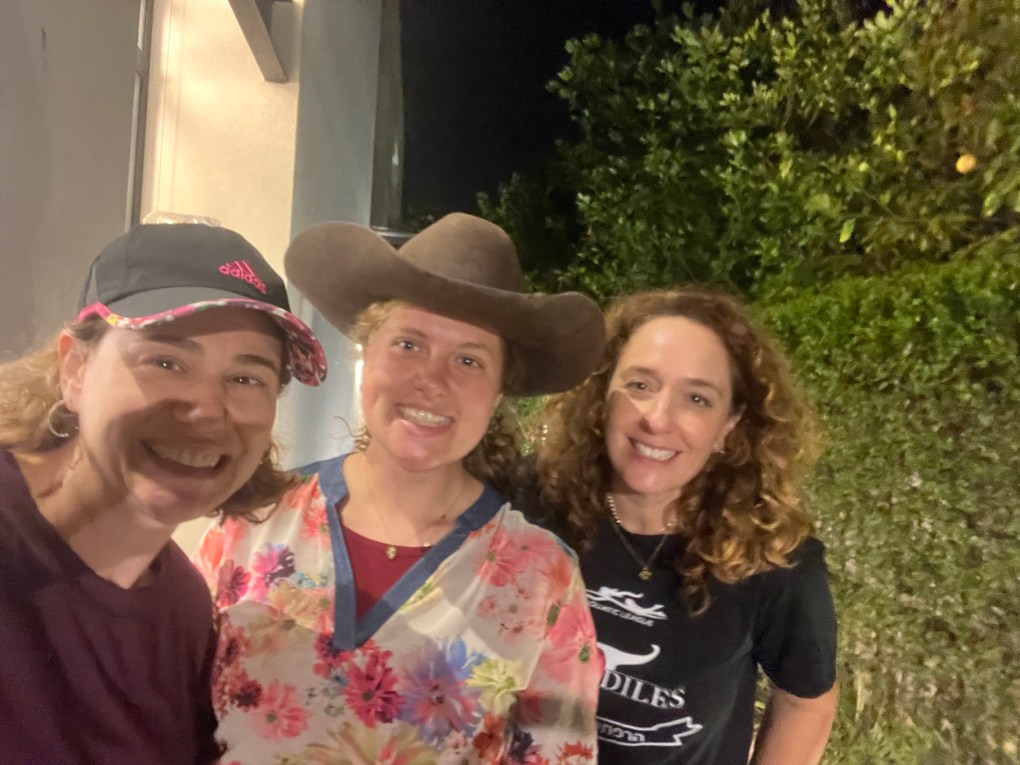
*photo with one of the cowgirls who support Israel.


Parshat Bo: Enduring Faith

Did the Exodus from Egypt take place during the day or night? The commentaries on parshat Bo find meaning in this ambiguity. It is a symbol of enduring faith through difficult times.

First, God promises to bring the plague against the first-born at around mid-night (“k’chatzot”) after which the people would leave Egypt. Then, God’s promise is fulfilled in the middle of the night (“b’chatzi halayla”). Pharaoh, in response to the suffering, commands Moshe to take the Israelites out in the night. However, Moshe had instructed the people not to leave their homes until the morning. It also states that God took them out of Egypt on “that very day,” understood by some commentaries to mean in full daylight. Light is associated with redemption in rabbinic thought. Bereshit Rabbah understands the words “And there was light,” from the creation story, as “corresponding to the book of Exodus in which Israel emerged from darkness to light.” Daylight brings a new day and with it the potential to reaffirm our faith in God and experience redemption. 

Ramban resolves the ambiguity of the timing of the Exodus as follows: B’nei Yisrael left Egypt in the daytime, so all could see, but the process of geula began at night. Mid-night then is a turning point, when the seeds of potential for redemption begin. This association of midnight as the beginning of the redemption process is reinforced in the midrash about King David, who would learn Torah until midnight (for protection) and from then on sing songs of praise to God. According to this reading, redemption begins even while we experience darkness, when we can’t see clearly or know when the light will begin to rise.

Similarly, Talmud Berakhot praises those who conclude the Shema with sunrise and “juxtapose redemption to prayer.” The image of preparing for redemption from midnight and of standing in prayer before sunrise has carried the Jewish people through periods of darkness before and will carry us through the challenges we face today. Shabbat Shalom – Karen Miller Jackson


Parshat Va’era: Recognizing Evil

Parshat Va’era marks the beginning of the redemption from Egypt. Before, the Jews suffered under Pharaoh’s harsh decrees, now Pharaoh begins to suffer. Before, God seemed hidden. Now, God’s presence was revealed and redemption promised. These chapters resonate today, as the world questions who is the perpetrator of evil and suffering and as we try to breathe and remain strong during difficult times. 

Nechama Leibwitz points out that God’s name is absent from the first two chapters of Shemot. This hester panim (hiddenness) which felt like distance and abandonment, is followed with Va’era, God’s (re)appearance. God even reveals a previously unknown name or characteristic to Moshe. Yet, the people struggled to believe, due to a broken spirit (kotzer ruah) and difficult labor (avodah kasha). Rashi defines this “broken spirit” as a difficulty taking deep breaths due to deep anguish. The midrash teaches that they were feeding off of Moshe’s concerns and doubts. 

Following this, God brings the plagues and proclaims: “I will harden (aksheh) Pharaoh’s heart, that I may multiply My signs and marvels in the land of Egypt.” (Shemot 7:3) The commentaries debate the purpose of the plagues and the hardening of Pharaoh’s heart. Rambam brings Pharaoh as a rare example of evil and cruelty which leads to the loss of free will. Sometimes evil is so terrible it can only be punished and eradicated. Another view is that the plagues were brought to demonstrate God’s wonders and truth. Rashi teaches that this was necessary to inspire the faith of the trodden spirit of the Jewish people. The midrash Sifre says it was meant to bring God’s light and truth to the whole world.

Va’era has two relevant messages for this week: 1) Try to overcome the kotzer ruah we may naturally be feeling after so much loss. 2) There will be times when others can’t recognize and call out real evil, and with God’s help we will continue to spread our light and truth to the world. Shabbat Shalom -Karen Miller Jackson


Shemot: Remembering Our Name

What’s in a name? Parshat Shemot lists the names of Yaacov’s sons who went down to Egypt. Yet, it also refers without names, to “a man from the house of Levi,” “daughter of Levi,” “daughter of Pharaoh,” and others. Biblical interpreters view the names and namelessness as a reflection of the strengthening or weakening of Jewish identity, particularly in the diaspora.

Sforno comments that the children of Yaacov are named because they lived up to their “names” or good character and family values. However, the generation enslaved in Egypt were not worthy of mentioning by name, hence the anonymity. The midrash, in contrast, teaches that one of the reasons Bnei Yisrael were redeemed from Egypt was that they kept their Hebrew names while in exile. The midrash assumes the next generation carried on the traditions of Yaacov. Similarly, some commentaries say Moshe is an Egyptian name, given to him by the daughter of Pharaoh, yet in Hebrew it alludes to his future role as savior of Israel. Others insist that it is a Hebrew name which was given to him by his mother and kept by Pharaoh’s daughter. A Hebrew name symbolizes Moshe’s future embracing of his identity and traditions. 

When European Jews moved to Israel, some Hebraicized their names to break from their past diaspora identity and highlight their Israeli-ness. Dara Horn has written about the “Ellis Island myth.” She argues that Jewish immigrants to America changed their names to sound more “American” and claimed that they were forced to change their names by officials at Ellis Island. This too highlights the connection between names and retaining or losing one’s identity. 

The book in which the Jewish nation is born is appropriately called Shemot, names. This was a watershed moment for the generation in Egypt and at various times and places in Jewish history. Today too, Shemot is asking us to stand strong and answer to the name of our nation. Shabbat Shalom -Karen Miller Jackson