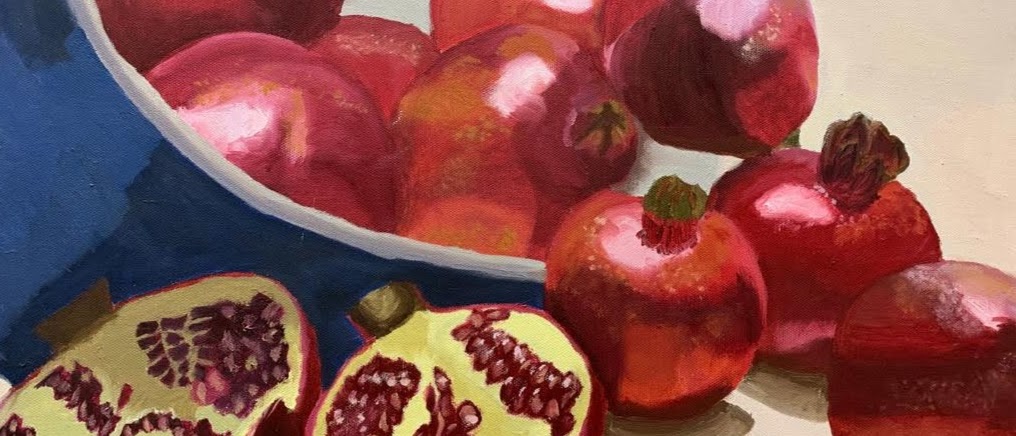
Parshat Ki Tavo: Today

“Never leave that till tomorrow which you can do today.” — Benjamin Franklin

Parshat Ki Tavo, in its list of blessings and curses, repeatedly emphasizes the word ha-yom (“today” or “this day”). Why such stress on the present moment?

Rashi, commenting on the verse “The Lord your God commands you this day to observe these laws…”, explains that mitzvot should feel new each day, as though we are receiving them afresh at Sinai. The Chafetz Chaim offers another perspective: ha-yom, the emphasis on today, reminds us not to take our days for granted. Additionally, he teaches that real growth comes not through lofty, overwhelming long-term goals, but through small, achievable steps we commit to today.

This theme of ha-yom also runs through the Rosh Hashana liturgy: “Today is the birthday of the world… today all creatures stand in judgment.” The Netivot Shalom links this emphasis on ha-yom to hitchadshut (renewal)– teaching that Rosh Hashana, the day of creation according to Rabbi Eliezer, carries unique potential for new beginnings in our relationship with God and with one another. Similarly, in the haftarah of Rosh Hashana, ha-yom marks the day Hannah’s prayers for a child were finally answered—a reminder that each new day holds the possibility of hope and change.

This week, in Israel and in the U.S., we have seen too many precious lives cut short through terrorism and hatred. Ha-yom—so central in our parsha and on the day of judgment—calls us to treasure what we have, to believe in the power of prayer for what we yearn for, and to begin today the work of building a safer, kinder, and more humane world. Shabbat Shalom -Karen Miller Jackson

Kedoshim: An Antidote to Hate

Parshat Kedoshim contains one of the most important chapters in the Torah according to the commentaries. It also contains mitzvot which are at the forefront of contemporary society and the challenges we face.

After focusing on the holiness of the mikdash and kohanim, Vayikra 19 marks a revolutionary shift where everyone is commanded: “Be holy.” Midrash Sifra teaches that this was one of the sections read out to the whole community during hakhel, emphasizing the potential for all to infuse their lives with holiness. Moreover, it lists many interpersonal mitzvot as the path to holiness. One of these mitzvot – “love your neighbor as yourself,” – was considered by Rabbi Akiva to be the overarching rule of the Torah.

New challenges have arisen accentuating the importance of these mitzvot which strive to enhance human relationships. Smartphones and social media have made it easy and trendy to criticize others publicly. This has led to hurtful and alienating behaviors such as virtue signaling, shaming and canceling. More sinisterly, it has also fueled the spread of fake news, hatred and extremism. One mitzvah in particular speaks to this challenge: “You shall not hate your brother in your heart, rebuke your kinsman, but incur no guilt because of him.” This verse seems to support criticizing others. Yet, the Talmud Arachin limits the scope of “tochecha,” when it teaches that the criticism must stop if it results in public shaming. The sages themselves acknowledge that most of them were incapable of receiving or giving rebuke effectively as it was meant to diminish hatred in one’s heart.

What is the antidote to the spread of falsehood, hatred and anger? Frank Bruni writes that in this era “overwhelmed by grievance,” we need more humility. Even more, Kedoshim provides a moral and practical framework for calling out injustice from a desire to spread holiness instead of hatred. Shabbat Shalom🇮🇱 -Karen Miller Jackson


Parshat Balak: Love over Hate

“I have decided to stick to love… Hate is too great a burden to bear.” -Martin Luther King, Jr. 

Love vs. hate, Blessings vs. Curses. These are some of the themes which run through the commentaries on parshat Balak. The midrash notes linguistic and thematic similarities between the stories of Balaam and Avraham. Both Avraham and Balaam demonstrate “zrizut,” enthusiasm for their mission. In the story of akeidat Yitzchak, Avraham rises early and saddles his own donkey to fulfill the word of God. Balaam too, sets out with enthusiasm to do as Balak has commanded, to curse the nation of Israel. The midrash points out that both these men had servants who certainly would have saddled their donkeys for them, but as Rabbi Shimon bar Yochai teaches, regarding Avraham: “Love upends the social order,” and about Balaam: “Hate upends the social order.” Similarly, Pirkei Avot teaches that one can choose to be a student of Balaam and have an “evil eye” or like a disciple of Avraham, with a “good eye.” Balaam was keen to curse a whole people he did not know, while Avraham sought out opportunities to bless others. Perhaps this is why the midrash teaches that at first God was the only giver of blessings in Bereshit, until God gave the ability to bless others over to Avraham and his descendents.

Each day we have an opportunity to look at the world negatively, with a critical eye and spread hatefulness in the world, or with a good and generous eye and share brachot with others. Perhaps that is why we start the day with Balaam’s curse-turned-blessing, “mah tovu,” to remind us of this choice. 

Hatred is on the rise these days. It has been seen between Jews and fellow Jews, in the form of antisemitism and through the recent tragic bloodshed in Chicago. By following the model of Avraham, “the father of many nations,” we can upend the current social status quo by promoting love over hate. Shabbat Shalom – Karen Miller Jackson

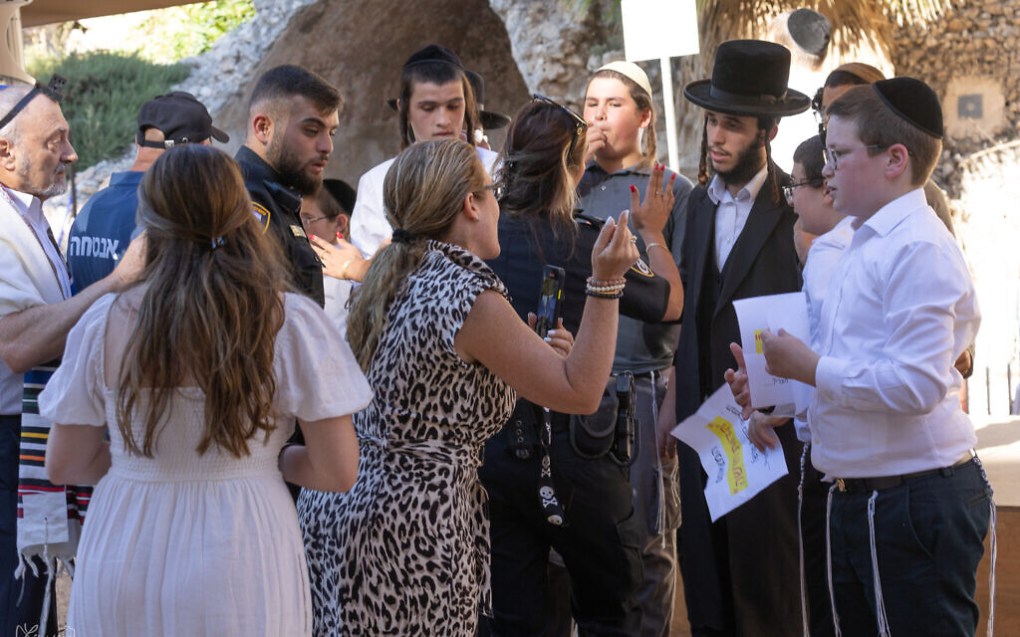
*Ultra-Orthodox youths interrupt a bar mitzvah ceremony at the egalitarian section of the Western Wall on June 30, 2022. (Laura Ben-David)