Vayishlach: Responding to Antisemitism

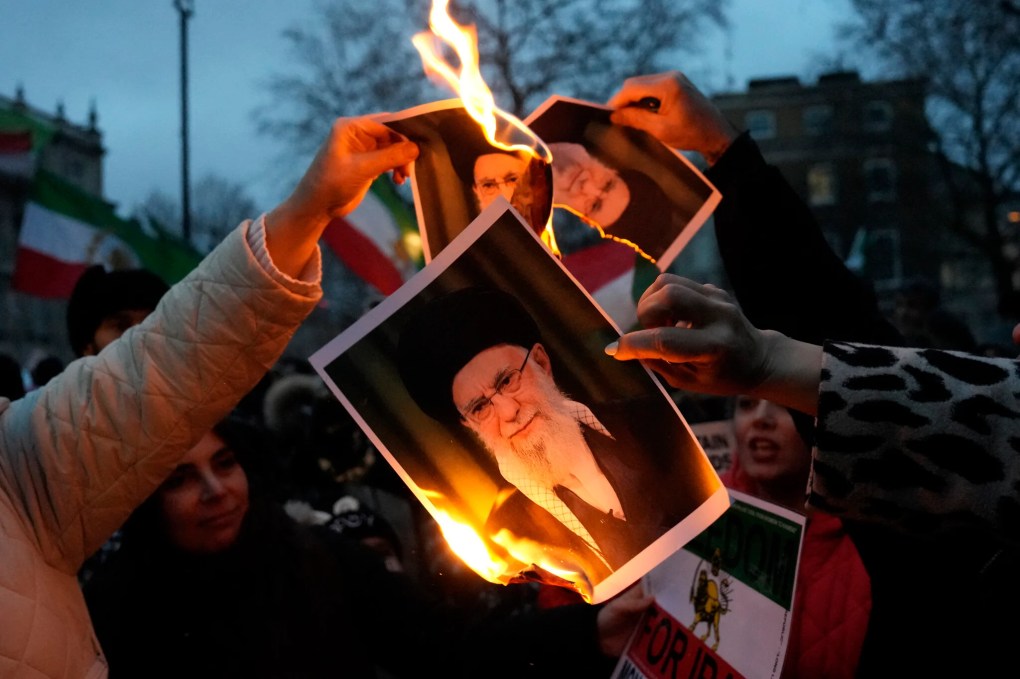
A number of commentaries understand Yaacov’s encounter with the ish in Parshat Vayishlach as symbolizing the Jewish people’s struggles with their adversaries throughout history. If so, what guidance might this episode offer us in confronting today’s vehement strain of antisemitism?

Already before their birth, God tells Rivka that Yaacov and Esav are the founders of two nations. Midrashic tradition identifies Esav/Edom with Rome, and later commentators link him with Christianity. Thus, when Yaacov wrestles with the ish, the midrash interprets this figure as Esav’s guardian angel—a representative of the forces that would oppose Israel throughout the ages. Ramban famously describes this conflict as a remez l’dorot—a hint to the ongoing struggles between the children of Yaacov and the children of Esav until Yaacov ultimately prevails. These interpretations reflect the historical experiences of commentators who lived under oppression at the hands of their own “Esav.”

But today, with our own homeland and army, we stand in a new chapter of Jewish history—one that invites renewed interpretation and application of this story. When the ish blesses Yaacov with a new name, Yisrael, the commentaries highlight its significance. Rashi explains that this name embodies serarah, meaning noble leadership and moral strength. Yaacov, associated with concealment and vulnerability, becomes Yisrael: forthright, resilient, confident, and unafraid to stand tall in the world.

We, too, are living through a moment of struggle, facing a resurgence of antisemitism and anti-Zionism. Yet, strengthened by a return to our land and sovereignty, we face these challenges not from a place of insecurity or uncertainty, but as Yisrael—anchored in identity, purpose, and pride. Shabbat Shalom -Karen Miller Jackson


Vayetze: On Sacred Spaces

The word makom (place) appears repeatedly at the start of Parshat Vayetze as Jacob sets out on his journey: “He came upon the place (ba-makom)…” What is this place? Its very ambiguity becomes a key to understanding Judaism’s vision of sacred space, from Jacob’s world to our own.

Rashi identifies the makom with the site of the Binding of Isaac—“Abraham looked up and saw the place (ha-makom) from afar”—later known as Mount Moriah, where the Temple would later be built. In Devarim, the Mishkan is likewise called the makom. The midrash therefore associates Jacob’s encounter with Jerusalem. 

Yet there is a tension: Jacob renames the site Beit-El, formerly Luz—seemingly far from Jerusalem. Commentators struggle to reconcile this. A striking midrash offers a creative resolution: The ladder connecting heaven and earth in Jacob’s dream was actually the mechanism that allowed Jacob to be physically in one location while spiritually linked to the Temple Mount: “The ladder stood in Beersheba, and the middle of its slope reached opposite the Temple.” 

This preserves the centrality of the holiness of Jerusalem while teaching one may direct heart and prayer toward it from afar. Moreover, Ha-makom becomes one of the rabbinic names for God. When we study Torah, do justice, live by Jewish values and pray facing Jerusalem, says the midrash, any space can draw sanctity from Ha-makom. This is also the meaning of makom today. Synagogues in New York and London that hosted events which support and celebrate Israel—and faced protest for doing so—were embracing Jacob’s legacy. What the critics fail to grasp is that Jewish sacred spaces, wherever they stand, are inseparable from the pull of Jerusalem. The heart of Israel beats within every synagogue and community that turns toward Ha-makom. That is Jacob’s legacy, and it remains our mission today. Shabbat Shalom – Karen Miller Jackson


Toldot: Promoting Truth

What is meant by the verse in Micah, “Give truth to Jacob”? The commentaries discuss this question in Parshat Toldot, where the themes of truth and deception are front and center. The question feels especially urgent today, as we—the children of Yaacov—struggle to make truth heard and to dispel the deceptive narratives told about Israel.

The Torah describes Yaacov as “a plain (tam) man, dwelling in tents,” which Rashi contrasts with Esav, who regularly misled his father about his true character. This is striking, given that it is Yaacov who appears to act deceptively. He acquires the birthright at Esav’s moment of weakness, and later follows Rivka’s plan to disguise himself before Yitzchak. When Yitzchak, who is going blind, asks him directly who he is, Yaacov answers, “I am Esav, your firstborn.” Yitzchak later tells Esau that his brother came with mirma—cunning—and took the blessing. Still, Rashi works to preserve Yaacov’s integrity. He repunctuates the verse so that Yaacov is not technically lying: “I am [bringing you food]; Esav is your firstborn,” and defines mirma as cleverness rather than deceit.

Other commentaries take a different approach: even if the blessing was truly destined for Yaacov, the way he received it carried consequences. In one midrashic tradition, Rachel deceives Yaacov on his wedding night to spare Leah’s shame and reminds him that he once deceived his own father, measure for measure. And when Esav cries out “a great and bitter cry,” Bereshit Rabbah says that this is echoed generations later when Mordechai cries out in Shushan under Haman’s decree to wipe out the Jewish people.

Yaacov was a man of truth. When he acted with duplicity it was to ensure the future of the Jewish people, yet there were long-term consequences. Today, when the world so readily absorbs falsehoods about our people, we renew our mission to “give truth to Yaacov”—to stand for the integrity and truth of the Jewish people. Shabbat Shalom and chodesh tov!🇮🇱 -Karen Miller Jackson


Parshat Chayei Sarah: Finding our “Wells”

Parshat Chayei Sarah opens with the passing of Sarah. This loss, following the akedah, must have left Yitzchak feeling drained and broken. Perhaps this helps explain his passivity in finding a wife. The question, then, is how Yitzchak found the strength to rebuild and move forward.

Significantly, many key moments in Yitzchak’s life unfold at a be’er — a well. In the first scene, Yitzchak is absent, but his proxy Eliezer travels to Aram Naharayim in search of a wife for him. Eliezer stops at the be’er ha-mayim, where the women draw water, and there he prays for divine guidance and encounters Rivka. The midrash notes that wells are meeting places of biblical couples, symbolizing new beginnings, healing, and hope.

Later, when Rivka journeys to Abraham’s home, she meets Yitzchak as he is coming from Be’er Lachai Ro’i — the place where Hagar, after being banished, prayed to God and found sustenance. The midrash teaches that Yitzchak was there to bring back Hagar (aka Keturah) to Abraham after Sarah’s death. Once again, the well represents restoration and renewal.

Wells appear again when Yitzchak re-digs the wells of Abraham that had been stopped up by the Philistines. The Sefat Emet interprets these wells as symbols of spiritual life — channels of divine blessing that the avot brought into the world. In reopening them, Yitzchak becomes a model of spiritual resilience, drawing strength from his parents’ legacy and renewing it for future generations.

Israel is thankfully emerging from a time of loss, exhaustion, and uncertainty. It is time for us, too, to uncover our own “wells” — sources of faith, strength, and hope — to find renewal, healing, and resilience once more. Shabbat Shalom -Karen Miller Jackson


Parshat Lech Lecha: Hearing the Call of Good over Evil

We hear nothing about Avraham’s faith or righteousness before God calls to him, “Lech lecha.” So why was he chosen? The midrashim fill in the story, portraying Avraham’s moral clarity and spiritual courage, yet the pshat itself offers a quieter but powerful lesson—about standing up with faith and conviction for Jews and Israel today.

Bereshit Rabbah teaches that Avraham once saw a palace in flames and cried out, “How can it be that this palace has no leader?” God replied, “I am the master of this palace.” Avraham’s faith was born through questioning, through refusing to accept a world that made no moral sense. As Rabbi Sacks zt”l wrote: “For Abraham, faith began in cognitive dissonance. There is only one way of resolving this dissonance: by protesting evil and fighting it… It is as if God were saying to Abraham: I need you to help Me to put out the flames.”

Avraham’s distinctiveness may also be alluded to when he is later called “ha-ivri,” which means “the Hebrew” or “from the other side.” One midrashic opinion explains: “The entire world stood on one side, and he on the other.” This image feels especially relevant today, reminding us to speak truth and uphold moral clarity even when it defies popular opinion.

Perhaps the plainest reason God chose Avraham was because he responded to God’s call “Lech lecha…” Avraham answers the call fully even though it involves uncertainty and sacrifice. This too, is the story of the Jewish people and their love and commitment to Israel through the ages. As the world watches the elections in New York this coming week, we can learn from Avraham about the power of each individual to stand up and voice moral clarity about good and evil. Shabbat Shalom -Karen Miller Jackson


Bereshit: Faith and Gratitude

“Each and every blade of grass has a special song of its own.” – Naomi Shemer, based on Rebbe Nachman of Breslav

In the midst of the creation narrative, before humankind even enters the scene, parshat Bereishit offers a lesson about the power of faith and gratitude, one we have witnessed so vividly in each and every hostage who, thank God, has returned home. 

In the retelling of creation in Bereishit, chapter 2, just before Adam is formed, the Torah states: “When no shrub of the field was yet on earth and no grasses of the field had yet sprouted, because God had not sent rain upon the earth and there were no human beings to till the soil.” Why did God withhold the rain? And why are two reasons given for why the vegetation had not grown? Rashi connects these two explanations: God withheld the rain because there were not yet human beings who could be makir tov (to appreciate the rain). Only once Adam sensed the world’s need for sustenance did he pray for rain, and it was that prayer that brought the grasses and trees to life.

Rashi’s insight highlights several key ideas. First, Adam prays not only for himself, but for the sake of the world. Second, tefilla cultivates within us the capacity to be makir tov — to feel and express gratitude to God and to others for the good we receive. Finally, the world itself reached its completion — the grasses only began to grow — when Adam prayed. Our very sustenance, and the flourishing of the world, depend on our tefillot.

This message finds powerful expression in the chatufim, who have shown almost superhuman strength, faith, and gratitude. With radiant smiles, wrapped in Israeli flags, and in their renewed embrace of mitzvot like tefillin and tefilla. Their example is not only a source of inspiration but also a wellspring of strength — one that will help us recreate, renew, and heal Israeli society. Shabbat Shalom – Karen Miller Jackson


Parshat Ha’azinu & Sukkot: Strength from Former Hostages

The poetic parsha of Ha’azinu, which we will read just before Sukkot, reminds us of the blessings God has bestowed upon the people of Israel throughout history. By recalling both our failures and our faith, Ha’azinu becomes a verbal act of hakarat hatov, gratitude for all the good God has granted us.

The Midrash Sifrei teaches that this song encompasses the past, present, and future of the Jewish people. Ramban adds that it is both our testimony about God’s benevolence to us and God’s testimony about Israel—that even when we stray, God will forgive and return to us.

The mitzvah of sitting in the sukkah carries a similar message. The Torah commands us to dwell in sukkot “so that future generations will know that I caused the Israelites to dwell in booths” after the Exodus (Vayikra 23). Yet the Torah never describes these sukkot explicitly, leading to a rabbinic debate about whether they were physical booths, or the ananei hakavod—the Clouds of Glory—symbolizing divine protection. Whether they were actual shelters or the miraculous clouds, the sukkah teaches that it is precisely in moments of fragility and uncertainty that we are reminded to rely on God’s care.

We have also learned this lesson from many former hostages—may the remaining ones come home soon. In his book, Eli Sharabi describes how, at his most vulnerable, in the dark, cramped, airless tunnels of Gaza, he drew strength from the words of Kiddush and Shema. Ha’azinu and the sukkah together remind us that as we emerge from this month of chagim, when we feel most attuned to God’s presence, we can strive to hold on to these reminders of faith and protection throughout the year ahead. Shabbat Shalom -Karen Miller Jackson


Parshat Nitzavim: The Call of Jewish Peoplehood

We usually think of teshuva (repentance or return) as applying to individuals. Yet Parshat Nitzavim teaches us about another layer—one especially resonant at this moment in Jewish history—national teshuva.

The Ramban derives the mitzvah of teshuva from our parsha, traditionally read on the Shabbat before Rosh Hashana. The Hebrew root sh.u.v is repeated seven times in this section, characterizing teshuva as an ongoing process. It encompasses both the individual aspect: “You will return to your God…” and the collective dimension: “God will return and gather you from all the nations…” What, then, does national teshuva look like?

Rav Kook teaches that the Jewish people’s return to the Land of Israel is the foundation of the greatest teshuva. Rabbi Jonathan Sacks, building on the Ramban, described teshuva as a “double homecoming”—physically to the land and spiritually to God. Perhaps, too, there is a dimension of spiritual return to the Jewish people themselves: a reawakening of responsibility, solidarity, and shared destiny. As Rabbi Sacks asked, can we hear “the divine call (‘Where are you?’) within the events that happen to us, whether individually as personal fate or collectively as Jewish history”?

The prophet Hosea offers further insight into national teshuva when he calls on Israel to return to God. The core of teshuva is through words: “Take words with you and return to God… Instead of bulls, we will pay [with offering of] our lips.”(14:3) National teshuva is achieved through words of prayer and in using language that fosters healing and repair. 

Especially now, amid today’s challenges and uncertainties, the call to teshuva resounds on both the individual and national level. How can each of us respond—through prayer, action, and words—in a way which strengthens Israel, the Jewish people, and the wider world? Shabbat Shalom & Shana Tova🇮🇱🍎🍯-Karen Miller Jackson


Parshat Ki Tavo: Today

“Never leave that till tomorrow which you can do today.” — Benjamin Franklin

Parshat Ki Tavo, in its list of blessings and curses, repeatedly emphasizes the word ha-yom (“today” or “this day”). Why such stress on the present moment?

Rashi, commenting on the verse “The Lord your God commands you this day to observe these laws…”, explains that mitzvot should feel new each day, as though we are receiving them afresh at Sinai. The Chafetz Chaim offers another perspective: ha-yom, the emphasis on today, reminds us not to take our days for granted. Additionally, he teaches that real growth comes not through lofty, overwhelming long-term goals, but through small, achievable steps we commit to today.

This theme of ha-yom also runs through the Rosh Hashana liturgy: “Today is the birthday of the world… today all creatures stand in judgment.” The Netivot Shalom links this emphasis on ha-yom to hitchadshut (renewal)– teaching that Rosh Hashana, the day of creation according to Rabbi Eliezer, carries unique potential for new beginnings in our relationship with God and with one another. Similarly, in the haftarah of Rosh Hashana, ha-yom marks the day Hannah’s prayers for a child were finally answered—a reminder that each new day holds the possibility of hope and change.

This week, in Israel and in the U.S., we have seen too many precious lives cut short through terrorism and hatred. Ha-yom—so central in our parsha and on the day of judgment—calls us to treasure what we have, to believe in the power of prayer for what we yearn for, and to begin today the work of building a safer, kinder, and more humane world. Shabbat Shalom -Karen Miller Jackson


Parshat Ki Tetze: Preventing Strife in Society

“When you go out to war…” These opening words of the parsha are sobering to read as we approach the two-year mark of this war. Even more striking is their placement at the beginning of Parshat Ki Tetze, where they serve as a stark reminder of the toll war exacts—not only on individual soldiers but also on the wider society back home.

The parsha begins with the law of the eshet yefat to’ar, the foreign woman taken captive, whom a soldier may desire during wartime. While the Torah permits him to bring her home, it imposes strict conditions: she must be given a month to mourn her family, and afterwards he must either marry her or set her free. For its time, this law was revolutionary, significantly limiting the abuse of women in wartime. After this, the parsha shifts to matters of family and society.

It is striking that Ki Tetze begins here, after the laws of war were already given in Shoftim. Why is this law brought in this week’s parsha, and what message does its placement convey?

Some commentaries find a thematic link between the eshet yefat to’ar and the laws that follow. The midrash Tanhuma, noting its juxtaposition with the laws of polygamy and the rebellious son, teaches: one sin leads to another sin.” In other words, a relationship born solely of physical desire will inevitably lead to family strife and ultimately catastrophe.

But there is another lesson here as well. War—even when necessary, even when far from home—carries deep consequences: for the enemy, for the soldiers who risk their lives, and for the nation they fight to defend. The Torah places this law at the head of the parsha precisely before the societal laws that follow, reminding us that responsibility extends beyond the battlefield. We must be vigilant, too, in preventing conflict within our homes and communities, and in preserving our nation as one family. Shabbat Shalom -Karen Miller Jackson

* photo of car burnt in Jerusalem from TOI