Vayakhel: What needs to happen for Haredim to join the IDF

“Ask not what your country can do for you – ask what you can do for your country” -John F. Kennedy

Parshat Vayakhel emphasizes the generous contributions to the Mishkan, from everyone – men and women – to the point that Moshe needs to stop them from donating. Deeper analysis of the Torah’s description of contributing to the Mishkan can shed light on the current debate about who should be contributing to defending Medinat Yisrael. 

The Torah emphasizes the generosity of the donations. Moshe instructs the people to “take gifts from among you,” and then encourages everyone, whose “heart is so moved,” to bring gifts to the Mishkan. The Hebrew root n.d.v (to donate) appears numerous times, and as Rabbanit Sharon Rimon points out, the word “lev” (heart) appears fourteen times in this section. The Ramban interprets this verse as referring only to voluntary gifts. This highlights that the Mishkan, the center of Jewish life, was built with heart and a spirit of collective giving. 

Yet, we also know that there was an aspect of contributing to the Mishkan which was mandatory for all. The language of “take” implies that everyone had to give gifts to the Mishkan. Elsewhere, the people are commanded to each give a half-shekel toward the tabernacle, a required tax. So which is it then? Voluntary or mandatory? The Kli Yakar says that the words “take gifts” refer to both required giving (the half shekel) and voluntary giving, which were combined to build the Mishkan. 

The idea that contributions to the Mishkan were a combination of mandatory and voluntary was echoed in our nation’s response to October 7th. Our heroic soldiers were called up with a command, a “tzav 8.” And we also witnessed an unparalleled nedivut (generosity) of heart and spirit, of most others giving what they could. This is what Rabbi Sacks zt”l called a nation built on a covenant of “We,” – “bound by a sense of shared belonging and collective responsibility.”

As we face a need to increase the numbers of soldiers needed to defend our country, how can we deepen the conversation to help foster this sense of national loyalty alongside Zionist pride, so that all Israeli citizens feel they are a part of the “We,” and can embrace the call to serve the Jewish nation? Shabbat Shalom – Karen Miller Jackson

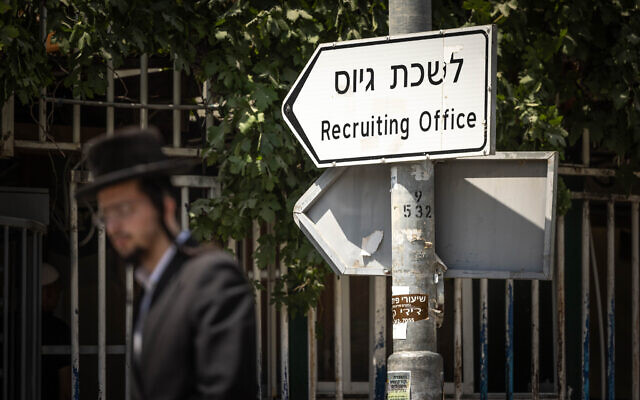
Photo credit: Utra-Orthodox Jews walk outside an army recruitment office in Jerusalem, August 16, 2023. (Chaim Goldberg/Flash90) From TOI News site.


Terumah: From Mishkan to Israel

The word “terumah” (contribution) is mentioned three times in the beginning of parshat Terumah, prompting the commentaries to explore the significance of the type of donations made to build the mishkan. Amazingly, their insights reflect the spirit of commitment and giving which we have seen across Am Yisrael recently.

Rashi explains that there were three distinct donations: two which were “chova” (required) and given equally by everyone, known as the machatzit hashekel, and one which was “nedava” (voluntary), giving as much as their “heart inspires” them. What emerges is two kinds of giving: The initial pair involves giving at a national scale while upholding the equal and noteworthy value of each individual offering. The third form embraces variety in individual contributions. Rav Amital, based on the Maharal, taught that this combination is necessary within Jewish life, a balance between first, “chova” (required commitment) and then, “nedava” (voluntary dedication). 

Similarly, The Lubavitcher Rebbe interprets the different materials of the mishkan as representing Jews with different levels of Torah commitment and religiosity. The mishkan only works if it includes everyone. The mishkan was a great unifier, including even those who think or practice differently. 
Today, Israel exhibits resemblances to these characteristics of the mishkan, underscoring the vital importance of the medinat Yisrael as a center and homeland for the Jewish people. We have witnessed ongoing contributions based on “chova” – young Israelis responding without hesitation to the call to serve. We also see the continuing “nedava” – service, gifts and solidarity from Israelis and Jews around the world who gave with “generosity of the heart.” Terumah is a timely reminder: Let’s preserve this spirit of connection and commitment, required alongside voluntary, and based on unity with diversity. Shabbat Shalom -Karen Miller Jackson


Mishpatim: Truth AND Compassion

Parshat Mishpatim contains laws which contribute to building a moral and compassionate society. Two mitzvot stand out as deserving special consideration within the framework of our contemporary world.

First, “keep far away from falsehood” (Shemot 23:7) – the language implies more than a command to be truthful, one should actively distance oneself from falsehood. The midrash Mekhilta contains a debate about whether this applies only to judges or to everyone. Elsewhere, the Torah clearly commands everyone not to lie. Here, we learn a key principle of Torah is that judges – societal leaders – should strive for truth and justice. Today, perhaps more than ever, lies and fake news are easier to access through social media. World leaders too have embraced lies and made it more acceptable to spread falsehood. In this context, “keep away…” has new resonance.

Second, “Do not oppress the stranger as we were once strangers in the land of Egypt.” (Shemot 23:9) This is one of numerous mitzvot in the parsha about protecting the vulnerable in society. Why does the Torah recall our time in Egypt? The Minchat Chinuch explains that reminding us of the anxiety and suffering our ancestors felt as strangers in Egypt “will move us to compassion for every person in a similar situation.” Drawing on our past experience in caring for the weak and vulnerable is also a core value in Torah.

 
What happens when one of these is praised and the other neglected? Sadly, we are seeing this in today’s “post-truth” world, where altruism is at times held above the truth. Courts, journalists and institutions which should be the embodiment of fairness and truth-seeking have lost objectivity. Perpetrators of evil have won over people’s sympathy. Rabbi Sacks presciently called this trend “altruistic evil,” when injustice and hatred spread under the flag of human rights. Parshat Mishpatim is a call to re-align the values of altruism and truth and to practice compassion when it is truly warranted. Shabbat Shalom and chodesh tov -Karen Miller Jackson


Parshat Yitro: Between Amalek and Yitro

Since October 7th, Israelis have been battling the pure evil which was unleashed on us and which shattered our feeling of relative security. For Jews around the world, October 7th was a similar watershed moment, as the true face and breadth of antisemitism and anti-zionism was revealed. Given this, it is natural to wonder if we have friends and allies in the world. Parshat Yitro reminds us how to balance this worldview and contains a message about antisemitism and Jewish identity.

The parsha begins after Amalek waged war on a vulnerable Israel, as they journey through the desert. Next, it is recounted that Yitro (Moshe’s father-in-law) travels from Midian to meet Moshe at the mountain of God after hearing about “what God had done for Israel.” Following this, Israel encamped at Har Sinai for Matan Torah. The commentaries see deep connections between these events.

The midrash Mekhilta contains a debate regarding the chronology of these events related to the ambiguity of what Yitro heard about. R’ Yehoshua says that he heard about the victory over Amalek. R’ Elazar Hamodai teaches that Yitro heard about the wonders of Matan Torah, which would mean the Torah tells these events out of chronological order. If Yitro arrived after Matan Torah, why is his arrival placed between Amalek and Matan Torah? Ibn Ezra comments that this is to teach that when we mention the hate-attack by Amalek we should also remember that we have genuine friends and admirers, like Yitro. 

Both readings contain a message for contemporary times. First, antisemitism should not define Jewish identity. Rather, it should be built on positive Jewish values, the basis of which is Matan Torah. Second, we need to call out antisemitism clearly and not ignore it. However, we must not let it distort our view of the whole world. We should embrace and encourage support from our non-Jewish friends, the Yitros of our time. Shabbat Shalom – Karen Miller Jackson

*photo with one of the cowgirls who support Israel.


Parshat Beshallach: Seeking Emunah

In parshat Beshallach Pharaoh finally “lets the people go.” Yet, instead of feeling elation, the people of Israel waver. They take leaps of faith toward God and then fall back and express doubt and fear. What can their wavering teach us about emunah (faith) today?

Given Bnei Yisrael’s fragility, God leads them on a long route to avoid war. The Mekhilta explains that by taking the nearer route they may have tried to return to Egypt. This is exactly their sentiment as they find themselves closed in between “Egypt” and the sea. Yet, their fear abates when they see God’s miracles and the sea parts for them. Talmud Sotah adds to the story of wavering faith when it depicts the heads of the tribes arguing over who will jump into the sea first, until Benjamin jumps in. Another version teaches that each tribe refused to jump in, until Nachshon ben Aminadav (Judah) took the initiative. Dr. Aviva Zornberg points out a linguistic back and forth throughout the narrative – va-yar/va-yire’u – to see and to fear, from the same Hebrew root. The antidote to their fear of Egypt is to see God’s wonders and to see Egypt disappear. 

After the splitting of the sea, the people fear only God and have emunah. Yet, almost immediately, their faith wavers repeatedly, as they cry out for water, then bread and question “Is Hashem among us or not?” Next, they face war with Amalek. But here, the people display courage and faith. As they fight, Moshe stands on a hill and holds up his hands. When he weakens, Aaron and Hur help him and his arms remain steady – “vayehi yadav emunah.” Rashi teaches that the word emunah is used here because his hands held up toward heaven inspired faithfulness in the people.

To quote Rabbi Sacks z”l: “A small people that, in the face of difficulty, continues to look up will win great victories and achieve great things.”

The parsha acknowledges that people’s emunah fluctuates during difficult periods. Simultaneously, it urges us to look around and find sources of strength and inspiration – in the commitment of our soldiers, the unity of our people and in our connection to God. Shabbat Shalom -Karen Miller Jackson


Parshat Va’era: Recognizing Evil

Parshat Va’era marks the beginning of the redemption from Egypt. Before, the Jews suffered under Pharaoh’s harsh decrees, now Pharaoh begins to suffer. Before, God seemed hidden. Now, God’s presence was revealed and redemption promised. These chapters resonate today, as the world questions who is the perpetrator of evil and suffering and as we try to breathe and remain strong during difficult times. 

Nechama Leibwitz points out that God’s name is absent from the first two chapters of Shemot. This hester panim (hiddenness) which felt like distance and abandonment, is followed with Va’era, God’s (re)appearance. God even reveals a previously unknown name or characteristic to Moshe. Yet, the people struggled to believe, due to a broken spirit (kotzer ruah) and difficult labor (avodah kasha). Rashi defines this “broken spirit” as a difficulty taking deep breaths due to deep anguish. The midrash teaches that they were feeding off of Moshe’s concerns and doubts. 

Following this, God brings the plagues and proclaims: “I will harden (aksheh) Pharaoh’s heart, that I may multiply My signs and marvels in the land of Egypt.” (Shemot 7:3) The commentaries debate the purpose of the plagues and the hardening of Pharaoh’s heart. Rambam brings Pharaoh as a rare example of evil and cruelty which leads to the loss of free will. Sometimes evil is so terrible it can only be punished and eradicated. Another view is that the plagues were brought to demonstrate God’s wonders and truth. Rashi teaches that this was necessary to inspire the faith of the trodden spirit of the Jewish people. The midrash Sifre says it was meant to bring God’s light and truth to the whole world.

Va’era has two relevant messages for this week: 1) Try to overcome the kotzer ruah we may naturally be feeling after so much loss. 2) There will be times when others can’t recognize and call out real evil, and with God’s help we will continue to spread our light and truth to the world. Shabbat Shalom -Karen Miller Jackson


Parshat Vayechi: Blessings and Chizuk

There are two scenes of Yaacov blessing his children or grandchildren in parshat Vayechi. Both times we feel Yaacov’s tension and concern about whether or not his descendents will live up to their potential and be a blessing. Both times the next generation rises to accept their destiny.

When Yaacov is about to bless Yosef’s sons, Menashe and Efraim, he suddenly asks, “Mi eleh?” “Whose are these?” Rashi explains – Yaacov saw that in the future some of their descendents would not be worthy of a bracha. Rabbi Benny Lau suggests that this was because they looked Egyptian and Yaacov wondered, how are these related to me? Yet, Yaacov decides to bless them nonetheless and they become part of the twelve tribes. Appropriately, this is the source for the blessing we give our children on Friday nights.

Next, in Bereshit 49, Yaacov calls his sons to gather at his bedside twice. Rashi explains that the repetition is due to the fact that Yaacov wished to reveal the future to them, however the Divine presence departed from him. The midrash elaborates: Yaacov feared that his children might have a “machloket,” or cause to reject God. His children reassured him they have no machloket by saying “Shema Yisrael (Yaacov’s other name), the Lord is our God, the Lord is One.” Yaacov, in his relief, answered “Baruch shem…,” “Blessed be the name of God’s glorious kingdom forever and ever.” Here, the Shema is a sign of children giving chizuk to their parents.

 We continue to bless our children in the hope that they internalize our positive values and maximize their potential. Like Yaacov, we have been blessed with a generation of children who have affirmed their incredible commitment to the Jewish people and who are a source of strength and inspiration for Israel. May the memory of those we have lost be for a blessing. May Hashem protect our soldiers and bring them home victorious soon. Chazak, chazak ve’nitchazek. Shabbat Shalom -Karen Miller Jackson


Vayigash: Achdut

Vayigash is the parsha of achdut (Jewish unity). Before Oct. 7th we longed for more achdut. Since Oct. 7th we have been carried by the spirit of our people’s togetherness. Going forward, how do we preserve this achdut in Israeli society despite our differences? The approach of Yehuda toward Yosef provides some insight.

“Then Yehuda approached him [Yosef]…” This was a pivotal moment in the story of Yaacov’s sons. At their lowest point, the brothers could not speak peaceably with Yosef. Rashi characterizes their feelings of disdain as having “moved on from all feelings of brotherhood.” In parshat Vayigash, Yehuda (who doesn’t realize that he is speaking to his brother) speaks at length to Yosef, in the hopes of saving Binyamin as he had promised his father. 

Bereshit Rabbah likens this encounter to a well with good, cold water at the bottom, which is out of reach until someone ties rope to rope and draws from it and drinks. So too, Yehuda approached Yosef with many words until he found the ones which touched Yosef’s heart. The physical approach, along with words, communication, are the keys to bridging deep divides. 

The haftorah too, contains a vision for Jewish unity, particularly for modern Israel. Yechezkel is told by God to take two sticks and write on one the name Yosef (Ephraim and the tribes of Yisrael) and the other Yehuda and then, “Bring them close to each other, so that they become one stick.” Rav Avraham Yitzchak HaCohen Kook quoted this prophecy in his eulogy for Theodor Herzl and calls the secular Zionist movement the footsteps of the messiah son of Yosef. 

Rav Kook was a model for approaching and drawing closer to parts of Israeli society who thought and lived differently. How can we walk in the footsteps of Yehuda, Yechezkel and Rav Kook? By seeing what they all saw – we are one people. Shabbat Shalom -Karen Miller Jackson


Toldot: Truth vs. Deception

What is meant by the verse in Micah, “Give truth to Jacob?” The commentaries discuss who is truthful and who is deceptive in parshat Toldot. This has particular significance for our world today, as we – the children of Yaacov – are fighting to get the truth out and dispel the deceptive lies about Israel. 

Yaacov is characterized by the Torah as “a plain (tam) man, dwelling in tents.” Rashi comments that Yaacov is the antithesis of his brother Esau who was regularly deceiving his father about his true character. This is surprising given that it is Yaacov who seems to act deceivingly. First, he makes a deal with Esau and receives the birthright (bechora) at a low moment for Esau, when he is exhausted. Next, Rivka instructs Yaakov to disguise himself as Esau so that Yitzchak blesses him and not Esau. When Yitzchak, who is going blind, asks Yaacov straight out who he is, he replies, “I am Esau, your firstborn.” Later, Yitzchak explicitly tells Esau that his brother “came in cunning (mirma) and took his blessing.” Yet, Rashi continues to defend Yaacov’s innocence. Rashi repunctuates one of the verses so that Yaacov is not technically lying: “I am [bringing you food], Esau is your firstborn,” and defines mirma as cleverness, not cunning.

Yet, other interpreters suggest that even if the blessing was meant for Yaacov, the means by which it was acquired led to consequences for Yaacov and his descendents – the Jewish people. In one midrash, Rachel deceives Yaacov on his wedding night with Leah to protect her sister’s dignity. She reminds him that he too deceived his father, measure for measure. Moreover, when Esau realizes what has happened and cries out “a great and bitter cry,” Bereshit Rabbah says that “Yaacov” was punished when Mordechai lets out a great, bitter cry in Shushan, due to Haman’s decree to wipe out the Jewish people. 

Yaacov was a man of truth. When he acted with duplicity it was to ensure the future of the Jewish people, yet there were long-term consequences. Today, as the world so easily consumes the lies of our enemies, we will continue to fight to “give truth to Yaacov,” to the Jewish people. Shabbat Shalom -Karen Miller Jackson


Lech Lecha 2023: Why Avraham?

One of the major questions about parshat Lech Lecha is this: Why was Avraham chosen? We hear nothing about his faith or righteousness before this point. However, the biblical commentaries develop a fuller picture of Avraham’s moral clarity and spiritual strength, teaching us a valuable lesson about standing strong in our faith and devotion to Israel today.   

There are many descriptions from the midrash to Rambam about how Avraham discovered and embraced monotheism and became the father of the Jewish people. Midrash Bereshit Rabbah teaches: Avraham wandered from place to place and saw a palace in flames. He said, “how can it be that this palace has no leader?!” The owner of the castle (God) peered out and said, “I am the master of this palace (this world).” Here, Avraham’s faith came about through questioning, through not being able to make sense of the world. As Rabbi Sacks zt”l wrote: “What moved Abraham was not philosophical harmony but moral discord. For Abraham, faith began in cognitive dissonance. There is only one way of resolving this dissonance: by protesting evil and fighting it… It is as if God were saying to Abraham: I need you to help Me to put out the flames.

Avraham’s distinctiveness may also be alluded to when he is later called “ha-ivri,” which means “the Hebrew” or “from the other side.” One midrashic opinion suggests a meaning which has resonated throughout Jewish history and again now: The entire world was on one side and he was on the other side [ever]. We will continue to speak our truth even when it goes against popular world opinion.

Perhaps the very reason God chose Avraham was because of his response to God’s call “Lech lecha…” Avraham answers the call fully even though it involves uncertainty and sacrifice. This too, is the story of the Jewish people and their love and commitment to Israel through the ages. 

Avraham models faith despite disorder and evil in the world, moral clarity even while in the minority and strength of commitment to the land of Israel – that is why he was chosen and inspires us to continue to hear the call of “Lech Lecha…” Shabbat Shalom -Karen Miller Jackson