
Kedoshim: An Antidote to Hate

Parshat Kedoshim contains one of the most important chapters in the Torah according to the commentaries. It also contains mitzvot which are at the forefront of contemporary society and the challenges we face.

After focusing on the holiness of the mikdash and kohanim, Vayikra 19 marks a revolutionary shift where everyone is commanded: “Be holy.” Midrash Sifra teaches that this was one of the sections read out to the whole community during hakhel, emphasizing the potential for all to infuse their lives with holiness. Moreover, it lists many interpersonal mitzvot as the path to holiness. One of these mitzvot – “love your neighbor as yourself,” – was considered by Rabbi Akiva to be the overarching rule of the Torah.

New challenges have arisen accentuating the importance of these mitzvot which strive to enhance human relationships. Smartphones and social media have made it easy and trendy to criticize others publicly. This has led to hurtful and alienating behaviors such as virtue signaling, shaming and canceling. More sinisterly, it has also fueled the spread of fake news, hatred and extremism. One mitzvah in particular speaks to this challenge: “You shall not hate your brother in your heart, rebuke your kinsman, but incur no guilt because of him.” This verse seems to support criticizing others. Yet, the Talmud Arachin limits the scope of “tochecha,” when it teaches that the criticism must stop if it results in public shaming. The sages themselves acknowledge that most of them were incapable of receiving or giving rebuke effectively as it was meant to diminish hatred in one’s heart.

What is the antidote to the spread of falsehood, hatred and anger? Frank Bruni writes that in this era “overwhelmed by grievance,” we need more humility. Even more, Kedoshim provides a moral and practical framework for calling out injustice from a desire to spread holiness instead of hatred. Shabbat Shalom🇮🇱 -Karen Miller Jackson

Parshat Yitro: Between Amalek and Yitro

Since October 7th, Israelis have been battling the pure evil which was unleashed on us and which shattered our feeling of relative security. For Jews around the world, October 7th was a similar watershed moment, as the true face and breadth of antisemitism and anti-zionism was revealed. Given this, it is natural to wonder if we have friends and allies in the world. Parshat Yitro reminds us how to balance this worldview and contains a message about antisemitism and Jewish identity.

The parsha begins after Amalek waged war on a vulnerable Israel, as they journey through the desert. Next, it is recounted that Yitro (Moshe’s father-in-law) travels from Midian to meet Moshe at the mountain of God after hearing about “what God had done for Israel.” Following this, Israel encamped at Har Sinai for Matan Torah. The commentaries see deep connections between these events.

The midrash Mekhilta contains a debate regarding the chronology of these events related to the ambiguity of what Yitro heard about. R’ Yehoshua says that he heard about the victory over Amalek. R’ Elazar Hamodai teaches that Yitro heard about the wonders of Matan Torah, which would mean the Torah tells these events out of chronological order. If Yitro arrived after Matan Torah, why is his arrival placed between Amalek and Matan Torah? Ibn Ezra comments that this is to teach that when we mention the hate-attack by Amalek we should also remember that we have genuine friends and admirers, like Yitro. 

Both readings contain a message for contemporary times. First, antisemitism should not define Jewish identity. Rather, it should be built on positive Jewish values, the basis of which is Matan Torah. Second, we need to call out antisemitism clearly and not ignore it. However, we must not let it distort our view of the whole world. We should embrace and encourage support from our non-Jewish friends, the Yitros of our time. Shabbat Shalom – Karen Miller Jackson

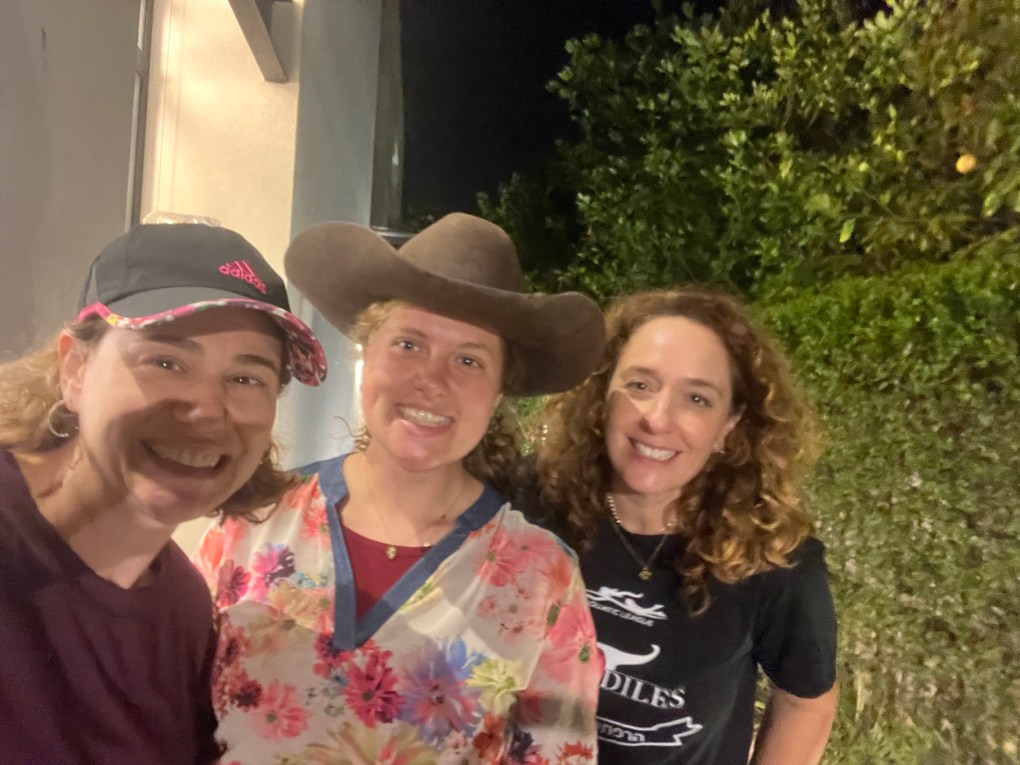
*photo with one of the cowgirls who support Israel.