Parshat Ki Tavo: Today

“Never leave that till tomorrow which you can do today.” — Benjamin Franklin

Parshat Ki Tavo, in its list of blessings and curses, repeatedly emphasizes the word ha-yom (“today” or “this day”). Why such stress on the present moment?

Rashi, commenting on the verse “The Lord your God commands you this day to observe these laws…”, explains that mitzvot should feel new each day, as though we are receiving them afresh at Sinai. The Chafetz Chaim offers another perspective: ha-yom, the emphasis on today, reminds us not to take our days for granted. Additionally, he teaches that real growth comes not through lofty, overwhelming long-term goals, but through small, achievable steps we commit to today.

This theme of ha-yom also runs through the Rosh Hashana liturgy: “Today is the birthday of the world… today all creatures stand in judgment.” The Netivot Shalom links this emphasis on ha-yom to hitchadshut (renewal)– teaching that Rosh Hashana, the day of creation according to Rabbi Eliezer, carries unique potential for new beginnings in our relationship with God and with one another. Similarly, in the haftarah of Rosh Hashana, ha-yom marks the day Hannah’s prayers for a child were finally answered—a reminder that each new day holds the possibility of hope and change.

This week, in Israel and in the U.S., we have seen too many precious lives cut short through terrorism and hatred. Ha-yom—so central in our parsha and on the day of judgment—calls us to treasure what we have, to believe in the power of prayer for what we yearn for, and to begin today the work of building a safer, kinder, and more humane world. Shabbat Shalom -Karen Miller Jackson

Parshat Ki Tavo: Individual and National Gratitude

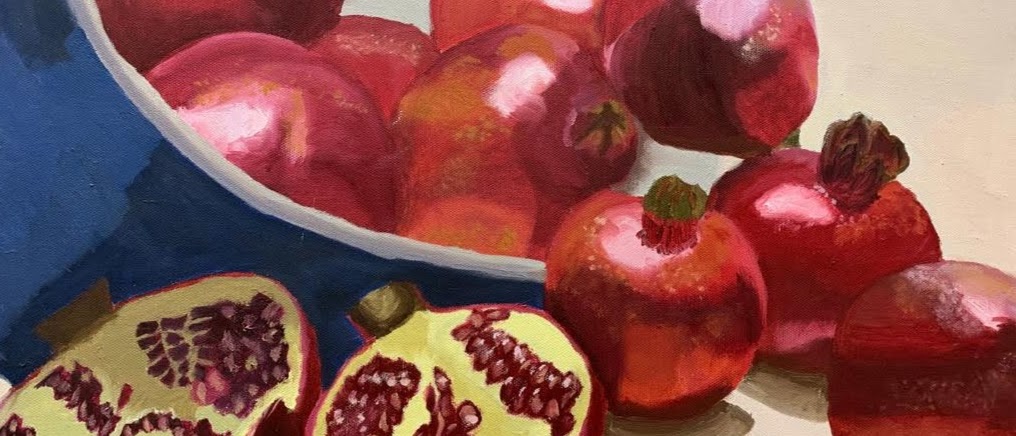
Parshat Ki Tavo opens with the mitzvah of bikkurim, the offering of first fruits. This ceremony, echoing previous biblical stories, carries a relevant message for our generation’s relationship with the land of Israel.

After settling the land, the people are commanded to bring their first fruits to the Beit Hamikdash and recite a declaration recounting their journey from Egypt to Israel. On an individual level, Rashi explains that bringing bikkurim demonstrated that a person was not “kafui tova,” ungrateful to God. This recalls the story of Kayin, who also brought “fruit of the soil” but is depicted in midrash as offering a sub-standard gift to God and fighting with his brother about what belonged to him. In contrast, offering the first and most precious fruits to God teaches us to express gratitude and appreciate the land and its blessings.

The same is true on a national level. Rashi teaches that the mitzvah of bikkurim applied only after Bnei Yisrael, the nation, had inherited the land. This underscores the communal dimension of bikkurim. This is further reinforced by the parallels between bikkurim and the story of the spies. Both involve the fruit of Israel and reflect how we speak about the land. Rabbi Elchanan Samet explains that the spies brought back supersized fruit not to amaze the people, but to dissuade and demotivate them. Bikkurim serve as a tikkun (rectification) for the meraglim. While the spies spread negativity about the land, bikkurim is a way of speaking positively and expressing gratitude for the land’s bounty.


The bikkurim ceremony took place only while the Temple stood. Yet, the declaration is preserved and read out each year at the Pesach seder. The enduring message of this declaration reminds us of the responsibility we bear in how we speak, both individually and as a nation, about the land of Israel today. Shabbat Shalom -Karen Miller Jackson


Parshat Ki Tavo: Communal Gratitude

Parshat Ki Tavo opens with an expression of gratitude for Israel and its produce. The interpretation of “bikkurim” – the mitzvah to bring one’s first fruits in Israel to the mikdash – reinforces the Jewish people’s love and commitment to God and Israel throughout history.

Rashi explains that offering the first, often most precious fruits, to God, demonstrated that a person was not “kafui tova,” ungrateful to God. Rambam writes that bikkurim are a reminder to remain humble about our success, and to remember that God is the ultimate source of such blessings. Hence, the verbal recalling of our origins as slaves in Egypt, instilling us with humility and appreciation. In addition to bringing the fruits, a person recites before the kohen: “I acknowledge this day before God, that I have entered the land…” Hence the Sforno and Ramban see bikkurim as an expression of gratitude for the gift of Eretz Yisrael. 

When does the mitzvah of bikkurim apply? Midrash Sifrei states that bikkurim apply as soon as an individual enters the land of Israel and begins to produce fruit. Rashi, however, comments that it began only when all of Bnei Yisrael conquered and inherited the land. According to Rashi, there is a communal dimension which is needed in order for bikkurim to be fulfilled properly. 

Similarly, the expression of gratitude in our daily tefilla contains this dual nature. “Modeh Ani,” an individual’s immediate and spontaneous expression of gratitude, said each morning before getting out of bed corresponds to Sifrei’s understanding of bikkurim: brought immediately by individuals. Then there is a communal gratitude of “Modim,” in the amidah. This gratitude, expressed in the plural, is likened to Rashi’s view that bikkurim be taken only when all Klal Yisrael was settled in Israel. 

The generation entering the land of Israel knows the consequences of spreading ingratitude and negativity about Israel. Bikkurim creates a system for the Jewish nation to practice and ensure communal gratitude and appreciation of Israel throughout all time. Shabbat Shalom -Karen Miller Jackson


Parshat Ki Tavo: Service

“Those who have seemed to me to be the most happy, contented and fulfilled have always been the people who have lived the most outgoing and unselfish lives.” – Queen Elizabeth II

Parshat Ki Tavo opens with the mitzvah of “bikkurim.” The people are commanded, after they settle Israel, to bring their first fruits to the Beit Hamikdash and recite a declaration about their journey from Egypt to Israel. What was the purpose of this mitzvah? And how can we preserve its message in our lives today? 

Rashi explains that bikkurim demonstrated that a person was not “kafui tova,” ungrateful to God. Taking the first, often most precious fruits, and offering them to God, is an expression of gratitude for such bounty. Rambam writes that bikkurim are a reminder to remain humble about our success, and to remember that God is the ultimate source of such blessings. Hence, the verbal recalling of our origins as slaves in Egypt, instilling us with humility, appreciation and generosity.

The language of “bringing the fruit of the soil” recalls the story of Kayin in Bereshit. The midrash depicts Kayin as ungenerous and entitled, the opposite of bikkurim. He brought a sub-standard offering to God and fought with his brother about what belonged to him.

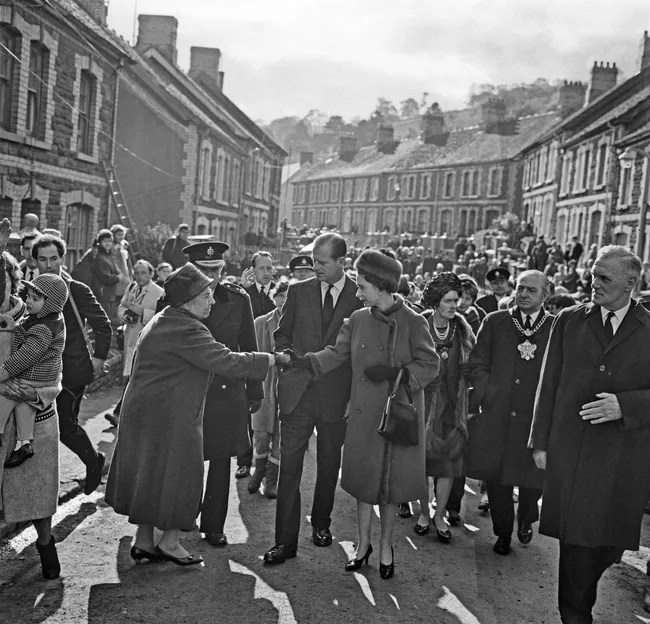
Martin Buber pointed out that the root נתן, to give, appears 7 times in parshat bikkurim. Recurrences of 7 in Torah are always significant. By remembering God’s generosity and “giving back” to God, one becomes more generous. Dr. Tal Ben Shachar points out that the root n.t.n is a palindrome: the more we give, the more we receive, leading to increased happiness. Perhaps this is why this section ends with rejoicing while sharing our fruits with the less fortunate. Queen Elizabeth modeled this value to the world by devoting most of her life – over seventy years – to the service of her country. May we all find ways to be generous, to serve our country and society and to express gratitude, bringing more happiness to our lives. Shabbat Shalom -Karen Miller Jackson

Photo: Queen visiting Aberfan Gallo IMages/Getty images (https://www.news24.com/you/royals/thequeen/queen-elizabeth-the-highs-and-lows-of-a-long-memorable-and-well-lived-life-20220908)