

Parshat Ki Tetze: Preventing Strife in Society

“When you go out to war…” These opening words of the parsha are sobering to read as we approach the two-year mark of this war. Even more striking is their placement at the beginning of Parshat Ki Tetze, where they serve as a stark reminder of the toll war exacts—not only on individual soldiers but also on the wider society back home.

The parsha begins with the law of the eshet yefat to’ar, the foreign woman taken captive, whom a soldier may desire during wartime. While the Torah permits him to bring her home, it imposes strict conditions: she must be given a month to mourn her family, and afterwards he must either marry her or set her free. For its time, this law was revolutionary, significantly limiting the abuse of women in wartime. After this, the parsha shifts to matters of family and society.

It is striking that Ki Tetze begins here, after the laws of war were already given in Shoftim. Why is this law brought in this week’s parsha, and what message does its placement convey?

Some commentaries find a thematic link between the eshet yefat to’ar and the laws that follow. The midrash Tanhuma, noting its juxtaposition with the laws of polygamy and the rebellious son, teaches: one sin leads to another sin.” In other words, a relationship born solely of physical desire will inevitably lead to family strife and ultimately catastrophe.

But there is another lesson here as well. War—even when necessary, even when far from home—carries deep consequences: for the enemy, for the soldiers who risk their lives, and for the nation they fight to defend. The Torah places this law at the head of the parsha precisely before the societal laws that follow, reminding us that responsibility extends beyond the battlefield. We must be vigilant, too, in preventing conflict within our homes and communities, and in preserving our nation as one family. Shabbat Shalom -Karen Miller Jackson

* photo of car burnt in Jerusalem from TOI

Parshat Ki Tetze: How and Why we Remember

Zachor” – Three times parshat Ki Tetze instructs us to remember a pivotal event in biblical history. When the Torah says “zachor” it wishes to convey a moral and spiritual awareness to carry with us always. 

First, we are instructed to remember (zachor) what God did to Miriam in the desert, when she was punished for speaking lashon ha-ra (slander) against her brother Moshe. Second, when the parsha presents a list of mitzvot regarding how to treat the stranger, orphan, and widow, these commandments are framed by the charge to remember (zachor) that we were once slaves in Egypt.  Third, the parsha ends with the instruction to remember (zachor) what Amalek did to us on the journey out of Egypt – they lacked fear of God and attacked the Jewish people at their weakest. 

Ramban sees deep meaning in the word “zachor” and comments: zachor signifies that these memories — the story of pure evil (Amalek) and the story of evil speech (Miriam) — must be actively remembered and verbally conveyed to future generations, underscoring their seriousness. While other commentators view the command to remember Miriam’s lashon ha-ra as a recommendation, Ramban argues that it is one of the 613 mitzvot. A similar point is applied to the third zachor, remembering that we were slaves in Egypt, which we verbally recall in daily tefillah and at the Passover seder. This zachor compels us to be particularly sensitive to the plight of the vulnerable and reinforces the value of freedom.

Actively remembering these three episodes may have held different meanings for different generations. Today, we can internalize their messages as follows: 1) We remember acts of evil and hatred against us to protect ourselves and in hope of a better future, 2) We must be mindful of how we speak about our brothers and sisters, and 3) We must remember our right to be a free people in our own land. Shabbat Shalom -Karen Miller Jackson


Parshat Ki Tezte: Motherly Compassion

Parshat Ki Tetze contains many mitzvot. One in particular relates to a central theme during Elul and Rosh Hashanah: fostering and praying for mercy and compassion.

What is the purpose of the mitzvah of “shiluach ha-ken,” to send away the mother bird before taking her young or her eggs? The mishna Berachot teaches that one may not add to tefilla the statement: Be merciful with us as “Your mercy is extended to a bird’s nest.” One explanation in the gemara of this ambiguous statement is that it is best not to attach reasons to mitzvot. Still, many biblical commentaries see a deep connection between shiluach ha-ken and the trait of compassion.

Rambam, in Guide to the Perplexed, explains that if the Torah warns against causing such grief to birds, how much more careful should we be not to cause grief to people. The Ha’amek Davar highlights the bravery of the mother bird, who’s intuition is to stay and protect her children – an image of compassion par excellence. The word “rachamim” (mercy) is also related to the word “rechem” (womb), symbolic of the compassion a mother feels toward her child. Perhaps for this reason mothers – Sarah, Hagar, Hannah – feature prominently in Rosh Hashanah liturgy, when we pray fervently for God’s compassion.

The shofar which is blown throughout Elul, in the run up to Rosh Hashana, is also associated with rachamim, as it recalls the ram sacrificed instead of Yitzchak. According to the midrash, God called Moshe to go back up Mount Sinai a second time on Rosh Chodesh Elul. The shofar was blown then to awaken the people to repentance and in prayer for God’s mercy and forgiveness.

By emulating the compassion God has for us in this world – be it toward others or with ourselves – we merit the words of the Talmud, “anyone who has compassion for God’s creatures will receive compassion from Heaven.” Shabbat Shalom -Karen Miller Jackson


Parshat Ki Tetze: Practicing Compassion

Parshat Ki Tetze contains many mitzvot. One in particular relates to a central theme during Elul and Rosh Hashanah: fostering and praying for mercy and compassion.

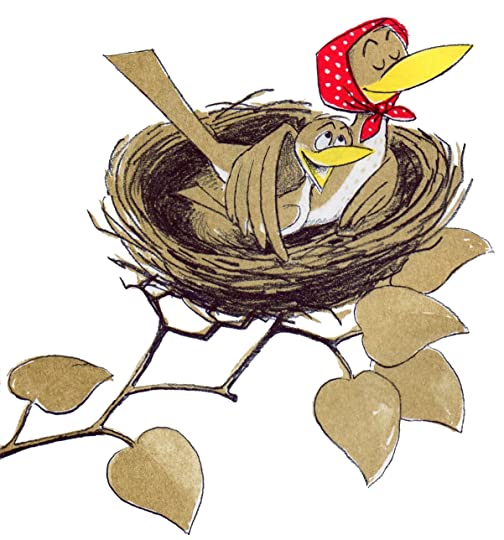
What is the purpose of the mitzvah of “shiluach ha-ken,” to send away the mother bird before taking her young or her eggs? The mishna Berachot teaches that one may not add to tefilla the statement: Be merciful with us as “Your mercy is extended to a bird’s nest.” One explanation in the gemara of this ambiguous statement is that it is best not to attach reasons to mitzvot. Still, many biblical commentaries see a deep connection between shiluach ha-ken and the trait of compassion.

Rambam, in Guide to the Perplexed, explains that if the Torah warns against causing such grief to birds, how much more careful should we be not to cause grief to people. The Ha’amek Davar highlights the bravery of the mother bird, who’s intuition is to stay and protect her children – an image of compassion par excellence. The word “rachamim” (mercy) is also related to the word “rechem” (womb), symbolic of the compassion a mother feels toward her child. Perhaps for this reason mothers – Sarah, Hagar, Hannah – feature prominently in Rosh Hashanah liturgy, when we pray fervently for God’s compassion.

The shofar which is blown throughout Elul, in the run up to Rosh Hashana, is also associated with rachamim. According to the midrash, God called Moshe to go back up Mount Sinai a second time on Rosh Chodesh Elul. The shofar was blown then to awaken the people to repentance and in prayer for God’s mercy and forgiveness.

By emulating the compassion God has for us in this world – be it toward others or with ourselves – we merit the words of the Talmud, “anyone who has compassion for God’s creatures will receive compassion from Heaven.” Shabbat Shalom -Karen Miller Jackson

*Photo excerpt from “Are You My Mother?” by P.D. Eastman


Healthy Sexuality

Parshat Ki Tetze opens with a disturbing law: when a Jewish man goes to war and desires a foreign woman among the captives, he may take her home on the condition that he waits one month during which her beauty is neglected and must then marry or free her. When seen in its biblical milieu and through the eyes of the midrashic rabbis, this law teaches us a lesson about healthy approaches to sexuality and the necessity of consent, and is particularly relevant for Israeli society this week.

The Torah emphasizes the soldier’s physical desire: He takes her based solely on her physical appearance: he “sees” her, “desires” her. She is known as “eshet yefat to’ar,” a beautiful woman. The woman has no voice or choice. The Torah’s concession to human weakness in allowing this woman to be taken would be unthinkable today and would be deemed a war crime. However, in the context of antiquity, the idea of putting constraints on victorious soldiers was revolutionary and significantly limited wartime rape. The midrash further discourages this behavior. Noting the incongruous placement of this law next to a law regarding polygamy and then the rebelious son (ben sorer u-moreh), the midrash teaches, “one sin leads to another sin.” Meaning, taking the eshet yefat to’ar into one’s house will cause conflict and a catastrophic breakdown of family relationships. It might be permitted, but it is toxic for everyone involved.

The Torah and the midrash were beacons of morality in a world where a female captive had no rights, which thank G-d is no longer the case. They remind us that sexual relations without consent has disastrous effects, and healthy sexuality goes beyond mere physical attraction.