
Parshat Mishpatim: Between Cruelty and Compassion

Children – dependent, vulnerable, defenseless – are the litmus test of our humanity. -Rabbi Lord Jonathan Sacks 

Parshat Mishpatim teaches what real compassion looks like. It highlights that cruelty, especially toward children, is a mark of unfathomable evil, whereas prioritizing and educating children in moral values is the greatest statement of hope for the future. 

The Torah commands us not to oppress the ger, the widow, or the orphan—the most vulnerable members of the biblical world: “If you mistreat them, as soon as they cry out to Me, I will hear their outcry.” The double language—aneh ta’aneh, tza’ok yitzak, shamoa eshma—underscores that just as the victim feels their pain deeply, God hears and responds with urgency.

Rabbi Sacks looked to the Shoah to contrast unimaginable evil with extraordinary humanity toward children. Janusz Korczak, a Polish-Jewish doctor and educator, exemplified moral courage and compassion when he refused to abandon the orphans in his care, even as they were sent to their deaths.

In Judaism, cruelty toward children is especially heinous because they embody our hope and future. Talmud Sotah teaches that after Israel crossed the Yam Suf, the infants were among the first to sing to God, recognizing His miracles. To the sages, children symbolize pure faith, goodness, and unshakable hope. That is why when we remember the redemption from Egypt, they are at the heart of our collective memory and moral responsibility.

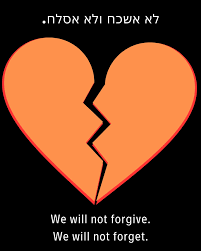
Ariel and Kfir Bibas symbolize the stark contrast between their society and ours: theirs is steeped in cruelty, while we are rooted in compassion, faith, and hope. May we honor all the children we have lost by securing and shaping a country and future worthy of the next generation. Shabbat Shalom -Karen Miller Jackson 


Mishpatim: Truth AND Compassion

Parshat Mishpatim contains laws which contribute to building a moral and compassionate society. Two mitzvot stand out as deserving special consideration within the framework of our contemporary world.

First, “keep far away from falsehood” (Shemot 23:7) – the language implies more than a command to be truthful, one should actively distance oneself from falsehood. The midrash Mekhilta contains a debate about whether this applies only to judges or to everyone. Elsewhere, the Torah clearly commands everyone not to lie. Here, we learn a key principle of Torah is that judges – societal leaders – should strive for truth and justice. Today, perhaps more than ever, lies and fake news are easier to access through social media. World leaders too have embraced lies and made it more acceptable to spread falsehood. In this context, “keep away…” has new resonance.

Second, “Do not oppress the stranger as we were once strangers in the land of Egypt.” (Shemot 23:9) This is one of numerous mitzvot in the parsha about protecting the vulnerable in society. Why does the Torah recall our time in Egypt? The Minchat Chinuch explains that reminding us of the anxiety and suffering our ancestors felt as strangers in Egypt “will move us to compassion for every person in a similar situation.” Drawing on our past experience in caring for the weak and vulnerable is also a core value in Torah.

 
What happens when one of these is praised and the other neglected? Sadly, we are seeing this in today’s “post-truth” world, where altruism is at times held above the truth. Courts, journalists and institutions which should be the embodiment of fairness and truth-seeking have lost objectivity. Perpetrators of evil have won over people’s sympathy. Rabbi Sacks presciently called this trend “altruistic evil,” when injustice and hatred spread under the flag of human rights. Parshat Mishpatim is a call to re-align the values of altruism and truth and to practice compassion when it is truly warranted. Shabbat Shalom and chodesh tov -Karen Miller Jackson


Parshat Mishpatim: Chesed and Compassion as Prayer

What is the relationship between social responsibility and tefilla? Two verses in parshat Mishpatim highlight God’s particular attentiveness to the cries of the vulnerable and oppressed.

The Torah warns against ill-treatment of a stranger, orphan or widow: “If you mistreat them, as soon as they cry out to Me, I will hear their outcry.” The verse contains three instances of double language: aneh-ta’aneh, tza’ok-yitzak, shamoa-eshma. This emphasizes that just as the victim will feel the pain of mistreatment more deeply, God will hear their cries and respond to their suffering more urgently. 

This unique and direct link with Hashem is also seen through the Torah’s instruction on how to loan money to the poor without taking advantage of them. It states: “If you lend money to My people, to the poor among you…” Rashi citing midrash Tanchuma explains that by referring to the person in need as “My people,” it is God’s reminder to treat him honorably, as he is “with God.” Also, “the poor among you” – be compassionate by considering yourself as though you are among the poor of your people. The Sefer HaChinuch explains that through this mitzvah we will be trained and habituated to the trait of kindness and of mercy. Indifference increases suffering, while developing and practicing compassionate behavior, leads to a more compassionate world. In the biblical world orphans, widows and the poor were among the most vulnerable. Therefore, it is through sensitivity to their experience and acts of lovingkindness, that we can develop a closer connection to God. 

When Rabbi Abraham Joshua Heschel marched with Dr. Martin Luther King in support of the civil rights movement, he said, “I felt my legs were praying.” May all of our acts of chesed and protests of injustice be like prayers and draw us closer to God. Shabbat Shalom -Karen Miller Jackson 

*Photo from https://www.jta.org/2012/01/10/ny/their-feet-were-praying : Martin Luther King Jr., left, and Abraham Joshua Heschel, right, during Selma march in 1965. (Courtesy of Susannah Heschel)