Parshat Tzav and Pesach

This week, Parshat Tzav coincides with Pesach—each centered on a sacrifice no longer offered, yet rich with enduring lessons about Jewish identity and observance.

The word tzav introduces the command to Aaron regarding the olah, the burnt offering. This sacrifice remained burning through the night, and each morning the priests began by clearing the ashes before starting anew. Rashi explains that tzav conveys zerizut—urgency and enthusiasm—applying both now and l’dorot for all generations. Chizkuni adds that such motivation was needed for a task done daily, which could easily become monotonous. How does this speak directly to our own lives today (l’dorot)? Just as the kohanim were called to maintain passion in their daily service, we are challenged to keep our Torah study and prayer fresh and meaningful despite their routine nature.

These same values—zerizut and l’dorot—are central to Pesach. As Bnei Yisrael prepared to leave Egypt, they were commanded to eat the korban Pesach b’hipazon: “with your loins girded, your sandals on your feet, and your staff in your hand; and you shall eat it in haste.” Though we no longer bring this offering, we recall it at the seder. We retell how the people marked their doorposts with its blood. There is a debate about whether the blood was placed inside, where only they could see it—Rashi explains this was to strengthen their observance and emunah—or outside, as Rambam suggests, a public rejection of Egyptian idolatry and immoral culture. Today, we need both: inward faith and outward expressions of Jewish identity.

The messages of these ancient offerings—bringing passion to our observance and strengthening our identity—are as relevant today as ever. Shabbat Shalom and Chag Kasher ve’Sameach – Karen Miller Jackson


Metzora and Pesach: Hope for our Home & Homeland

This week we triumphed over an existential threat that impacted us individually and nationally. Parshat Metzora and Pesach both focus on our homes and homeland as a source of strength, hope and protection. 

The parsha describes the purification process from tzara’at. This was a disease which affected not only a person’s body, but also can appear on one’s clothing and one’s home. However, tzara’at of the home is distinguished from that of the body and clothes as it only can appear once the people enter the land of Israel. While tzara’at is generally thought of as a punishment, when it appears on a home it can be seen in a positive light. Rashi teaches that it was a “besora,” good tidings, or a blessing, since the previous owners of the houses (Canaanites) hid their jewels in the walls which would be uncovered by Bnei Yisrael. Additionally, the kohen oversaw a process of renovation and purification which “attones for,” and renews the home. Establishing a home in Israel may entail hardship, but God provides hidden glimmers of hope and blessings. 

The home also plays a key role in the story of Pesach. Before they leave Egypt, God commands Bnei Yisrael to put blood on their doorposts. Rashi, citing the Mekhilta, explains that the blood was put on the inside of the doorpost, “as a sign for you.” And, God would see the people of Israel involved in performing mitzvot and would then protect them. The blood on the doorposts teaches that by fostering commitment in our individual homes, we will merit God’s national protection.

This Pesach, many homes are incomplete. Some have lost loved ones, some are still healing, some are away defending our homeland and some are still held captive, may Hashem redeem them. May this Pesach bring strength, nechama and renewal to our individual homes and may God see our commitment to our homeland and reward us with protection and salvation. Shabbat Shalom and Chag Kasher ve-Sameach –Karen Miller Jackson


Tazria: Words that Hurt/Words that Heal

One of the most unique traits of humankind is that we are created with the gift of speech and communication. How we use this gift can directly impact perception of ourselves, others and our world. 

The skin disease known as tzara’at, described in parshat Tazria, is associated with lashon ha’ra (evil speech) in Torah: When Miriam speaks badly about her brother Moshe, she gets tzara’at. When Moshe’s hand becomes leprous, Rashi explains that this is because he spoke badly about Bnei Yisrael. Just as the disease spreads across the body, critical and hurtful language spreads negativity and discord, and it can have disastrous consequences.

Speech is also a key element in the Pesach story. When the people were in Egypt, the midrash teaches that they had forgotten their language and that “speech was in exile.” The redemption, the Exodus, is characterized through Israel rediscovering their voice, through speech and song. Hence, Hasidic writings emphasize that Pesach can be read as “peh-sach,” “the mouth speaks.” And, the key mitzvah of the holiday is speaking – telling the story of redemption. This may also relate to Elijah’s connection with Pesach. He is harshly critical of Israel when he proclaims to God, “the Israelites have forsaken Your covenant…” In the Talmud, Elijah returns transformed and corrects false negative perceptions of the people. Rav Kook writes that he “perceives every spark of holiness in this world and redeems it.”  

This imperative of the parsha and Pesach feels particularly resonant for our world today. People have been moving further apart in their beliefs, making it harder to be able to disagree and debate ideas civilly. Also, we have seen how negative speech about the State of Israel quickly reverberates around the world. As it says in Mishlei: “There is blunt talk like sword-thrusts, but the speech of the wise is healing.” Shabbat Shalom -Karen Miller Jackson


Parshat Tzav and Pesach: Gratitude

This week parshat Tzav coincides with the upcoming celebration of Pesach, both of which teach about the positive power of recognizing when to be grateful and of expressing gratitude. 

Parshat Tzav describes the korban Todah, brought after a person experiences a personal miracle such as: a) being healed from an illness, b) being freed from prison, c) crossing a desert or d) sailing across a sea (Rashi). When korbanot could no longer be brought, Chazal instituted a bracha to be said instead, known as the birkat hagomel. Rav Kook, in Olat Reiyah, explains that it is human nature to become indifferent to the basic goodness we are granted each day, but after a traumatic experience one is given a new perspective on life. Reciting the birkat hagomel, or bringing the korban Todah, helped generate feelings of appreciation in ourselves and others.

Expressing gratitude is also a fundamental part of Seder night. Mishna Pesachim teaches that after we tell the story of the Exodus we “are obligated to thank, praise, glorify, extol, exalt, honor, bless, revere, and laud the One who performed for our forefathers and for us all these miracles.”

The full experience of yetziat mitzrayim includes our expressing thanks, just as was done by Bnei Yisrael. In fact, the Talmud teaches that the first time Hallel was recited was after yetziat mitzrayim and this regular Hallel is called by the Sages, “Hallel mitzri”. On Seder night we say an additional section called “Hallel ha-gadol.”

This moment in Israeli history too, feels as though it warrants recognition and expressions of gratitude. Wherever one stands on the political spectrum, the parsha and Pesach are reminders not to become complacent and indifferent to the miracle that is the modern State of Israel. May we draw on this time of positive reflection to listen better, to build consensus, to safeguard and feel proud of our national homeland. Shabbat Shalom and Chag kasher v’sameach! -Karen Miller Jackson


Pesach: Elijah at the Seder

As the seats at this year’s seder table fill up again with family and friends, one more guest is always traditionally invited to seders all over the world – Elijah. A look at the portrayal of Eliyahu ha-navi in Tanach and midrash shows why this beloved character plays a key role on Seder night.

There are two characterizations of Eliyahu in Jewish sources. In the books of Kings, Eliyahu is a prophet who performs miracles and attempts to restore the Jewish people’s faith in God. However, he becomes intolerant of their transgressions and is zealous for God, so he is taken up to heaven in a whirlwind. This is contrasted with the depiction of Eliyahu in rabbinic literature, as miraculously appearing to Jews throughout the generations. Eliyahu is at times the harbinger of redemption, like when he stands at the entrance to the cave and informs Rashbi and his son that it is safe to emerge after hiding from the Romans. He also resolves debates and spreads peace among the sages. Additionally, his chair is at the center of the brit milah ceremony, marking the continuing of the covenant with God from generation to generation. 

The mishna Eduyot ends with the opinion that Eliyahu returns to bring peace to the world, particularly within family relationships based on another biblical source. The prophet Malachi concludes by saying that before the coming of redemption, God will send Eliyahu to reconcile or increase love of parents with children and children with parents.”

When we pour a cup of wine for Eliyahu ha-navi and invite him to our seder, we are highlighting that the seder is a time of potential – for redemption, for nurturing family relationships, for peace and for passing on Jewish tradition from one generation to the next. Chag Sameach! – Karen Miller Jackson


Metzora: Positive Speech

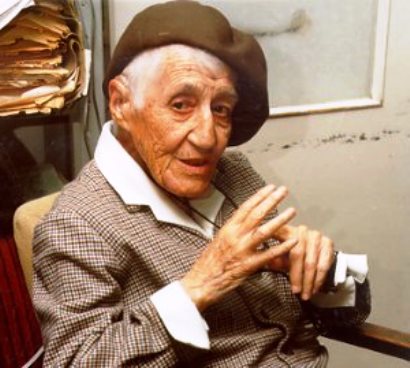
Parshat Metzora does not state explicitly whether tzara’at is a punishment, and if so what for. However, the commentaries understand tzara’at to be a punishment for lashon hara (speaking ill of others). I would like to share the following explanation for this, provided by the great Tanach scholar Nechama Leibowitz z”l, whose 25th yahrzeit was this past week. 

Nechama, as she was fondly called by her students, combined literary analysis with deep reading of midrash and medieval commentaries in her teaching. In her parsha books, which are a staple in many Modern Orthodox homes, she cites two other biblical stories and their interpretations, which link tzara’at with speaking lashon ha’ra. When tzara’at appears on Moshe’s hand in Shemot, it follows him speaking negatively about bnei Yisrael. In Bamidbar, when Miriam speaks badly about Moshe, she gets tzara’at. These literary connections support the association between tzara’at and slander.

The midrash reinforces this by reading the name “Me-tzo-ra” (one afflicted with tzara’at) as connected to “motzi-shem-ra,” spreading evil talk. The Talmud explains that the person afflicted with tzara’at must be isolated because speaking lashon ha’ra has potential dangers for human relationships and society. By remaining alone for at least seven days a person has time to internalize this. 

Negative speech can become viral and spread negativity like tzara’at. Conversely, positive speech leads to goodness and redemption. We can encourage, console, and strengthen each other through speech. Metzorah is read just before Pesach this year, when the haggada and its discussion is the paradigm of positive speech. The Hasidic masters read the word Pesach as “peh-sach,” the mouth speaks. In Egypt there was an “exile of speech”, an inability to express ourselves truly and positively. Pesach is the time of redemption of speech, speech which leads to friendships, strong communities, faith and commitment between God and the Jewish people. With prayers for healing and strength. Shabbat Shalom – Karen Miller Jackson