Parshat Pinchas: Israel Advocacy

The daughters of Tzelofchad, featured in Parshat Pinchas, offer a powerful model for modern-day Israel advocacy and passionate Zionism.

Following the Torah’s description of how the Land of Israel would be apportioned, these five sisters boldly step forward, approaching Moshe with a groundbreaking request: to inherit a portion of the land in the absence of male heirs. Who were these women, and what fueled their deep attachment to the land?

The midrash reveals them as courageous, devoted lovers of Eretz Yisrael. The Torah emphasizes twice that they descend from the tribe of Menashe, and the second time it specifies, “Menashe the son of Yosef.” Rashi explains that this repetition links their love of the land to Yosef, who also cherished the land—chibev et ha’aretz—and insisted his bones be brought back to be buried there. Their passion was inherited. Further, in a Talmudic debate about their father’s identity, Rabbi Shimon identifies Tzelofchad as one of the ma’apilim—those who attempted to enter the land even after God had decreed otherwise. Though their act was misguided, it reflected an overwhelming love for the land—one that clearly lived on in his daughters.

Beyond their passionate Zionism, the daughters of Tzelofchad exemplify how to seek justice through constructive, respectful engagement. Bamidbar Rabbah presents them as a counterforce to the fear, cynicism, and rebellion that plagued their generation. When Moshe brings their case before God, the response is striking: “The daughters of Tzelofchad speak rightly.” Their words are affirmed by God.Bnot Tzelofchad remain a timeless inspiration. They teach us that it is not only what we say about Israel that matters—but how we say it. To speak up, and to speak well—for the sake of our people, our land, and our future. Shabbat Shalom -Karen Miller Jackson

Parshat Pinchas: Modeling Positive Change

“Be a light, not a judge. Be a model, not a critic” – Stephen Covey

When is criticism constructive? And when is it destructive and demoralizing? The daughters of Zelophehad, in parshat Pinchas, demonstrate how to lead positive change. They are a much needed model for today.

After the Torah describes how the land of Israel will be divided, the daughters of Zelophehad approach Moshe and request an inheritance in Israel, as they have no brothers to inherit land. The commentaries characterize them as having great “chibbah” (love) for Israel. The Talmud goes even further, describing them as “darshaniyot” (interpreters), tzidkaniyot (righteous) and “chachmaniyot” (wise). How do we see these qualities in their behavior?

The daughters emphasize that their father “died by sin in the midbar,” but not as a part of Korah’s congregation. Rashi explains that they emphasized that while their father sinned, he did not lead others to sin like Korah. Also, Korah spread unfounded criticism and refused to engage in dialogue with Moshe.

The midrash also contrasts the daughters of Zelophehad with the spies, who slandered the Land of Israel and spread negativity among the nation. Their words led to catastrophe for that generation. The midrash views the daughters’ words as the opposite of the language that previously led to disasters in Bamidbar. They are proactive. They embrace dialogue and use positive language by saying: “We want to be part of this too!”

Hashem’s response is “The daughters speak justly,” connoting deep affirmation. After the earlier stories of people who found ways to criticize and sow discord, these five women model proactivity, dialogue, positivity, and love of the Land of Israel. When we speak up for justice or work to effect change let’s follow in the footsteps of b’not Zelophehad. Shabbat Shalom🇮🇱- Karen Miller Jackson


Parshat Pinchas: Change — The Torah Way

What does parshat Pinchas teach about balancing tradition with innovation and about effecting successful change?

Bamidbar 28 repeats the various types of korbanot (offerings). Why is this repetition necessary? Rashi explains that the first time, in Tetzaveh, was during the inauguration of the mishkan, while now, it is “l’dorot”– to observe for all time. One verse in particular emphasizes the significance of consistent commitment involved in the daily tamid offerings: “You shall offer one lamb in the morning, and the other lamb you shall offer at twilight.” The Ein Yaakov cites Rabbi Shimon ben Pazi who teaches that this verse is “the essence of Torah.” The twice daily ritual creates a framework which shapes us and our relationship with God. According to one position in the Talmud, tefilla was instituted based on the daily tamid korbanot. This also captures the essence of tefilla, strengthening our connection to God daily.

How interesting then, that the korbanot which represent consistency, tradition and devotion immediately follow two episodes about significant change and innovation. First, after the Torah delineates how the land of Israel will be divided, the daughters of Zelophehad approach Moshe with a request for inheritance in Israel, as there were no sons to inherit. Their story highlights a delicate balance between tradition and innovation. The words which characterize their approach are words associated with tefilla: “Vatikravna” (and they drew close) and “vata’amodna” (and they stood). Drawing close — from the same root as korban, and standing — is reminiscent of the amidah. Second, Moshe sees the need to publicly and formally appoint his successor Joshua. Here too, the Torah uses language of devotion and continuity: Joshua is asked “to stand” before the nation and Moshe transfers some of his glory onto Joshua. 

Perhaps there is another reason the command to be punctilious in devotion and offerings to God follows these moments of significant change: To demonstrate how to bring about positive change while standing firm in tradition and religious commitment. Shabbat Shalom -Karen Miller Jackson

*May our tefillot bring nechama to the families of chayalim Shilo Amir z”l and David Yitzchak z”l and may their memories be for a blessing.


Pinchas: Learning Leadership from the Women

“Be a light, not a judge. Be a model, not a critic” – Stephen Covey

Parshat Pinchas profiles various types of leadership. Among them, the daughters of Zelophehad demonstrate how to lead positive change. They are a much needed model for today. 

After the Torah describes how the land of Israel will be divided, the five daughters of Zelophehad approach Moshe and request an inheritance in Israel, as they have no brothers to inherit land. The commentaries characterize them as having great “chibah” (love) for Israel. The Talmud goes even further, describing them as “darshaniyot” (interpreters), tzidkaniyot (righteous) and “chachmaniyot” (wise). How do we see these qualities in their behavior?

The daughters emphasize that their father “died by sin in the midbar,” but not as a part of Korah’s congregation. Rashi teaches that they emphasized that while their father sinned, he did not lead others to sin like Korah. Also, Korah spread unfounded criticism and refused to engage in dialogue with Moshe. 

The midrash also contrasts the daughters of Zelophehad with the story of the spies. The spies slandered the Land of Israel and spread negativity among the nation. After their words, the people said they wanted to return to Egypt, leading to catastrophe for that generation. The midrash views the daughters’ words to Moshe as the opposite of the language and behavior that previously led to disasters in Bamidbar. They are proactive. They embrace dialogue and use positive language by saying: “We want to be part of this too!” 

Hashem’s response is “The daughters speak justly.” The midrash sees this as deep affirmation. The Talmud pays them the ultimate compliment: it teaches that the laws of inheritance for daughters are attributed to, and written by, the daughters of Zelophehad. After the earlier stories of people who found ways to criticize and sow discord, these five women model proactivity, dialogue, positivity, and love of the Land of Israel. Shabbat Shalom – Karen Miller Jackson

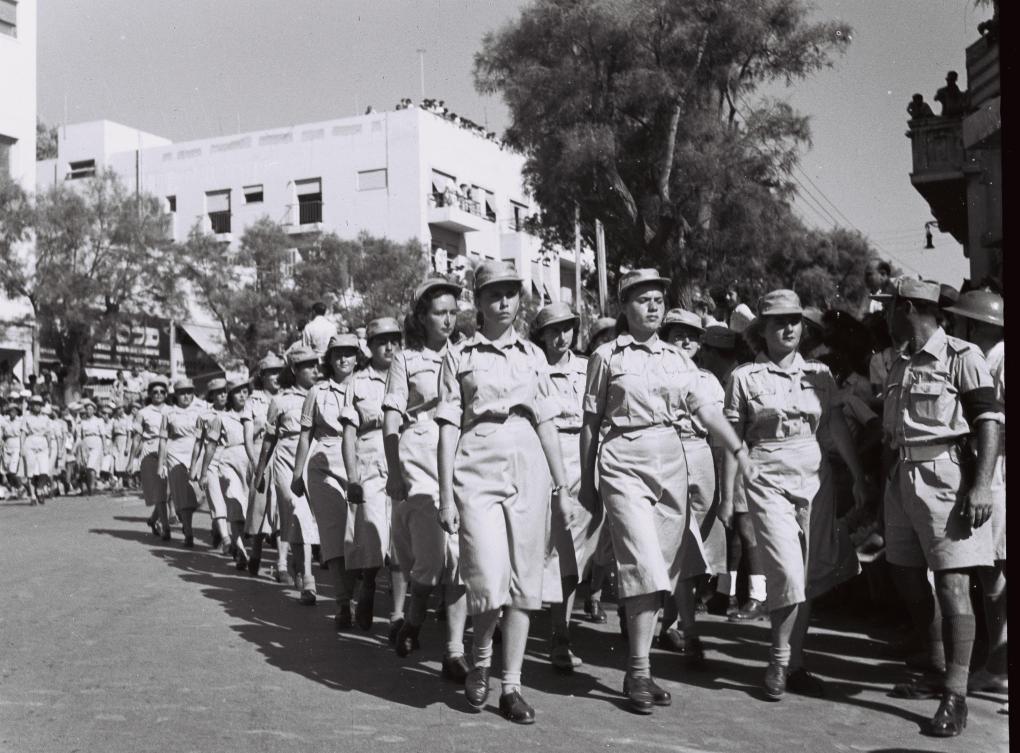
*photo https://he.wikipedia.org/wiki/%D7%97%D7%99%D7%9C_%D7%A0%D7%A9%D7%99%D7%9D#/media/%D7%A7%D7%95%D7%91%D7%A5:Chel_Nashim_IDF1948.jpg