Parshat Emor: Our Journey from Egypt to Sinai

As we mark Lag BaOmer, how fitting that this week’s parsha, Emor, contains the biblical source for Sefirat HaOmer. What is the significance of counting the days between Pesach and Shavuot? Many commentaries understand this period as a time for mindfulness and personal growth.

One approach highlights the value of elevating ourselves beyond mere physical and material concerns. The Omer period marks an agricultural transition in the Land of Israel — from the barley harvest to the wheat harvest. Sforno explains that counting each day is like a tefilla, a prayer of gratitude to God for the harvest, which we must not take for granted. This culminates in Shavuot, also known as Chag HaBikkurim, the festival of first fruits. In this way, counting the Omer becomes a daily reminder to be grateful for the Land of Israel and to never take its blessings for granted.

A second approach views the Omer as connecting two foundational events in Jewish history — the Exodus and the giving of the Torah. The Sefer HaChinuch explains that by counting, we mirror the journey of Am Yisrael, who moved from physical freedom to spiritual purpose. The Lubavitcher Rebbe adds that each person must count individually, underscoring the unique potential and personal agency of every Jew in the journey toward Torah. Similarly, Rabbi Shaul Yisraeli wrote that recalling our starting point as slaves gives us strength and deepens our appreciation for where we are going.

These two perspectives — one agricultural and the other historical — offer us meaningful orientation both in times of abundance and in times of challenge. This is a moment to be mindful of the privilege of living in Israel and to appreciate the miracle of its existence. It is also a time to look back on Jewish history, drawing strength from the perseverance and hope that continue to carry us forward toward better days. Shabbat Shalom -Karen Miller Jackson

Parshat Behar: Bring Them Home!

Today is day 31 of the Omer and day 231 of praying for the return of the hostages. Parshat Behar highlights the significance and impact of quantifying time.

When the Torah tells us to count time, it uses the language: “count for yourself/yourselves.” This connotes taking responsibility. The Sifrei teaches that in order to fulfill the mitzvah of sefirat ha-omer, each individual has to count for himself. Additionally, the ritually impure zav and zavah, must count the days until they may immerse in a mikveh. Our parsha contains the command to count seven times seven years, until the Jubilee (yovel) year, when debts were forgiven and slaves freed. Here, the beit din counts for the people. 

What do these countings have in common? All three signify a transformation, individually or nationally. Today, the zavah count is preserved in the seven clean days counted by a woman in niddah. As she moves into a state of taharah, there is renewed opportunity for new life or renewed love in the husband-wife relationship. Similarly, the Sefer HaChinuch teaches, as we count the omer days between Pesach and Shavuot we undergo a process of preparation to receive and recommit to the Torah and its values. Yovel, according to Rabbbenu Bahya, is an opportunity to pause and look back at previous generations and focus on a return to our roots, a reset, so to speak. It is a time to undertake a societal tikun, and refocus our commitment to God and the land, and to our origins and national beginning.  
As we count each day in prayer for the hostages, let’s apply the lesson of the yovel year and draw on our common bond with our land and our people, until they please G-d return home soon. Shabbat Shalom -Karen Miller Jackson

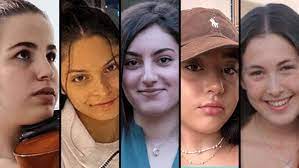
* photo of the 5 tatzpitaniyot hostages from ynet.


Parshat Emor: The Spiritual & the Physical

As Lag BaOmer approaches, how appropriate that this week’s parsha, Emor, contains the biblical source for Sefirat HaOmer. What is the purpose of counting the days between Pesach and Shavuot? 

In rabbinic literature, these two holidays are characterized by an emphasis on the historic religious events of the Exodus and Matan Torah. However, in Torah, these times are associated with material matters as well: it begins with the barley harvest and ends with the wheat harvest in the land of Israel. Why does the Omer period contain this duality of the physical-agricultural and the spiritual-historical? The Abudarham teaches that we count so that we don’t get distracted by the harvest and forget to focus on Shavuot and Matan Torah. We mustn’t let the physical distract us from remembering the spiritual. Sforno too, highlights the physical-spiritual connection: the sefira each day is like a tefilla, an expression of gratitude to God for the harvest, which we mustn’t take for granted, culminating in Shavuot, a.k.a “chag ha-bikkurim.” 

These interpretations highlight that Sefirat HaOmer teaches the interconnectivity and necessity of the spiritual and the physical. This is also a central theme in the Talmudic story of Rabbi Shimon bar Yochai, who has become associated with Lag BaOmer. At first, Rashbi valued Torah study above everything and derided material things. He criticized Roman structures such as bath houses and bridges, leading to his hiding in a cave for thirteen years. When he eventually emerged somewhat changed, he decided to make a tikkun (fix) in this world. 

The message of Rashbi’s story and commentaries on Sefirat HaOmer, is that we are not meant to live in a wholly spiritual existence, disengaged from the world. At the same time a purely physical existence is devoid of meaning. The Torah approach is to engage in and elevate the earthly by thanking God for such gifts. Rashbi reminds us to look around and ask, “how can I make a tikkun here and now?” Shabbat Shalom -Karen Miller Jackson