
Vayigash: Resolving Family Discord

Vayigash teaches us how to resolve deep discord. For more than twenty years, Yehuda and Yosef represent a family torn apart by conflict, resentment, and estrangement. They remain divided until this moment, when reconciliation finally becomes possible. Yehuda now steps into his role as a leader, and Yosef rises above the pain of the past to act with grace. Their story of family rupture and repair offers a powerful model for our larger family – the people of Israel. 

Yehuda takes the first step and approaches his brother: “Vayigash Yehuda.” This is a pivotal moment in the story. At their lowest point, the brothers “could not speak peaceably” with Yosef; Rashi describes their disdain as having moved on from feelings of brotherhood. Yet here, Yehuda – still unaware that Yosef is his brother – pleads with him to honor the promise made to their father and to protect the youngest brother, Binyamin.

Yehuda’s  willingness to draw close, to speak honestly, and to take responsibility is what ultimately touches Yosef’s heart and bridges the divide. Yehuda models what moral leadership looks like.

At the same time, Yosef rises above potential resentment and reveals himself to his brothers with grace. As Nechama Leibowitz notes, Yosef’s choice of language reflects his inner transformation. First he emphasizes that his brothers sold him into slavery. Yet, soon after he reframes the story using the language of shlichut, recognizing God’s larger plan in bringing him to Egypt to save his family and, ultimately, his people.

The Jewish people need both of these voices today: leaders who take responsibility, like Yehuda, and individuals who, like Yosef, are able to rise above resentments and focus on the larger picture, asking what constructive role each of us can play now for Am Yisrael. Shabbat Shalom -Karen Miller Jackson


Parshat Nitzavim: The Call of Jewish Peoplehood

We usually think of teshuva (repentance or return) as applying to individuals. Yet Parshat Nitzavim teaches us about another layer—one especially resonant at this moment in Jewish history—national teshuva.

The Ramban derives the mitzvah of teshuva from our parsha, traditionally read on the Shabbat before Rosh Hashana. The Hebrew root sh.u.v is repeated seven times in this section, characterizing teshuva as an ongoing process. It encompasses both the individual aspect: “You will return to your God…” and the collective dimension: “God will return and gather you from all the nations…” What, then, does national teshuva look like?

Rav Kook teaches that the Jewish people’s return to the Land of Israel is the foundation of the greatest teshuva. Rabbi Jonathan Sacks, building on the Ramban, described teshuva as a “double homecoming”—physically to the land and spiritually to God. Perhaps, too, there is a dimension of spiritual return to the Jewish people themselves: a reawakening of responsibility, solidarity, and shared destiny. As Rabbi Sacks asked, can we hear “the divine call (‘Where are you?’) within the events that happen to us, whether individually as personal fate or collectively as Jewish history”?

The prophet Hosea offers further insight into national teshuva when he calls on Israel to return to God. The core of teshuva is through words: “Take words with you and return to God… Instead of bulls, we will pay [with offering of] our lips.”(14:3) National teshuva is achieved through words of prayer and in using language that fosters healing and repair. 

Especially now, amid today’s challenges and uncertainties, the call to teshuva resounds on both the individual and national level. How can each of us respond—through prayer, action, and words—in a way which strengthens Israel, the Jewish people, and the wider world? Shabbat Shalom & Shana Tova🇮🇱🍎🍯-Karen Miller Jackson


Parshat Re’eh: Remembering Our “We”

At times in Jewish history, diversity and debate have been celebrated as sources of strength; at others, discord has threatened to tear us apart, making unity essential. One verse in Parshat Re’eh offers a powerful reminder of this balance.

“You are children of the LORD your God. You shall not gash yourselves (lo titgodedu) or shave the front of your heads (karha) because of the dead…God chose you… to be His treasured people.” What is the connection between these ancient mourning rituals and our status as God’s children, the chosen people? Rashi explains that the Torah prohibits these mourning rituals because they compromise bodily dignity as the “children of God.” The Rabbis, however, interpret the verse differently: lo titgodedu means “lo ta’asu agudot agudot”—“do not split into factions.” In halakha, this is applied to communal disputes, such as when different courts or synagogues in one city follow conflicting practices. The issue grew even sharper with the ingathering of Jews from diverse communities to Israel, raising the challenge of preserving distinct customs without fragmenting into factions.

What is the purpose of this mitzvah? Rashi comments that it should not look like there are two Torahs. According to Rambam it is to prevent great conflict between Jews. Similarly, Yalkut Shimoni interprets the word “karha,” as an allusion to the kind of discord sown by “Korah” – don’t make a “karha” (deep divide) within the Jewish people. Perhaps this is why this prohibition is bracketed by reminders of our status as God’s children, the chosen people.

As we enter Elul, this message is particularly resonant. It is a call for the Jewish people and for Israeli society to reaffirm our collective identity, to resist the pull of division, and to focus on what Rabbi Jonathan Sacks called a covenant of “we.” Shabbat Shalom -Karen Miller Jackson  
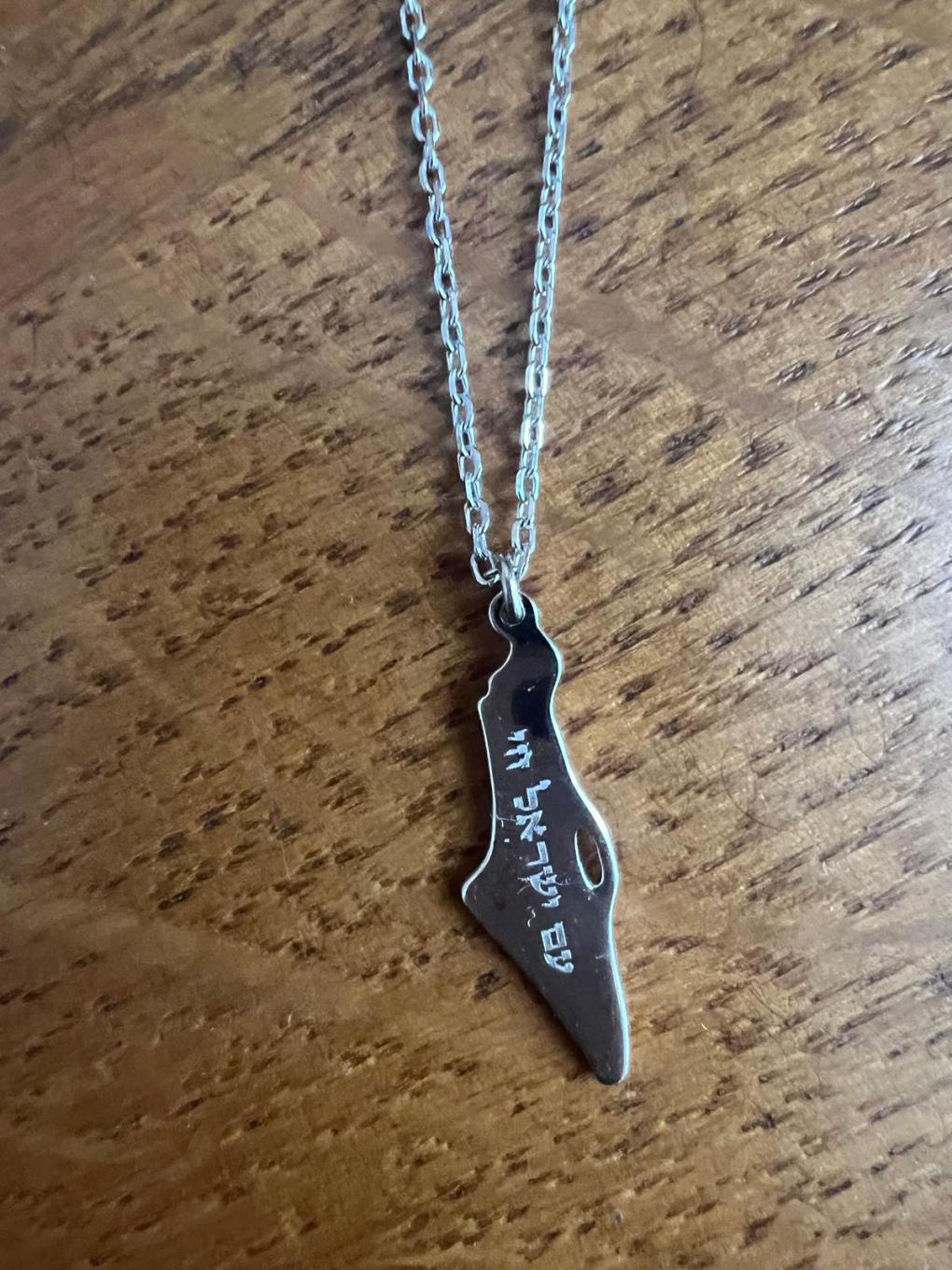

Parshat Devarim: Seeking Truth

The book of Devarim opens in an unexpected way – with Moshe recounting one of Israel’s greatest failures: the sin of the meraglim. His retelling, however, differs significantly from the original narrative in Bamidbar and, at first glance, even seems to contradict it. Why tell it this way? Moshe’s words offer a powerful lesson for our world which is quick to call out faults and eager to embrace narratives that simplify or distort the truth.

In Devarim, it is not God who initiates the sending of scouts, but rather the nation. And it is not the spies—the tribal leaders—who spread criticism of the land, but the people. Rav Tamir Granot explains that Moshe chose to begin with this story, and to retell it in this way, because its lessons were most relevant for this second generation. Bamidbar emphasizes the failures of the leaders. Devarim emphasizes the people’s responsibility – teaching that a nation cannot simply blame its leadership; every individual bears a share of accountability.

The rabbis adopt a similar approach in retelling the story of the churban, commemorated on Tisha B’Av. Historical sources and the Talmud recount corrupt priests during the final years of the Second Temple, and the infamous story of Kamtza and Bar Kamtza, along with the silence of the rabbis who witnessed it, contributed to the destruction of Jerusalem. Yet, the Sages ultimately teach that the Temple fell not because of leadership failures alone, but because of sinat chinam – pointless hatred among the people.

These retellings do not seek to manipulate or distort the truth. Instead, they model something rare and vital: the courage to confront failure honestly and learn from it. In an age when truth is often twisted and responsibility deflected, Moshe’s words call us to a higher standard – to speak with integrity, to take ownership of our actions, and to recognize that each of us can shape a more honest and hopeful future. Shabbat Shalom -Karen Miller Jackson


Parshat Bo: Experiencing Redemption

The Exodus story is more than a historical account of liberation from slavery in Egypt. It serves as an enduring model of transformation—from oppression to survival and ultimately to thriving in every generation. This process begins in parshat Bo, by empowering the people of Israel to embrace their identity and destiny as a nation.

Before their liberation, Bnei Yisrael were given a few mitzvot, including Kiddush HaChodesh (sanctifying the new moon). The Torah emphasizes that this mitzvah is for you—addressed to all of Israel. This command to take ownership of time was a powerful message to an enslaved people with no control over their own lives and time. As the midrash teaches, God was declaring that from now on, they would establish Jewish time—a key step toward Torah observance.

Another mitzvah given in Egypt was the korban Pesach. Bnei Yisrael were commanded to take the animal and prepare it four days before the sacrifice. The Mekhilta explains that this was because they had no merits, remaining in a state of spiritual “nakedness,” as Ezekiel describes: “You were still naked and bare.” By actively participating in this ritual, they took their first steps toward redemption.

Beginning with these mitzvot reinforces that the Exodus was not just a one-time liberation but an enduring model of ge’ula (redemption). It teaches that true freedom is not only freedom from oppression but also freedom for a life of holiness and purpose. The recent images and stories of our hostages returning home—marked by their unimaginable courage and deep commitment to Am Yisrael—reflect this ongoing story of redemption. May they find strength, healing, and the ability to thrive. Shabbat Shalom -Karen Miller Jackson

(Photo of released hostage Agam Berger and her unbelievable faith and strength)


Shemot: Pinning Our Hope on Am Yisrael

Reading parshat Shemot, with its emphasis on names and identity, during this momentous week, offers both solace and hope. 

The Ramban calls the book of Shemot “The Book of Redemption.” Even before the oppression begins, the keys to redemption are already present. The opening verse repeats the names of the children of Jacob who went down to Egypt, even though these names were already listed at the end of Bereishit. Rashi explains that God lists them again to “show how dear they were to God — like the stars, which God brings out and in by number and name.” This highlights the balance the Jewish people must maintain between their individual and collective identities, even when they do not always align. Rav Amital zt”l, a survivor of the Shoah, writes that being part of Am Yisrael means balancing the “number” — our collective purpose — with the “name” — our unique individual identity and beliefs.

Yet, the story continues with an increase in number but not in name. While the children of Israel proliferate greatly in number, their individual names are absent. They are referred to as “midwives,” “a man from the house of Levi,” “daughter of Levi,” and “daughter of Pharaoh.” Biblical interpreters see this shift between named and nameless figures as a reflection of the strengthening or weakening of Jewish identity in exile. A powerful midrash teaches that one of the main reasons Bnei Yisrael were ultimately redeemed from Egypt was that they preserved their Hebrew names. This act of remembering — holding fast to our names, values, and aspirations — has been a cornerstone of Jewish survival and resilience.

The coming weeks will be filled with emotional reflections on both numbers and names. “Ve’eileh Shemot” reminds us to honor the names of the individual heroes we have lost as we try to move forward, into what we pray will be a time of redemption for the Jewish nation. Shabbat Shalom -Karen Miller Jackson


Vayishlach: Names as Destiny

Names in Tanach often reveal character and destiny. The first appearance of the name Israel in Parshat Vayishlach offers deep insight into both the individual, Yaacov, who receives this name, and the nation destined to bear it.

Twice in the parsha, Yaacov is blessed: “Your name will no longer be Yaacov, but Israel..” – once by the man/angel he wrestles with and again by God. Unlike other biblical name changes, such as Avraham, Sarah, and Yehoshua, where a letter is added, Yaacov receives a completely new name and his names are used interchangeably throughout Tanach. 

The commentaries attempt to make sense of this and they see these names as having lasting resonance for the Jewish people. Rashi explains Yisrael signifies noble leadership (serara), while Yaacov is associated with duplicity and concealment. The Ramban notes that at the end of Bereshit, God calls him Yaacov and Yisrael to hint that while in Egyptian exile, Israel will be in a state of vulnerability (Yaacov) before they’re honorable status (Yisrael) is restored. 

Hasidic thinkers highlight another aspect of the dual name Yaacov/Yisrael. Yaacov represents the earthly, physical strength – he lifts a heavy rock, experiences economic success, and prepares for battle with Esau. Yisrael, on the other hand, embodies spiritual strength – wrestling with God. He retains both names because both aspects are essential; the physical and spiritual are intertwined.
This combined name defines our destiny today as well. As Yaacov, the Jewish people, can only overcome the hate of Esav, of antisemitism, by embracing the confidence and forthrightness of Yisrael. Moreover, our national success lies in synthesizing our physical and spiritual strength, embodying both aspects of our name and calling. Shabbat Shalom -Karen Miller Jackson


Parshat Noah: Living up to Yourself

Noah is often criticized, especially when compared with other biblical characters. The greatest disappointment however, may be that he could not fully live up to his own potential.

Noah’s beginnings are filled with hope, with word-plays on his name hinting at relief and grace: His father names him “Noah,” saying, “This one will provide us relief (yenachameinu),” though his name actually means “rest.” Noah (נח) also finds grace (חן) in God’s eyes. Living ten generations after Adam and before Abraham, he echoes Adam, who was tasked to “work and preserve the land.” Noah emerges from the ark and becomes “a man of the land.” Yet, both of them sin and are punished by God.

Noah is introduced as “a righteous man in his generation,” yet the midrash questions if this was only relative. He “walked with God,” but had he lived with Abraham—who walked “before God”—he might not have stood out. The Zohar contrasts the two sharply: Noah never prays to save others, while Abraham pleads with God on their behalf.

The midrash also compares Noah to Moshe. This at first seems far-fetched. However, their stories contain the only two mentions of a tevah (ark) in all of Tanach, both of which were built to save people’s lives. Yet, their paths diverge when it comes to their spiritual growth. Bereshit Rabbah teaches: Noah shifts from “a righteous man” to “a man of the land,” while Moshe transforms from an “Egyptian man” to “a man of God.”

Noah’s story is a poignant tale of great promise that took a tragic turn. He lacked what Abraham and Moshe possessed: optimism about humanity’s potential and faith in the Jewish people. This outlook enabled them to become their best selves and great leaders. Shabbat Shalom🇮🇱 -Karen Miller Jackson


Parshat Balak: Jewish, Zionist and Alone?

Are the Jewish people destined to be isolated and demonized? Has having our own country only exacerbated Antisemitism and Anti-Zionism in the world? One verse in parshat Balak speaks directly to this issue: Can a particularistic Jewish identity coexist with a universalistic relationship with the world?

Bilaam, a non-Jewish prophet, is sent by Balak, king of Moab to curse the Jewish people. Yet, as the Talmud teaches, God turned his attempted curses into blessings. Bilaam, looking down on Bnei Yisrael, says they are “a people that dwells alone; not reckoned among the nations.” This hardly sounds like a blessing. In many ways it encapsulates the repeated struggle of the Jewish people throughout history to preserve their identity, resist assimilation and avoid persecution amongst the nations.

Most commentaries, however, regard this as a blessing for the Jewish people. Rashi teaches that it refers to the future when Israel will dwell safely in our land and not be punished like the other nations. The Malbim and Netziv, writing in Europe post-Enlightenment and amid experiences of Antisemitism, interpreted this verse within their historical context. When Jews are confident in their identity – they dwell in peace. When they assimilate – they are not worthy of being counted. Rabbi Jonathan Sacks provides a transformative reading of this verse: The blessing is for Jews to dwell “apart” – meaning our strength is in our distinctive experience and values. Yet, it is dangerous to remain alone. Through retaining our distinctiveness, we can and should have a positive impact on the other nations: “By being what only we are, we contribute to humanity what only we can give.”

Today, this verse also highlights the delicate balance Israel needs to maintain in the larger world. We need to work with our allies and take their concerns seriously and seek out those who wish to bless us. At the same time, we also need to remain strong and true to our identity and mission as the people of Israel. Shabbat Shalom -Karen Miller Jackson


Chukat: Transforming Fatigue into Commitment

Parshat Chukat marks a transformational moment for Bnei Yisrael as they begin to find their confidence and commitment as a nation, ready to live in their promised land. 

The parsha, as Ibn Ezra writes, has fast-forwarded to the 40th year of desert wanderings, after the first generation has mostly died out. It is a new generation, but it sounds like the same old complaints: “The soul of the people grew discouraged on the journey…” They said: “Why did you make us leave Egypt to die in the wilderness? … We have come to loathe this miserable food.” They sound tired and “hangry.” Rashi teaches that usually the Torah provides the source of the discouragement (kotzer nefesh), yet here it is ambiguous. Hence, says Rashi, it was the journey itself that caused their dejection. However, it stemmed from an impatient desire to go into Israel already. Similarly, the Ha’amek Davar paints the complaint about food in a positive light: like a baby who is tired of drinking his mother’s milk (manna) and is ready for solid food (produce of Israel).

This pivotal shift is reflected in the continuation of the parsha. First, after complaining, they immediately correct themselves and ask forgiveness of Moshe and God. They faltered but their faith was restored. Second, after the disappearance of the miraculous well which supplied them with water, the people proactively sing for water: “Az yashir Yisrael…” At the splitting of the sea the people sang with Moshe and Miriam, while here they were empowered to sing independently. Third, the people fight two wars, against Sichon and Og, where they rely less on miracles and more on their strength and faith. The Ha’amek Davar writes that Chukat is the beginning of Israel’s transformation, from dependence on overt miracles to experiencing God concealed through nature. 

We too, after nine months, may be feeling fatigue. Let’s make it the kotzer nefesh of commitment and eagerness needed to achieve success and hatzlacha for Israel. Shabbat Shalom -Karen Miller Jackson