Kedoshim: An Antidote to Hate

Parshat Kedoshim contains one of the most important chapters in the Torah according to the commentaries. It also contains mitzvot which are at the forefront of contemporary society and the challenges we face.

After focusing on the holiness of the mikdash and kohanim, Vayikra 19 marks a revolutionary shift where everyone is commanded: “Be holy.” Midrash Sifra teaches that this was one of the sections read out to the whole community during hakhel, emphasizing the potential for all to infuse their lives with holiness. Moreover, it lists many interpersonal mitzvot as the path to holiness. One of these mitzvot – “love your neighbor as yourself,” – was considered by Rabbi Akiva to be the overarching rule of the Torah.

New challenges have arisen accentuating the importance of these mitzvot which strive to enhance human relationships. Smartphones and social media have made it easy and trendy to criticize others publicly. This has led to hurtful and alienating behaviors such as virtue signaling, shaming and canceling. More sinisterly, it has also fueled the spread of fake news, hatred and extremism. One mitzvah in particular speaks to this challenge: “You shall not hate your brother in your heart, rebuke your kinsman, but incur no guilt because of him.” This verse seems to support criticizing others. Yet, the Talmud Arachin limits the scope of “tochecha,” when it teaches that the criticism must stop if it results in public shaming. The sages themselves acknowledge that most of them were incapable of receiving or giving rebuke effectively as it was meant to diminish hatred in one’s heart.

What is the antidote to the spread of falsehood, hatred and anger? Frank Bruni writes that in this era “overwhelmed by grievance,” we need more humility. Even more, Kedoshim provides a moral and practical framework for calling out injustice from a desire to spread holiness instead of hatred. Shabbat Shalom🇮🇱 -Karen Miller Jackson


Tzav: An Attitude of Gratitude

Parshat Tzav, literally “command,” offers a blueprint for embracing duties and responsibilities within the Torah and towards the State of Israel with eagerness and fervor.

A central theme in parshat Tzav is “zerizut,” acting with urgency and enthusiasm, expressed in a number of ways. First, the opening verse: “Command (tzav) Aaron and his sons…” Rashi comments that when this language “tzav” is used it connotes “zerizut,” and should be carried out without delay. Amidst the description of this important service, there is a command to the priests to clean the ashes on the altar each morning before beginning again each day. Many ask why the Kohanim, who do such holy work, also need to sweep up the ashes, a seemingly lowly job?! Nechama Leibowitz quotes Rabbi S.R. Hirsch who compares us all to the kohanim: The ashes from the previous day are removed to convey that we have an opportunity each day to approach mitzvot with “new zest.” 

Similarly, the parsha also describes the korban of thanksgiving, which was brought after a dangerous experience. Today, this is expressed through the recitation of the “hagomel” blessing. Rav Kook explains that it is human nature to take basic goodness for granted. However, after a traumatic experience one is given a new perspective on life and feels an urgency to express gratitude. Also, the Shulchan Aruch teaches that it should ideally be said as soon as possible (within 3 days), indicating it should not be delayed unnecessarily. Here too, there is built into the service in the mishkan and our tefillot, an element of “zerizut.” 

Like the Kohanim in the Mishkan, our people’s response to the “tzav 8” of our day is a true expression of fervor and devotion to Israel. May this be a source of inspiration – in how we approach mitzvot and in our people’s ability to hear the call to safeguard this land. Shabbat Shalom -Karen Miller Jackson

Pekudei: Seeking Order

Parshat Pekudei marks the completion of building the mishkan, a project which is described in detail in the second half of the book of Shemot. Why is so much space given to the order of the mishkan and what relevance can it have for our lives today? 

Many scholars have pointed out the literary and thematic similarities between the creation of the mishkan and the creation of the world. This includes repetition of words such as “seeing,” “completing,” “blessing,” and “sanctifying” the work (melakha) which was done by God in Bereshit and by people in the mishkan. In both accounts the work ceases for Shabbat. As Leon Kass writes, in creation, complete chaos (tohu va’vohu) is transformed by the spirit of God (ruah Elokim) hovering on the water. The next time this term appears in Tanach is when Betzalel, architect of the mishkan, is infused with ruah Elokim. Based on God’s command, he created the mishkan, a sanctuary for daily service of God, providing order for the Jewish people, and potential for re-creation/renewal. 

The midrash Pesiqta Rabbati deepens this parallel when it connects King Solomon’s completion of the Temple in this week’s haftorah reading to creation as well. When Bereshit says that God created the world “la’asot,” to do, it means it was created unfinished, in need of perfection. The completion of the mikdash is likened to the culmination of the creation process. 

Just as in creation, God brought order to the world, the mishkan/mikdash provides a holy space for us to reconnect with order over chaos, and with God and holiness over immorality and empty values. Today, as the world may seem to lack order, and good and evil are at times distorted, we need to find our place of “sanctuary,” where we can rediscover a sense of God’s order and renew ourselves. Shabbat Shalom -Karen Miller Jackson


Vayakhel: What needs to happen for Haredim to join the IDF

“Ask not what your country can do for you – ask what you can do for your country” -John F. Kennedy

Parshat Vayakhel emphasizes the generous contributions to the Mishkan, from everyone – men and women – to the point that Moshe needs to stop them from donating. Deeper analysis of the Torah’s description of contributing to the Mishkan can shed light on the current debate about who should be contributing to defending Medinat Yisrael. 

The Torah emphasizes the generosity of the donations. Moshe instructs the people to “take gifts from among you,” and then encourages everyone, whose “heart is so moved,” to bring gifts to the Mishkan. The Hebrew root n.d.v (to donate) appears numerous times, and as Rabbanit Sharon Rimon points out, the word “lev” (heart) appears fourteen times in this section. The Ramban interprets this verse as referring only to voluntary gifts. This highlights that the Mishkan, the center of Jewish life, was built with heart and a spirit of collective giving. 

Yet, we also know that there was an aspect of contributing to the Mishkan which was mandatory for all. The language of “take” implies that everyone had to give gifts to the Mishkan. Elsewhere, the people are commanded to each give a half-shekel toward the tabernacle, a required tax. So which is it then? Voluntary or mandatory? The Kli Yakar says that the words “take gifts” refer to both required giving (the half shekel) and voluntary giving, which were combined to build the Mishkan. 

The idea that contributions to the Mishkan were a combination of mandatory and voluntary was echoed in our nation’s response to October 7th. Our heroic soldiers were called up with a command, a “tzav 8.” And we also witnessed an unparalleled nedivut (generosity) of heart and spirit, of most others giving what they could. This is what Rabbi Sacks zt”l called a nation built on a covenant of “We,” – “bound by a sense of shared belonging and collective responsibility.”

As we face a need to increase the numbers of soldiers needed to defend our country, how can we deepen the conversation to help foster this sense of national loyalty alongside Zionist pride, so that all Israeli citizens feel they are a part of the “We,” and can embrace the call to serve the Jewish nation? Shabbat Shalom – Karen Miller Jackson

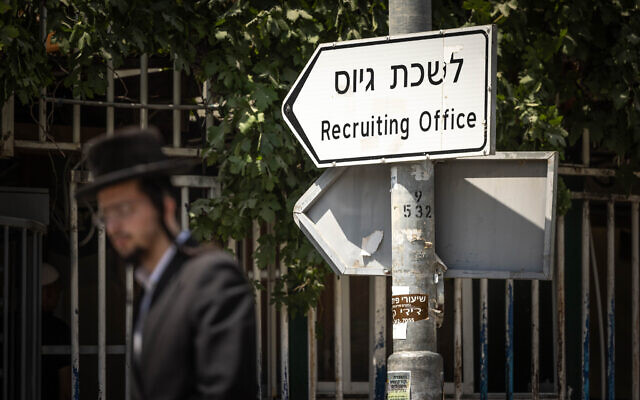
Photo credit: Utra-Orthodox Jews walk outside an army recruitment office in Jerusalem, August 16, 2023. (Chaim Goldberg/Flash90) From TOI News site.


Mishpatim: Truth AND Compassion

Parshat Mishpatim contains laws which contribute to building a moral and compassionate society. Two mitzvot stand out as deserving special consideration within the framework of our contemporary world.

First, “keep far away from falsehood” (Shemot 23:7) – the language implies more than a command to be truthful, one should actively distance oneself from falsehood. The midrash Mekhilta contains a debate about whether this applies only to judges or to everyone. Elsewhere, the Torah clearly commands everyone not to lie. Here, we learn a key principle of Torah is that judges – societal leaders – should strive for truth and justice. Today, perhaps more than ever, lies and fake news are easier to access through social media. World leaders too have embraced lies and made it more acceptable to spread falsehood. In this context, “keep away…” has new resonance.

Second, “Do not oppress the stranger as we were once strangers in the land of Egypt.” (Shemot 23:9) This is one of numerous mitzvot in the parsha about protecting the vulnerable in society. Why does the Torah recall our time in Egypt? The Minchat Chinuch explains that reminding us of the anxiety and suffering our ancestors felt as strangers in Egypt “will move us to compassion for every person in a similar situation.” Drawing on our past experience in caring for the weak and vulnerable is also a core value in Torah.

 
What happens when one of these is praised and the other neglected? Sadly, we are seeing this in today’s “post-truth” world, where altruism is at times held above the truth. Courts, journalists and institutions which should be the embodiment of fairness and truth-seeking have lost objectivity. Perpetrators of evil have won over people’s sympathy. Rabbi Sacks presciently called this trend “altruistic evil,” when injustice and hatred spread under the flag of human rights. Parshat Mishpatim is a call to re-align the values of altruism and truth and to practice compassion when it is truly warranted. Shabbat Shalom and chodesh tov -Karen Miller Jackson


Parshat Yitro: Between Amalek and Yitro

Since October 7th, Israelis have been battling the pure evil which was unleashed on us and which shattered our feeling of relative security. For Jews around the world, October 7th was a similar watershed moment, as the true face and breadth of antisemitism and anti-zionism was revealed. Given this, it is natural to wonder if we have friends and allies in the world. Parshat Yitro reminds us how to balance this worldview and contains a message about antisemitism and Jewish identity.

The parsha begins after Amalek waged war on a vulnerable Israel, as they journey through the desert. Next, it is recounted that Yitro (Moshe’s father-in-law) travels from Midian to meet Moshe at the mountain of God after hearing about “what God had done for Israel.” Following this, Israel encamped at Har Sinai for Matan Torah. The commentaries see deep connections between these events.

The midrash Mekhilta contains a debate regarding the chronology of these events related to the ambiguity of what Yitro heard about. R’ Yehoshua says that he heard about the victory over Amalek. R’ Elazar Hamodai teaches that Yitro heard about the wonders of Matan Torah, which would mean the Torah tells these events out of chronological order. If Yitro arrived after Matan Torah, why is his arrival placed between Amalek and Matan Torah? Ibn Ezra comments that this is to teach that when we mention the hate-attack by Amalek we should also remember that we have genuine friends and admirers, like Yitro. 

Both readings contain a message for contemporary times. First, antisemitism should not define Jewish identity. Rather, it should be built on positive Jewish values, the basis of which is Matan Torah. Second, we need to call out antisemitism clearly and not ignore it. However, we must not let it distort our view of the whole world. We should embrace and encourage support from our non-Jewish friends, the Yitros of our time. Shabbat Shalom – Karen Miller Jackson

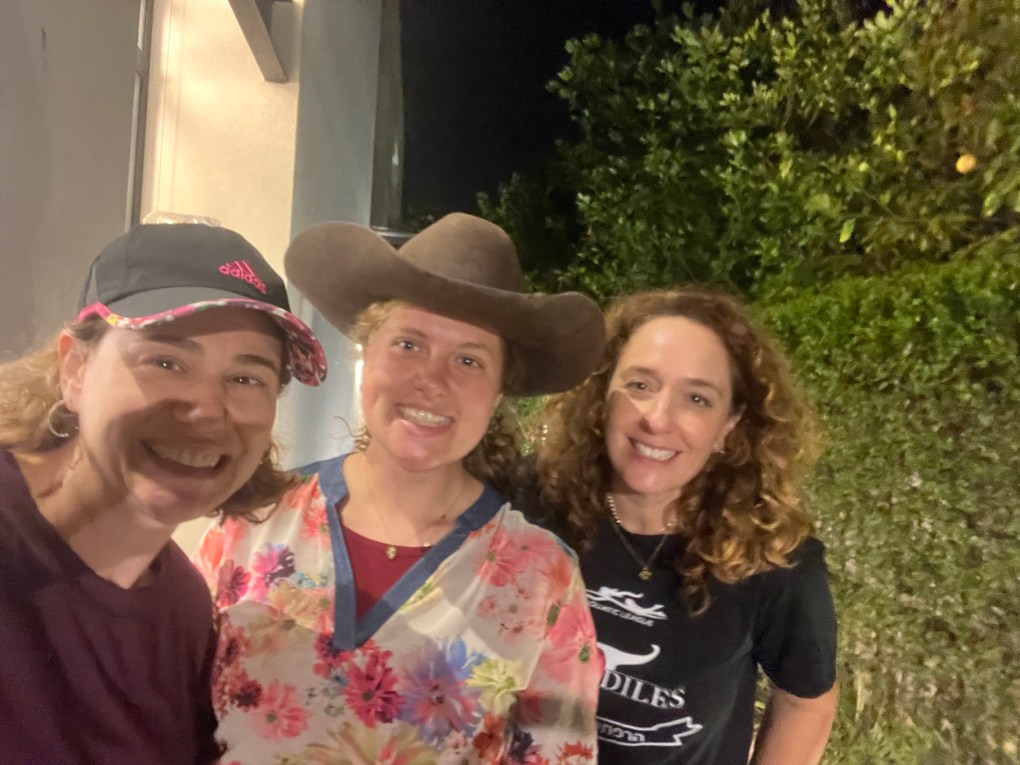
*photo with one of the cowgirls who support Israel.