
Parshat Ki Tetze: Preventing Strife in Society

“When you go out to war…” These opening words of the parsha are sobering to read as we approach the two-year mark of this war. Even more striking is their placement at the beginning of Parshat Ki Tetze, where they serve as a stark reminder of the toll war exacts—not only on individual soldiers but also on the wider society back home.

The parsha begins with the law of the eshet yefat to’ar, the foreign woman taken captive, whom a soldier may desire during wartime. While the Torah permits him to bring her home, it imposes strict conditions: she must be given a month to mourn her family, and afterwards he must either marry her or set her free. For its time, this law was revolutionary, significantly limiting the abuse of women in wartime. After this, the parsha shifts to matters of family and society.

It is striking that Ki Tetze begins here, after the laws of war were already given in Shoftim. Why is this law brought in this week’s parsha, and what message does its placement convey?

Some commentaries find a thematic link between the eshet yefat to’ar and the laws that follow. The midrash Tanhuma, noting its juxtaposition with the laws of polygamy and the rebellious son, teaches: one sin leads to another sin.” In other words, a relationship born solely of physical desire will inevitably lead to family strife and ultimately catastrophe.

But there is another lesson here as well. War—even when necessary, even when far from home—carries deep consequences: for the enemy, for the soldiers who risk their lives, and for the nation they fight to defend. The Torah places this law at the head of the parsha precisely before the societal laws that follow, reminding us that responsibility extends beyond the battlefield. We must be vigilant, too, in preventing conflict within our homes and communities, and in preserving our nation as one family. Shabbat Shalom -Karen Miller Jackson

* photo of car burnt in Jerusalem from TOI


Vayeshev: Prayers for the Return of the Hostages

The name of this week’s parsha, Vayeshev, underscores the delicate balance between seeking tranquility and the risk of falling into complacency. After a life filled with challenges—fleeing Esav, enduring Lavan’s deceit, and the trauma of Dina’s kidnapping—Yaakov settles in Canaan. The midrash elaborates that he hoped for “shalva,” tranquility, a wish we can easily understand.

Yet Chazal critique this desire. Rashi, citing the midrash, comments: “Yaakov wished to live at ease, but the ordeal of Yosef sprang upon him.” God’s response, as portrayed in the midrash, is striking: “The peace of the world-to-come awaits tzadikim, yet they also want tranquility in this world?!” This connects Yaakov’s longing for rest with the subsequent turmoil—his sons’ jealousy, Yosef’s sale, and Yaakov’s grief. What was wrong with Yaacov’s request? Must tzadikim always be in motion, never settled?

A contrasting perspective is seen in the laws of Hanukkah. The Shulchan Aruch cites the custom for women to refrain from work during the lighting of Hanukkah candles. The Magen Avraham explains that this pause reflects their role in the Hanukkah miracle. Here, rest is valued—a moment to reflect, give thanks, and draw inspiration from the candles.

Perhaps this is the difference: Yaacov wanted prolonged tranquility with no end. But endless repose is not the way to live out one’s life. We never fully “retire.” In contrast, women pause on Hanukkah temporarily, at a designated time. Periodic rest and reflection provide the opportunity to recharge ourselves, to renew our creativity, energy and purpose in life.

This Shabbat, let us not be complacent. Just as the Hanukkah candles inspire us to pause and draw strength, let us channel our prayers and unity toward a modern-day miracle—the safe and swift return of the hostages. Shabbat Shalom and Hanukkah Sameach! 🇮🇱🕎- Karen Miller Jackson


Parshat Beshalach: Engaging Women

How do we imbue our girls with a sense of confidence and self-worth? How do we teach the value of modesty (inward and outward) while encouraging young women to pursue their talents and dreams? How can women feel more connected to communal prayer? Miriam, in parshat Beshalach, provides a model. 

According to Rashi based on the Mekhilta, after the splitting of the sea, Moshe leads the men in singing “az yashir” and Miriam leads the women. Some commentaries understand this to mean that Miriam led the same “az yashir” for the women and the Torah just recorded a shortened version. However, the slight difference in language and other new elements suggests that Miriam’s song was unique and distinct.

First, Moshe says “I will sing (ashira) to God” and Miriam says “Sing (shiru) to God.” In addition to singing, Miriam took a tambourine in her hand and all the women came out after her “betupim u’vimcholot,” with tambourines and dances. Where did they get musical instruments in the middle of the desert? The midrash Mekhilta teaches that the women, while still in Egypt, believed deeply that God would redeem them, and therefore they prepared tambourines, anticipating that they would be celebrating miracles in future. The nation sang a song of gratitude, but the women added a unique element to the song – tupim u’vimcholot, a musical celebration reflecting deep faith. Miriam inspired the women of her generation to find their voices and express themselves in religious life. Following Miriam’s example, by creating opportunities for girls and women to express themselves, the whole Jewish people will be enriched. 

In biblical times, the women’s faith and gratitude were so great that they too wanted to express this in song. Today too, as girls and women are searching for more connection, this model of women alongside men, empowered yet distinctive, can be a source of inspiration in our communities. Shabbat Shalom – Karen Miller Jackson

  • image: The Songs of Joy, James Tissot c. 1896-1902, thejewishmuseum.org

Parshat Vayera: The Meaning of Prayer

Parshat Vayera contains the first appearance of the word tefilla in Tanach. Avaraham prays (“Vayitpallel”) for Avimelech’s household and God responds to his prayer. Then, Sarah too is remembered by God and becomes pregnant after years of infertility. How does the language of “hitpallel” teach about the efficacy and purpose of prayer? Furthermore, where is Sarah’s prayer?

After the king Avimelech takes Sarah, he is stricken and the wombs of his household are closed as punishment by God, “because of the matter of (al d’var) Sarah”. Avraham prays to God for Avimelech and his family and they are healed. Bereshit Rabbah points out that this unique first expression of the word tefilla indicates that a “knot was undone” – prayer has the power to influence God’s response and yield positive results. However, the Hebrew root פ.ל.ל has another meaning in Tanakh. In Shemot, when damage is done, the reparation is determined “b’flilim,” meaning, “according to the judges.” Rabbi Samson Raphael Hirsch expands on the connection between the word for prayer and judgment. The word “hitpallel” is reflexive – an opportunity to “assess/ judge oneself” and one’s relationship with God and the world. 

Both can be true. Tefilla is about pleading with Hashem, a way of expressing our deepest yearnings and requests to God. Tefilla is also an opportunity to self-reflect and focus on the state of ourselves and our relationship with God and others. 
What about Sarah? Does she not engage in prayer as well? In fact, the Sages teach that she prayed too. The midrash reads “al d’var” not as “the matter” of Sarah, but rather “the words (of prayer) of Sarah.” Sarah prayed to be saved and God assured her that Avimelech’s suffering and healing would be according to her word. The rabbis saw role models for tefilla in both Avraham and Sarah, who both call out to God as the source of protection and healing and are answered. Shabbat Shalom -Karen Miller Jackson


Pinchas: Learning Leadership from the Women

“Be a light, not a judge. Be a model, not a critic” – Stephen Covey

Parshat Pinchas profiles various types of leadership. Among them, the daughters of Zelophehad demonstrate how to lead positive change. They are a much needed model for today. 

After the Torah describes how the land of Israel will be divided, the five daughters of Zelophehad approach Moshe and request an inheritance in Israel, as they have no brothers to inherit land. The commentaries characterize them as having great “chibah” (love) for Israel. The Talmud goes even further, describing them as “darshaniyot” (interpreters), tzidkaniyot (righteous) and “chachmaniyot” (wise). How do we see these qualities in their behavior?

The daughters emphasize that their father “died by sin in the midbar,” but not as a part of Korah’s congregation. Rashi teaches that they emphasized that while their father sinned, he did not lead others to sin like Korah. Also, Korah spread unfounded criticism and refused to engage in dialogue with Moshe. 

The midrash also contrasts the daughters of Zelophehad with the story of the spies. The spies slandered the Land of Israel and spread negativity among the nation. After their words, the people said they wanted to return to Egypt, leading to catastrophe for that generation. The midrash views the daughters’ words to Moshe as the opposite of the language and behavior that previously led to disasters in Bamidbar. They are proactive. They embrace dialogue and use positive language by saying: “We want to be part of this too!” 

Hashem’s response is “The daughters speak justly.” The midrash sees this as deep affirmation. The Talmud pays them the ultimate compliment: it teaches that the laws of inheritance for daughters are attributed to, and written by, the daughters of Zelophehad. After the earlier stories of people who found ways to criticize and sow discord, these five women model proactivity, dialogue, positivity, and love of the Land of Israel. Shabbat Shalom – Karen Miller Jackson

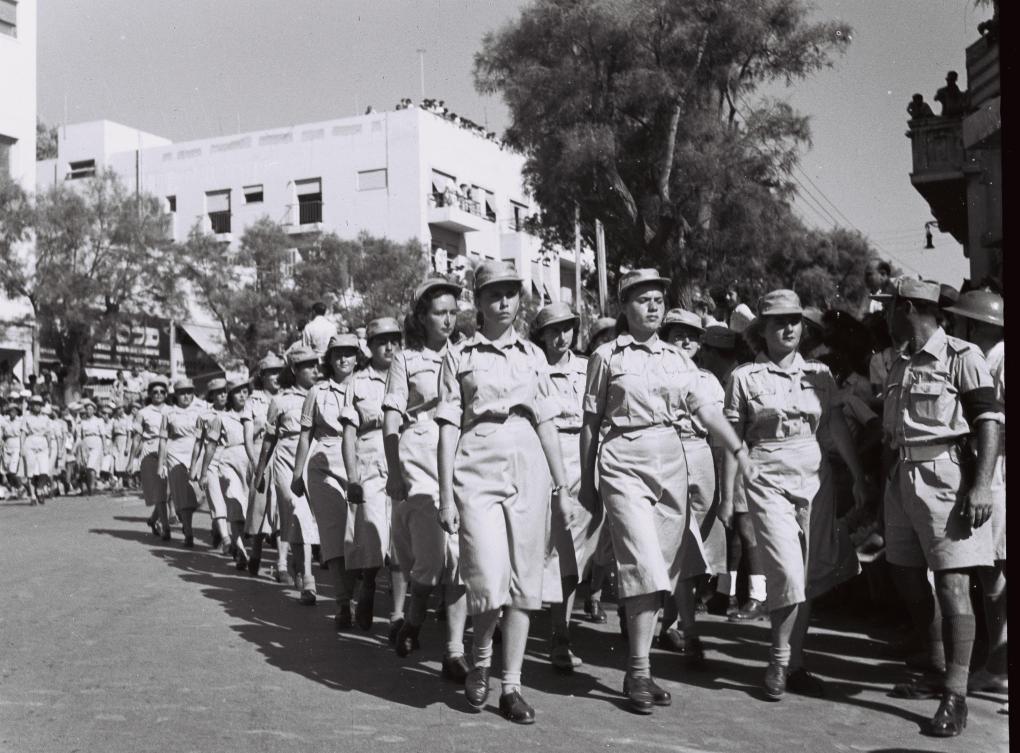
*photo https://he.wikipedia.org/wiki/%D7%97%D7%99%D7%9C_%D7%A0%D7%A9%D7%99%D7%9D#/media/%D7%A7%D7%95%D7%91%D7%A5:Chel_Nashim_IDF1948.jpg


The Tefillah Paradox: Standardized or Spontaneous?

Tefillah is such a significant part of our lives. 1 Yet, it contains a paradox – on the one hand, the times we pray and the words we say are prescribed by halakha. On the other hand, tefillah is meant to be heartfelt and filled with kavanah. How does one approach such standardized devotion while retaining continuous intention? The sources of the mitzvah of tefillah reflect this tension and offer some potential insight into this dilemma.

To read more… https://www.matan.org.il/en/the-tefillah-paradox-standardized-or-spontaneous/


Parshat Beshalach: Women Leading the Song?

Parshat Beshalach contains a song of gratitude sung by the Jewish people after the miraculous splitting of Yam Suf. According to the peshat, Moshe led the men in singing Az Yashir, while Miriam led the women in a short song. However, one particular line points to the women’s involvement and leadership in Az Yashir as well.

The verse, “This is my God (zeh Eli) and I will glorify Him,” is interpreted as the peak of revelation for the Jewish people. Rashi interprets the word “this” to mean the people pointed to God’s glory. Rashi continues citing another midrash: the “maidservants saw at Yam Suf what even the prophets never saw,” meaning everyone, even the lowliest maidservant, received this highest level of revelation at Yam Suf. 

Another midrashic tradition highlights the women’s unique ability to recognize God in challenging times. The Talmud teaches that in the merit of the “nashim tzidkaniyot” (righteous women), the Jews were redeemed from Egypt. These women bravely continued to give birth in the face of Pharaoh’s harsh decrees. They birthed their babies in the fields and had faith that God would protect the children. God performed miracles for them and provided angels to nurse them. As a reward for the righteous women’s actions and commitment, their children followed in their footsteps and were the first to recognize and point to God’s presence at the Sea and proclaim “Zeh Eli.” 

This has been a challenging week in Israel, from the tragic loss of chayalim to continued disruptive covid wave. When we read Az Yashir, may it be a tefillah that when we God-willing one day cross to the other side of these uncertain waters, we can follow in the footsteps of the righteous women and children and say “Zeh Eli,” as we recognize God and express gratitude for our redemption. Shabbat Shalom – Karen Miller Jackson

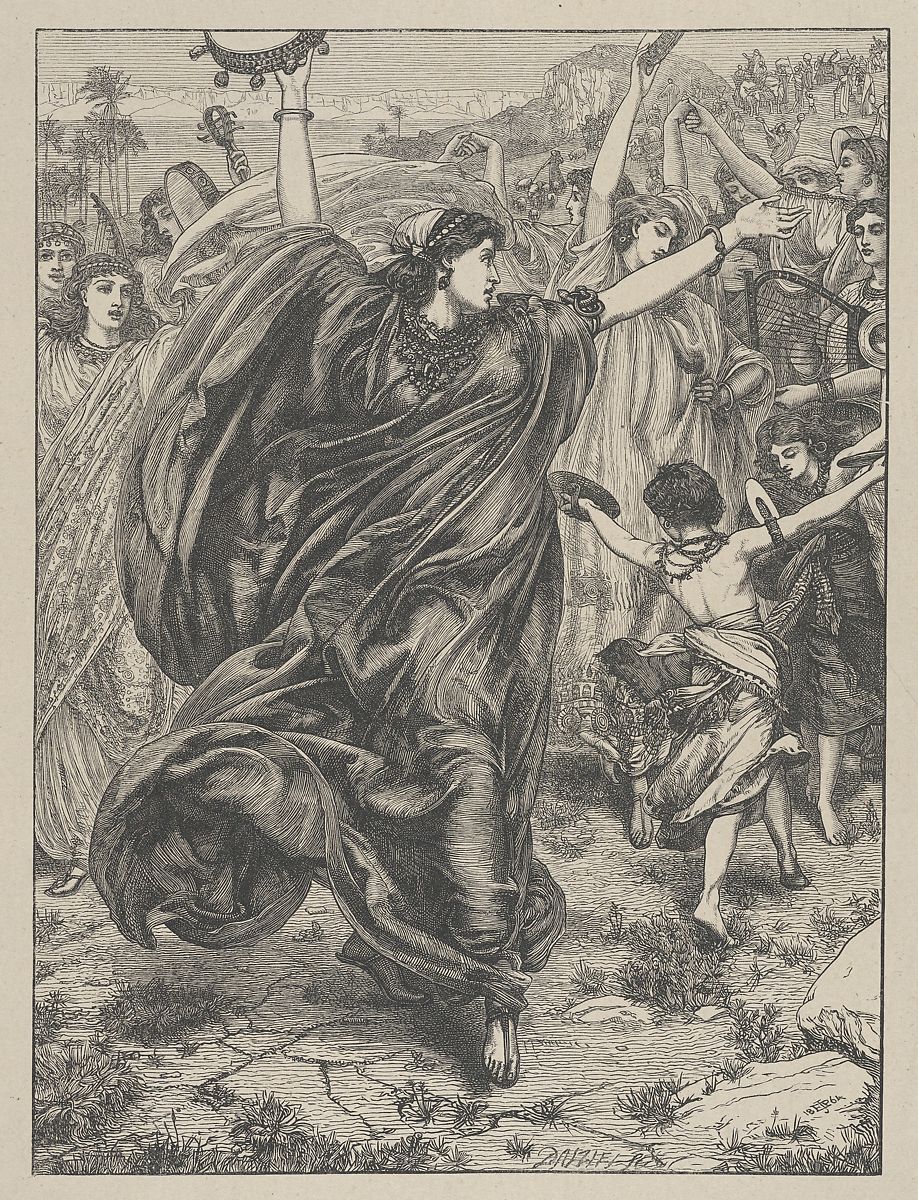
*Miriam, by Sir Edward John Poynter from The Metropolitan Museum of Art