Parshat Shoftim: Seeking Great Leaders

“Leaders do not do the work on behalf of the people. They teach people how to do the work themselves.” – Rabbi Lord Jonathan Sacks, zt”l

Parshat Shoftim is a call to just and moral leadership: Appoint judges; Don’t judge unfairly; Don’t take bribes nor be partial and famously, “Justice, justice you shall pursue.” Who exactly is being commanded to fulfill these crucial mitzvot?

At first, it seems these words are directed at judges. However, several commentaries suggest otherwise. These verses seem to be speaking not only to leaders, but also to individuals. The Sefer Hachinuch teaches that the biblical command to appoint judges (referring to a religious court – beit din) is “incumbent on every community, in every place.” The establishment of just and moral leadership comes about partly through the people who appoint them. This idea is further reinforced by the interpretation of “צדק צדק תרדוף” – “Justice, justice you shall pursue.” The midrash Sifrei teaches that this means you (the individual) must “seek out the finest beit din.” We, the people, can take steps to ensure true justice.

This verse is appropriately also applied to Rebbe Yehuda HaNasi, compiler of the Mishna and a model of wise, compassionate and just leadership. The Talmud in Ketubot teaches “pursue justice” means: run to Rebbe’s beit din in Beit Shearim. This appears in the story of Rebbe’s last will and testament, where he practices outstanding leadership even on his deathbed. He ensures the continued honor of his widow (who was only stepmother to his children) and the honor of his household servants. He set up continuity of leadership through his sons and values fear of sin in a leader over great wisdom. He balances honor to a Torah scholar who has died (himself) alongside humility. May we be blessed with the ability to choose similar moral, just and compassionate leaders in our time. Shabbat Shalom – Karen Miller Jackson

*Photo from https://www.europeanbusinessreview.com/effective-leadership-9-ways-to-support-your-team/


Parshat Re’eh: See and Be Seen

This week’s parsha (Re’eh) opens and closes with a keyword: To see. It begins with “Re’eh!” “See!” the choice you have before you to receive God’s blessings or curses. It ends with the mitzvah of “olat reiyah,” when the men would bring an offering and “see”/“be seen” by God in the mikdash. What is the relationship between seeing and being seen by God?

The olat reiyah was brought as part of the aliyah la-regel, the pilgrimage made on the three major festivals to the mikdash. While only men were obligated to bring an offering, women could participate in the pilgrimage and according to some sources, were even required in aliyah la-regel. The Talmud teaches that the prophet Jonah’s wife took on this mitzvah. This shows there was flexibility and potential inclusion for the women to take part in the mitzvot of aliyah la-regel. 

The language of the biblical source for the olat reiyah offering is ambiguous: “all your males shall be seen the face of God” (Devarim 16:16). Are they seeing or being seen? How can one see “pnei,” the face of God? The midrash Sifrei (re)interprets as follows: “If you do this, I will “free” (“poneh” which sounds like “pnei”) Myself of all My affairs and occupy Myself with you alone.” When we give of our time and possessions to see others and serve Hashem, God sees and blesses us. 

There are many people in our communities and society who have been feeling less seen over the last few years. In particular, educators, parents and children. The parsha is a reminder to take a moment and consider how we can see the exhaustion and frustration of both the teachers and the parents/children. As we begin the month of Elul and hopefully the new school year, we pray for a world in which everyone feels seen and is blessed with feeling valued and seen by Hashem. Shabbat Shalom – Karen Miller Jackson


Parshat Eikev: On Partial Observance

In Parshat Eikev Moshe continues his final speech to Bnei Yisrael. The language he uses provides a springboard for discussing how to relate to varying levels of commitment to Torah within our homes and communities.

Moshe teaches the reward for observing mitzvot: They will thrive, increase and possess the land of Israel. “All the commandment (כׇּל־הַמִּצְוָ֗ה) that I enjoin upon you today, you shall faithfully observe them (תִּשְׁמְר֣וּן לַעֲשׂ֑וֹת)…” First the verse refers to keeping “kol hamitzvah” which appears to be in the singular and then refers to keeping all mitzvot in the plural “tishmerun.” Moreover, the meaning of the word “kol” is unclear.

Rashi, in his usual style, first comments that “kol hamitzvah” should be understood literally, as meaning “all mitzvot,” even though the word mitzvah is singular. Yet, unsatisfied with this logical interpretation, Rashi cites the midrash Tanhuma which teaches a lesson in keeping mitzvot: If you begin a mitzvah, finish it! The word “kol” is understood as “the entirety of the mitzvah,” or “the completion of the mitzvah.” If several people take part in a mitzvah, it is the one who completes it who gets the credit. When Moshe took Yosef’s bones out of Egypt, it was Bnei Yisrael who got credit for burying them in Israel since they completed the mitzvah.

Still, the midrash recognizes that Moshe’s partial completion of a mitzvah was important, even if it is not complete fulfillment. Similarly, Rabbi Yochanan is cited in the Talmud as saying that one who learns only one statute (chok) is rewarded with a share in the World-to-Come. The Kli Yakar on our pasuk states similarly that partial completeness also works at a communal level: the transition from singular to plural in the verse implies that when an individual keeps mitzvot, there is benefit and reward for the wider community.

Perhaps Moshe understood that while completeness is the ideal, recognizing the value of partial observance encourages people to grow and take part in the Jewish community. Shabbat Shalom -Karen Miller Jackson


Parshat Va’etchanan: Increasing Love

What do parshat Va’etchanan and the holiday of Tu B’Av (which coincide this week) have in common?

The Shema prayer — the ultimate testament of faith and commitment by the Jewish people to God — is found in parshat Va’etchanan. The first paragraph begins with a challenging command: to Love Hashem. As the midrash Sifrei asks, “How does one come to love God?!” In other words, how can the Torah command such an emotion?! The Sifrei’s answer provides insight not only into how to observe the command to love God but also into how to increase love in human relationships. The Sifrei learns from the second paragraph of Shema, “And these things that I command you this day shall be upon your heart,” that the way to fulfill ahavat Hashem is by performing mitzvot. Acts of lovingkindness and service bring us closer, so to speak, to God. 

A similar idea runs through the closing mishna in Ta’anit, which teaches that Tu B’av (and Yom Kippur) were the happiest days, since the daughters of Israel would go out to dance in the vineyards to meet their love-match. The women would all borrow dresses so as not to shame anyone who did not own a nice white garment. The mishna continues by comparing this matchmaking celebration with the wedding day of Shlomo Ha-melech in Shir Hashirim: “Go forth, daughters of Zion, and gaze upon King Solomon… on the day of his wedding…” The mishna interprets Shlomo’s wedding day as a metaphor for the bond between God and Israel: The day of Matan Torah, God’s gift to Israel and Israel’s building of the mikdash. 

The message of this mishna and the Sifrei: selflessness, acts of giving and sacrifice increase love between the Jewish people and God and in human relationships as well. Shabbat shalom and happy Tu B’Av! -Karen Miller Jackson


Parshat Devarim: Positive Words

Parshat Devarim, literally “words,” teaches that the language we choose to use can influence people’s motivation levels and feelings of optimism.

Devarim opens with naming several places where the nation traveled in the desert. However, these places were never mentioned in the Torah before. Rashi teaches that this was how Moshe rebuked the generation whose parents sinned in the desert. Moshe alludes to these events indirectly, out of respect for Israel. Instead of using words which were shaming and demotivating, Moshe models how to speak words of criticism in a way which is respectful and can have positive outcomes.

Our choice of words can also have a positive affect on our mindset and well-being. In masechet Pesachim Rabbi Yehoshua b. Levi advises not to use negative language. He bases this on the fact that the Torah teaches the value of speaking positively by the addition of extra letters in the Noah narrative. Rather than calling the animals “impure,” the Torah states, “those that are not pure.” Similarly, Rabbi Joseph Telushkin writes in his book “Rebbe,” that the Lubavitcher Rebbe believed that carefully chosen words could positively influence the emotional state of ourselves and others. For instance, the Rebbe refused to call a hospital a “beit cholim” (house of the sick) but rather called it “beit refuah” (house of healing).

As Tisha B’Av approaches, we learn that the Beit Hamikdash was destroyed because of sinat chinam (baseless hatred). Moreover, the enmity between Qamtza and Bar Qamtza and the silence of the rabbis who were with them led to the destruction of Jerusalem. Parshat Devarim and Tisha B’Av are reminders that speaking respectfully and positively spreads ahavat chinam and optimism in our world. Shabbat Shalom🌷 -Karen Miller Jackson


Parshat Masei: Growth or Destination?

Parshat Masei begins by summarizing Bnei Yisrael’s travels throughout their forty years in the desert. Many commentaries question why the Torah repeats this list of “masaot” (journeys), when they have already been described earlier in the Torah. The answers they provide contain wisdom on finding meaning within our own life’s journey.

The midrash Tanhuma likens the repetition of the journey to a parent who takes his/her sick child to various places in search of healing. Afterwards, the parent recounts the experiences they had through each location. So too, God wants Bnei Yisrael to draw strength from hearing about overcoming hardship in their past and be reminded that they can do it again in the future. Rambam in Guide to the Perplexed teaches that re-telling the places Israel traveled highlights the miracles God provided for the Jewish people’s survival in the desert. Through preserving the memory of these miracles, future generations will find inspiration and faith. Sforno sees this as highlighting the goodness of Bnei Yisrael in the desert. He explains that the journeys are repeated “in order to compliment the Jewish people,” who followed God through a vast and dangerous desert, despite the hardship. 

These interpretations are similar to what psychologist Carol Dweck refers to as the “growth vs. fixed mindset.” Her research demonstrates that the most successful way to navigate life – including disappointments and difficulties – is by taking on new challenges and viewing setbacks as part of the journey. The fixed mindset cares only about the outcome, while the growth mindset finds value in each step of the journey. May the journeys of Bnei Yisrael inspire us to find meaning, strength and growth in our own lives. Chazak chazak ve’nitchazek. Shabbat shalom – Karen Miller Jackson

* photo from waze.com


Parshat Matot: A Parenting Model

In parshat Matot, Moshe is faced with a challenge from within bnei Yisrael. His reaction, and the discussion which follows, provides a model for healthy parenting. 

Sefer Bamidbar opens with the high hopes of entering the land of Israel. Yet, after a series of rebellions, the first generation dies out in the desert. Now, as their children are about to complete this mission, there is a moment of crisis. Two tribes, Reuven and Gad (joined by half of Menashe), request to remain on the east side of the Jordan River, because of its excellent grazing land for their livestock. Why does this seemingly innocent request yield a strong and emotional reaction from Moshe?

Moshe’s words reflect his concerns: that they won’t help their “brothers” fight for the land and that like their fathers, they will “turn the minds” of bnei Yisrael from crossing into Israel. Moshe fears that this will be a repeat of the meraglim. However, as Rabbi Nati Helfgot points out, several literary elements in this “inverted meraglim” story show that this generation is stronger and has taken their parents’ past mistakes to heart. With the spies, 10 men speak negatively and only 2 advocate for settling Israel. Here, only 2 tribes request to stay on the east of Jordan, while 10 tribes will settle Israel. Moreover, the 2 tribes state clearly that they will help fight for Israel, dispelling Moshe’s fears of rebellious motives.  

Moshe’s firm, preemptive response to bnei Reuven and Gad is understandable after the setbacks in the desert. They, in turn, show Moshe that they are different from the spies and display unity and commitment. This dynamic provides a model for parenting as well. Children will always make mistakes. The challenge for parents is finding a balance between standing firm in our values and beliefs, while also striving to be flexible and believing in our children’s ability to change and grow. Shabbat Shalom – Karen Miller Jackson


Pinchas: Learning Leadership from the Women

“Be a light, not a judge. Be a model, not a critic” – Stephen Covey

Parshat Pinchas profiles various types of leadership. Among them, the daughters of Zelophehad demonstrate how to lead positive change. They are a much needed model for today. 

After the Torah describes how the land of Israel will be divided, the five daughters of Zelophehad approach Moshe and request an inheritance in Israel, as they have no brothers to inherit land. The commentaries characterize them as having great “chibah” (love) for Israel. The Talmud goes even further, describing them as “darshaniyot” (interpreters), tzidkaniyot (righteous) and “chachmaniyot” (wise). How do we see these qualities in their behavior?

The daughters emphasize that their father “died by sin in the midbar,” but not as a part of Korah’s congregation. Rashi teaches that they emphasized that while their father sinned, he did not lead others to sin like Korah. Also, Korah spread unfounded criticism and refused to engage in dialogue with Moshe. 

The midrash also contrasts the daughters of Zelophehad with the story of the spies. The spies slandered the Land of Israel and spread negativity among the nation. After their words, the people said they wanted to return to Egypt, leading to catastrophe for that generation. The midrash views the daughters’ words to Moshe as the opposite of the language and behavior that previously led to disasters in Bamidbar. They are proactive. They embrace dialogue and use positive language by saying: “We want to be part of this too!” 

Hashem’s response is “The daughters speak justly.” The midrash sees this as deep affirmation. The Talmud pays them the ultimate compliment: it teaches that the laws of inheritance for daughters are attributed to, and written by, the daughters of Zelophehad. After the earlier stories of people who found ways to criticize and sow discord, these five women model proactivity, dialogue, positivity, and love of the Land of Israel. Shabbat Shalom – Karen Miller Jackson

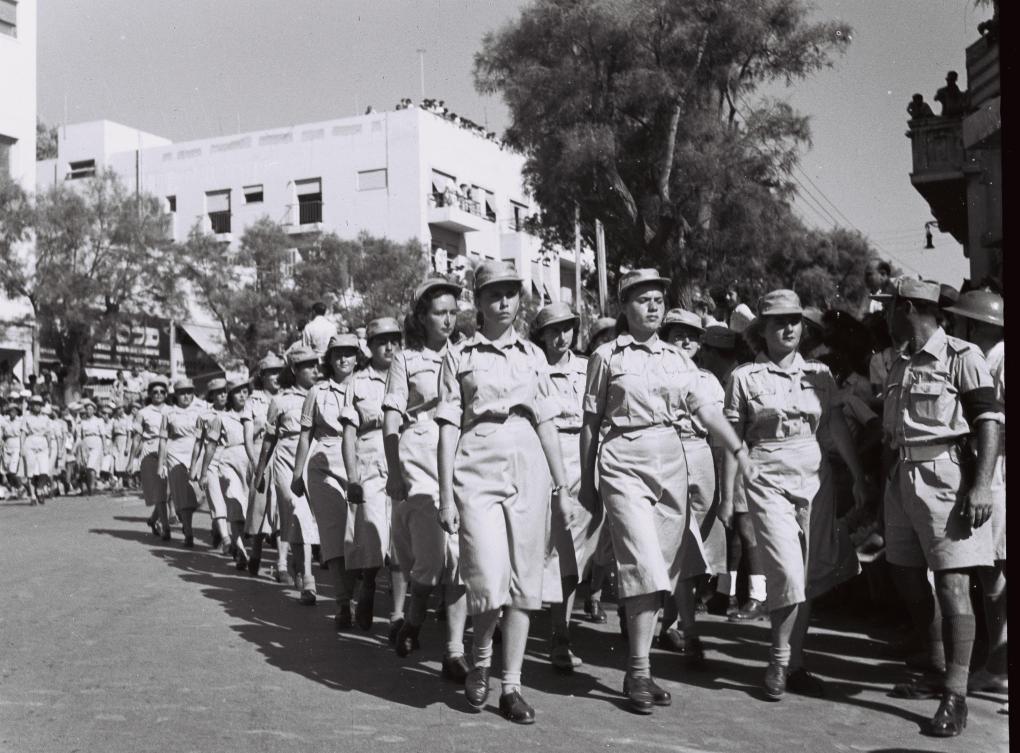
*photo https://he.wikipedia.org/wiki/%D7%97%D7%99%D7%9C_%D7%A0%D7%A9%D7%99%D7%9D#/media/%D7%A7%D7%95%D7%91%D7%A5:Chel_Nashim_IDF1948.jpg


Parshat Balak: Love over Hate

“I have decided to stick to love… Hate is too great a burden to bear.” -Martin Luther King, Jr. 

Love vs. hate, Blessings vs. Curses. These are some of the themes which run through the commentaries on parshat Balak. The midrash notes linguistic and thematic similarities between the stories of Balaam and Avraham. Both Avraham and Balaam demonstrate “zrizut,” enthusiasm for their mission. In the story of akeidat Yitzchak, Avraham rises early and saddles his own donkey to fulfill the word of God. Balaam too, sets out with enthusiasm to do as Balak has commanded, to curse the nation of Israel. The midrash points out that both these men had servants who certainly would have saddled their donkeys for them, but as Rabbi Shimon bar Yochai teaches, regarding Avraham: “Love upends the social order,” and about Balaam: “Hate upends the social order.” Similarly, Pirkei Avot teaches that one can choose to be a student of Balaam and have an “evil eye” or like a disciple of Avraham, with a “good eye.” Balaam was keen to curse a whole people he did not know, while Avraham sought out opportunities to bless others. Perhaps this is why the midrash teaches that at first God was the only giver of blessings in Bereshit, until God gave the ability to bless others over to Avraham and his descendents.

Each day we have an opportunity to look at the world negatively, with a critical eye and spread hatefulness in the world, or with a good and generous eye and share brachot with others. Perhaps that is why we start the day with Balaam’s curse-turned-blessing, “mah tovu,” to remind us of this choice. 

Hatred is on the rise these days. It has been seen between Jews and fellow Jews, in the form of antisemitism and through the recent tragic bloodshed in Chicago. By following the model of Avraham, “the father of many nations,” we can upend the current social status quo by promoting love over hate. Shabbat Shalom – Karen Miller Jackson

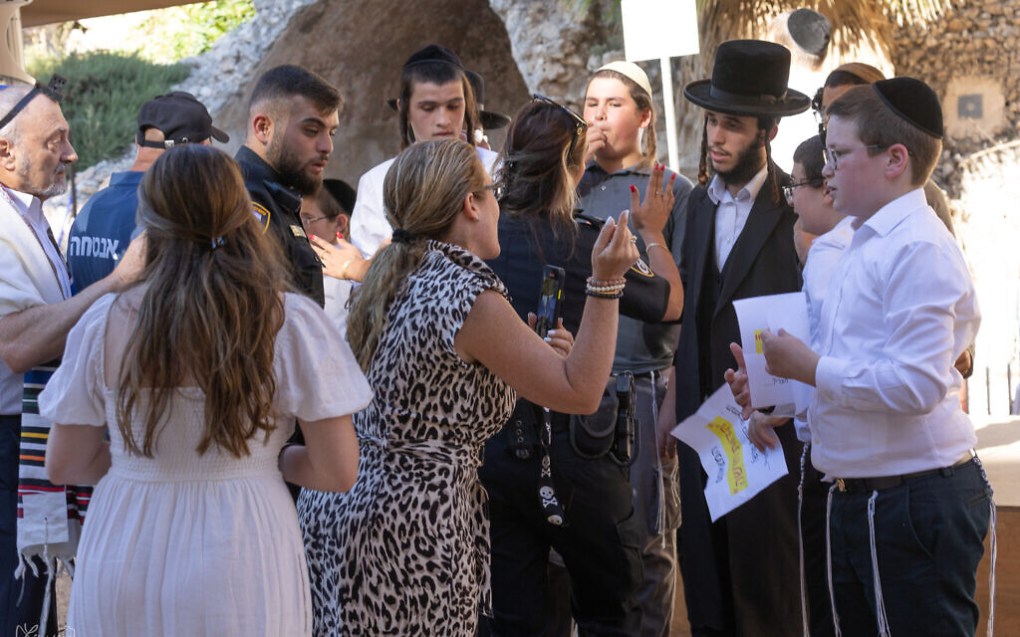
*Ultra-Orthodox youths interrupt a bar mitzvah ceremony at the egalitarian section of the Western Wall on June 30, 2022. (Laura Ben-David)


Chukat: Mayim Chayim (Living Waters)

Parshat Chukat is a parsha of leavetaking and loss, yet it also contains the seeds of renewal and hope for the future. This is reflected in the imagery of the be’er, the well of water which dries up and then flows once again, yet differently. 

The parsha begins in the fortieth year, when the desert generation has mostly died out. Both Miriam and Aaron pass away and Moshe is told he too will not enter the land. The parsha also contains the hopeful image of Bnei Yisrael (the next generation) poised across from Jordan, readying to enter the land of Israel. With Miriam’s death, Bnei Yisrael cry out for water. Later, the people sing to a well which brings forth water. The Tosefta Sotah explains that there was a be’er which accompanied and sustained Israel for forty years in the desert in Miriam’s merit. After she died, the well disappeared and returned in Moshe’s merit. 

However, Ramban suggests that this may be a new be’er. There are numerous elements which support this position. First, this is the first time the people take an active role and sing for water. Second, the song states “Az yashir Yisrael…” As opposed to the splitting of the sea, when the people sang with Moshe and Miriam, here they sang independently. This be’er represents the passing down of tradition alongside new characteristics. This can be applied to Torah too, which is called “mayim chayim.” Each generation receives it and imbues it with new meaning.

This week the Jewish world lost a great Talmud scholar. Rabbi Prof. David Weiss Halivni represented the transition from the old world of Torah erudition to a post Shoah world, with new approaches to critical study of the Talmud. I, like so many others, am grateful to have merited to drink from the well of his brilliant Torah. May his memory and teachings be for a blessing. Shabbat Shalom – Karen Miller Jackson

  • photo from Columbia.edu