Chukat: Sources of Well-being

Parshat Chukat reminds us to care not only for our own well-being, but also for those around us. It highlights how easily we take precious relationships and sources of support for granted.

The parsha begins with Miriam’s death and Bnei Yisrael crying out for water. The Tosefta Sotah explains that a be’er accompanied and sustained Israel throughout their forty years in the desert in Miriam’s merit. After she died, the well disappeared and later returned in Moshe’s merit. This midrashic tradition highlights how easy it is to overlook the gifts and people who sustain us. Often, only a crisis reveals how much we depend on them for our physical and emotional well-being.

The Ramban suggests that the well which returns may actually be a new one, rather than Miriam’s original well. There are numerous elements which support this position. For the first time the people themselves sing for the water: “Az yashir Yisrael.” Also, unlike at the splitting of the sea, where they sang alongside Moshe and Miriam, here they sing independently. This be’er represents a generation becoming more mature, empowered, and responsible for its own future.

Miriam remains a model of caring for ourselves and one another. She is repeatedly associated with water and the preservation of life: watching over her baby brother Moshe at the Nile and leading the women in songs of praise at Yam Suf, demonstrating faith in God’s salvation even when the future was unclear. Centuries later, the Beit Yosef records a tradition that Miriam’s well reappears on Motzaei Shabbat and brings healing to those who drink from it. Miriam’s well disappears and then reappears, symbolizing sustenance, renewal, and refuah.

May all those who are in need of healing find their sources of strength, renewal, and recovery. Shabbat Shalom -Karen Miller Jackson

Parshat Va’era: Personal and National Healing

Parshat Va’era contains numerous requests for prayer and healing, surprisingly, from Pharaoh. During the plagues, Pharaoh asks Moshe to pray to God for him. The word which Pharoah repeatedly uses is ויעתר, “to entreat.” An exploration of the various uses of this word in Tanach provides a powerful message about prayer for healing and for current events in Israel.

The first occurrence of ויעתר, entreaty or petitioning of God, is when Yitzchak prays for a child. The Sages debate the deeper meaning of the word ויעתר. One interpretation: Yitzchak’s prayers become more frequent and urgent. Entreaty here means prayer in abundance. Pharaoh, however, does not pray himself, he entreats Moshe to pray. The midrash explains that Pharaoh was too full of pride and arrogance to have his prayers heard. Only Moshe’s pleadings on his behalf could be effective. From this we learn that haughtiness and intractability can block tefillot from being heard. In order to be able to petition God for mercy toward us, we need to be open to modifying our own frame of mind and foster compassion within ourselves. 

These examples are about prayer for individual healing. In Yirmiyahu, the root “עתר” is applied to the healing of the nation of Israel. Even amidst the destruction God promises, “I will heal them and reveal to them abundance (עתרת) of peace and truth.” The midrash learns from this that communal prayer – עתרת – is only heard when there is shalom amongst the people.

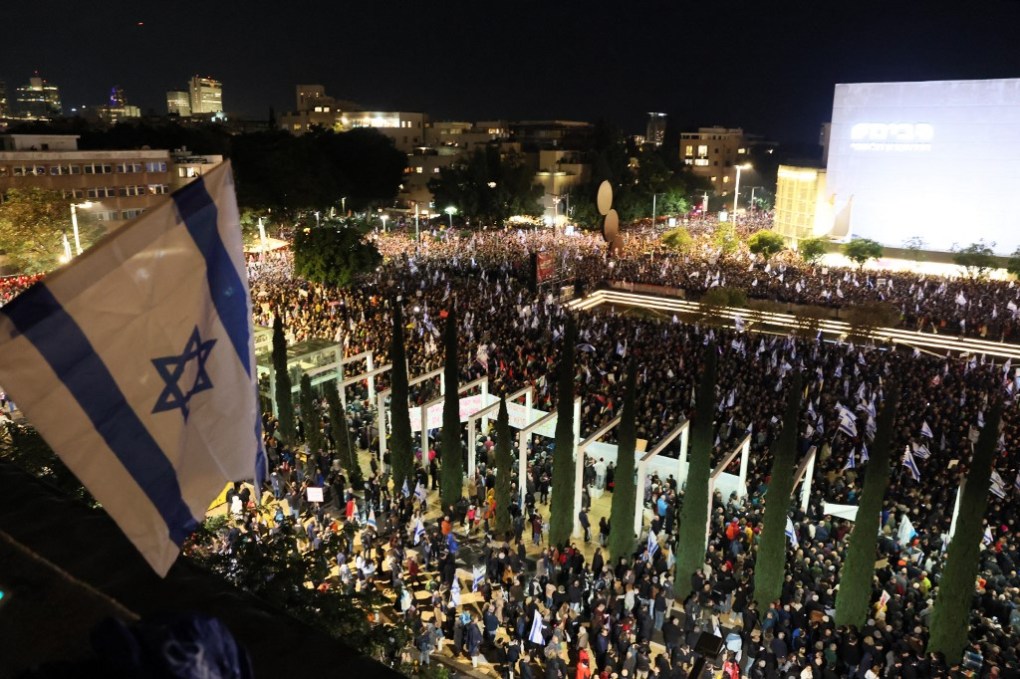
The past few weeks in Israel have been filled with genuine uncertainty and protests, alongside extreme and detrimental language, over proposed plans for judicial reforms. The biblical term for entreaty – עתר – provides a model for modern Israel: Effective change and national healing comes about by promoting peaceful debate with a dose of humility. Shabbat Shalom – Karen Miller Jackson 

*Israelis protest against Prime Minister Benjamin Netanyahu’s government, in Tel Aviv, on January 14, 2023. (Jack Guez/AFP) From Times of Israel https://www.timesofisrael.com/some-80000-rally-in-tel-aviv-against-governments-sweeping-judicial-overhaul/