Parshat Vayakhel: Leadership from the Bottom Up

One of the defining features of the Mishkan’s construction, as described in Parshat Vayakhel, is the collective participation of the entire nation. While Betzalel was appointed by God as chief architect, the contributions of the people were essential. Two midrashic insights into this dynamic between leadership and the people resonate deeply with Israeli society today.

First, after Bnei Yisrael—particularly the women—generously donated materials, the tribal chieftains (nesi’im) brought onyx stones. Rashi, citing Bamidbar Rabbah, questions why they gave last instead of leading. The midrash explains that they were offended they had not been asked first and waited to see what was needed, only to find that the people had already given beyond expectations. Left with little to contribute, they brought onyx stones. Learning from this, they were the first to donate at the altar’s dedication in Bamidbar. This teaches that when leaders falter, the people can rise to the occasion and ultimately inspire their leaders to follow. 

A second model of leadership emerges from the midrash on Moshe’s role in constructing the Mishkan. At the end of Shemot, the Torah states that all the components of the Mishkan were brought to Moshe, and “the Mishkan was raised.” The midrash, noting that it would be impossible for one person alone to lift it, teaches that the Divine spirit rested upon Moshe, enabling the Mishkan to be assembled. Rabbi Aharon Lichtenstein points out that while many skilled craftsmen contributed, none could see the full picture of the Mishkan. Moshe, who had not personally contributed materials, played a different yet critical role—humbly uniting the collective efforts of the people into a completed whole.

The Mishkan teaches that true leadership is one which unites the whole nation and that sometimes it is the people who ultimately lead the way. Shabbat Shalom -Karen Miller Jackson


Vayeshev: Shining the Light of Moral Strength

What can leaders today learn from Yosef? Yosef’s beginnings in parshat Vayeshev do not portend a great leader, even if his dreams predict otherwise. He is busy stirring up his brothers’ jealousy. The midrash depicts him as self-interested and frivolous. Yet, from the moment he is thrown into a pit, Yosef undergoes a transformation of character and emerges from dark times into a leader who spreads the light of his identity and faith to the outside world.

After the Torah describes the sale of Yosef, he is “taken down” (hurad) to Egypt. Midrash Bereshit Rabbah sees deeper meaning in this “yeridah” (descent) and understands it to be a spiritual decline. Yosef, perhaps at his greatest low, immersed in Egyptian culture, finds himself alone with Potiphar’s wife, who tries to seduce him. According to one Talmudic opinion, Yosef intended to sin with her. Only when he looked up at the window and saw an image of his father did he overcome his temptation and act responsibly and righteously. Alone, in a foreign land, this was a great test of faith. When he reacts with moral strength, this is a sign that he was destined to be a true leader.

Hanukkah too, is a time which spotlights the darkness of Jewish assimilation. The Maccabees were battling fellow Jews who chose Hellenistic cultural trends over Judaism and were willing to abandon core Jewish beliefs and mitzvot. The antidote to this, can be found in the way we light the Hanukkah candles. The Talmud teaches: “It is a mitzvah to place the Hanukkah lamp at the entrance to one’s house on the outside.” The Hanukkah lights are a reminder that by strengthening the light in our home – tradition, identity, morality and faith, we then can shine those values outward to the world. 

Yosef and Hanukkah’s message for leaders today: Cultural and ideological trends have led to a distorted view of reality and darkened the light of moral clarity. True leaders are those who can distinguish between good and evil, light and darkness. Shabbat Shalom and Hanukkah sameach -Karen Miller Jackson


Parshat Shoftim: True Leadership

“True leaders understand that leadership is not about them but about those they serve. It is not about exalting themselves but about lifting others up”. -Sheri L. Dew

The laws of various types of leadership discussed in parshat Shoftim highlights the challenges and moral responsibility involved in being a leader and also empowers individuals in choosing good leaders. 

Alongside the Torah’s command to appoint judges in every town, comes the warning to judges not to show favor or take bribes and: “justice, justice you shall pursue.” When the people want a king, the Torah enumerates various ways the king may abuse his powers – the king must not have too many wives or riches and must keep a Torah scroll with him to be mindful of God and mitzvot. Shoftim also talks about priests and prophets, who are chosen by God. Yet, there are limits to their power – the kohanim don’t receive inheritance and the navi must be careful to only relay the word of God. Along with stature comes sacrifice and responsibility. 

Yet, there is also responsibility placed on the shoulders of individuals.

The Sefer Hachinuch teaches that the biblical command to appoint judges to a beit din (religious court) is “incumbent on every community, in every place.” The establishment of just and moral leadership comes about partly through the people who appoint them. This idea is further reinforced by the interpretation of “צדק צדק תרדוף” – “Justice, justice you shall pursue.” The midrash Sifrei teaches that this means you (the individual) must “seek out the finest beit din.” We, the people, have a call to duty and to ensure justice as well.

These ideas are also reflected in the tefilla we say for the State of Israel. We pray to God: “bestow Your light and truth upon its leaders, ministers, and advisors, and grace them with Your good counsel.” May we choose and be blessed with moral, just and inspiring leaders in our time. Shabbat Shalom – Karen Miller Jackson


Parshat Vayechi: Posture in Prayer and in Life

What is the purpose of the various movements and bowing in prayer? Parshat Vayigash and hilchot tefilla provide insight for individuals as well as for people in leadership roles.

The midrash notes the emotionally charged word which the Torah uses when Yehuda approaches Yosef: “Vayigash.” Based on other instances of this word Tanach, the midrash suggests 3 possible interpretations of what “vayigash” expressed: as one would approach in battle, an approach from a place of appeasement or, “hagasha l’tefilla,” approach through prayer. The same word, different connotations; and the person would have very different body language.  

The term “hagasha l’tefilla,” appears in the halakhic literature on tefilla as well. The Rema writes (OH 95:1) that when we are about to recite the Amidah prayer, we take 3 steps forward by way of kiruv and hagasha – a sign of coming close and approaching. Separately, Rav teaches in the Talmud: “One who is praying, should bow in the appropriate places.” One should bow when saying “baruch” and stand upright when saying God’s name. Rav Kook explains that these body movements help instill within us the words of tefilla and a balance between feeling humble before God, but not lowering ourselves too much. The Talmud specifies that the High Priest and King are required to bow more frequently in tefilla, to ensure that alongside their power, they remain humble.

In one of the most popular TED talks ever (although subsequently challenged), Amy Cuddy demonstrates the difference in our body language when we feel victorious vs. when we are sad. She argues that standing in a power pose like Wonder Woman actually impacts a person’s hormones and raises his/her confidence level. May we as individuals and may our leaders find the posture to balance humility and confidence in the way we approach Hashem, in the way we interact with each other, and in the way we serve the Jewish people. Shabbat Shalom -Karen Miller Jackson


Parshat Shoftim: Seeking Great Leaders

“Leaders do not do the work on behalf of the people. They teach people how to do the work themselves.” – Rabbi Lord Jonathan Sacks, zt”l

Parshat Shoftim is a call to just and moral leadership: Appoint judges; Don’t judge unfairly; Don’t take bribes nor be partial and famously, “Justice, justice you shall pursue.” Who exactly is being commanded to fulfill these crucial mitzvot?

At first, it seems these words are directed at judges. However, several commentaries suggest otherwise. These verses seem to be speaking not only to leaders, but also to individuals. The Sefer Hachinuch teaches that the biblical command to appoint judges (referring to a religious court – beit din) is “incumbent on every community, in every place.” The establishment of just and moral leadership comes about partly through the people who appoint them. This idea is further reinforced by the interpretation of “צדק צדק תרדוף” – “Justice, justice you shall pursue.” The midrash Sifrei teaches that this means you (the individual) must “seek out the finest beit din.” We, the people, can take steps to ensure true justice.

This verse is appropriately also applied to Rebbe Yehuda HaNasi, compiler of the Mishna and a model of wise, compassionate and just leadership. The Talmud in Ketubot teaches “pursue justice” means: run to Rebbe’s beit din in Beit Shearim. This appears in the story of Rebbe’s last will and testament, where he practices outstanding leadership even on his deathbed. He ensures the continued honor of his widow (who was only stepmother to his children) and the honor of his household servants. He set up continuity of leadership through his sons and values fear of sin in a leader over great wisdom. He balances honor to a Torah scholar who has died (himself) alongside humility. May we be blessed with the ability to choose similar moral, just and compassionate leaders in our time. Shabbat Shalom – Karen Miller Jackson

*Photo from https://www.europeanbusinessreview.com/effective-leadership-9-ways-to-support-your-team/


Pinchas: Learning Leadership from the Women

“Be a light, not a judge. Be a model, not a critic” – Stephen Covey

Parshat Pinchas profiles various types of leadership. Among them, the daughters of Zelophehad demonstrate how to lead positive change. They are a much needed model for today. 

After the Torah describes how the land of Israel will be divided, the five daughters of Zelophehad approach Moshe and request an inheritance in Israel, as they have no brothers to inherit land. The commentaries characterize them as having great “chibah” (love) for Israel. The Talmud goes even further, describing them as “darshaniyot” (interpreters), tzidkaniyot (righteous) and “chachmaniyot” (wise). How do we see these qualities in their behavior?

The daughters emphasize that their father “died by sin in the midbar,” but not as a part of Korah’s congregation. Rashi teaches that they emphasized that while their father sinned, he did not lead others to sin like Korah. Also, Korah spread unfounded criticism and refused to engage in dialogue with Moshe. 

The midrash also contrasts the daughters of Zelophehad with the story of the spies. The spies slandered the Land of Israel and spread negativity among the nation. After their words, the people said they wanted to return to Egypt, leading to catastrophe for that generation. The midrash views the daughters’ words to Moshe as the opposite of the language and behavior that previously led to disasters in Bamidbar. They are proactive. They embrace dialogue and use positive language by saying: “We want to be part of this too!” 

Hashem’s response is “The daughters speak justly.” The midrash sees this as deep affirmation. The Talmud pays them the ultimate compliment: it teaches that the laws of inheritance for daughters are attributed to, and written by, the daughters of Zelophehad. After the earlier stories of people who found ways to criticize and sow discord, these five women model proactivity, dialogue, positivity, and love of the Land of Israel. Shabbat Shalom – Karen Miller Jackson

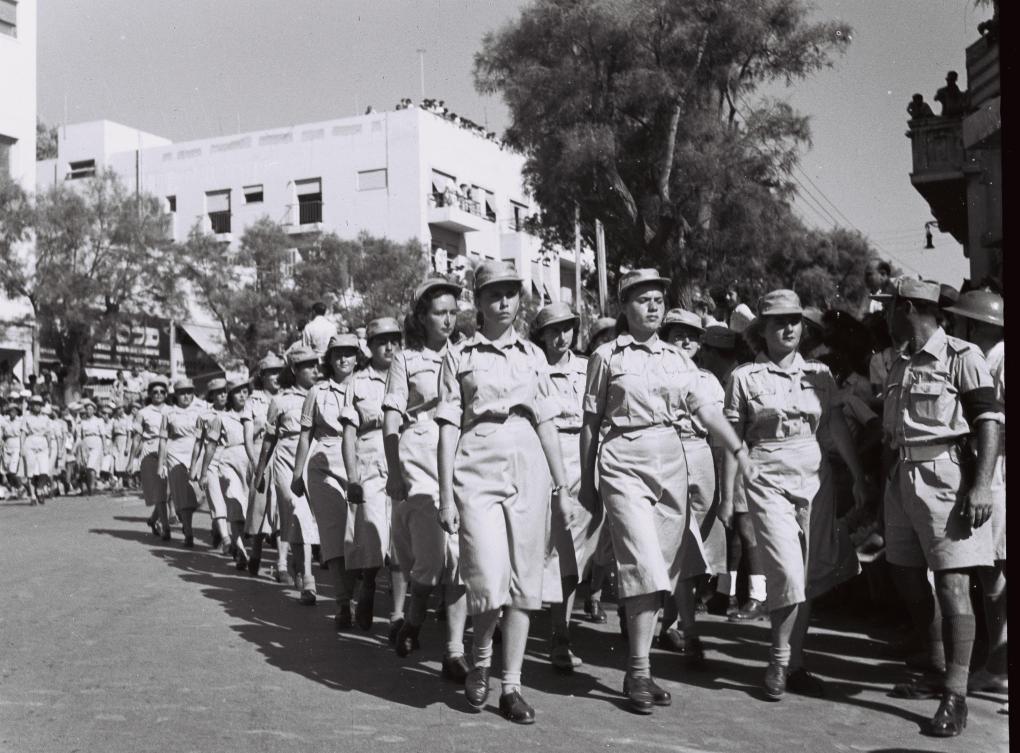
*photo https://he.wikipedia.org/wiki/%D7%97%D7%99%D7%9C_%D7%A0%D7%A9%D7%99%D7%9D#/media/%D7%A7%D7%95%D7%91%D7%A5:Chel_Nashim_IDF1948.jpg


Ki Tissa: Learning from Shattered Luchot

What can be learned about leadership from Moshe’s reaction to the golden calf? Is it ever acceptable for leaders to speak or act out of anger? The commentaries on parshat Ki Tissa provide some insight.

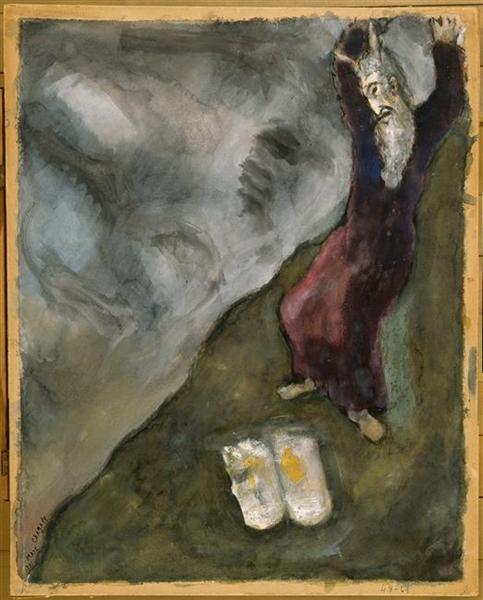
When Israel commits the sin of the golden calf, the Torah states that Hashem became angry, so to speak, and Moshe calmed God’s anger. God tells Moshe “leave Me be so that My anger may blaze forth against them.” Yet, after succeeding in turning back God’s anger, Moshe seems to lose control upon coming down the mountain and seeing for himself the people celebrating with the calf. The parallel between God and Moshe’s anger is reinforced by the Torah’s use of the same words: ויחר אף. Next, Moshe throws down the first set of luchot (tablets) and shatters them.

Was Moshe’s shattering of the luchot condoned by God? One view is that not only was Moshe right to break the luchot, but God even agreed with this act. God tells Moshe to make a second set of luchot, with the same words as on the first ones which he had shattered, אשר שברת. This is interpreted in Talmud Shabbat with a wordplay – strength to you (yashar kochecha) for shattering them. Here, God affirms Moshe’s action. A more critical view is found in Devarim Rabbah, where God reprimands Moshe for breaking the luchot. Since Moshe broke the luchot from a place of fury, God punishes Moshe by having him re-make the second set of tablets. Here, Moshe’s greatness is in accepting this.

The Talmud also teaches that the broken luchot were kept in the same ark as the new luchot, due to their sanctity. Perhaps it was also to serve as a warning. The image of carrying the broken luchot can be a reminder to modern leaders as well, who hopefully strive to be like Moshe, that they have a responsibility to not react from anger nor spread enmity, but rather to model good character and temperament toward each other and the world. Shabbat Shalom – Karen Miller Jackson