
Nitzavim-Vayelech: Relationship Repair

Teshuva, one of the central mitzvot of Elul and the Yamim Noraim, has its biblical source in Parshat Nitzavim-Vayelech. The Torah portrays teshuva as a dynamic of return between Am Yisrael and God that can also serve as a model for repairing relationships and fostering positive change in our own lives.

Ramban derives the mitzvah of teshuva from the verse, “And you will return to the Lord your God…” Notably, the root sh.u.v – return – appears seven times in this section. Rashi, commenting on the Torah’s unusual language, “And God will return…,” teaches that once we initiate our return to God, God returns with us. This surprising characterization of teshuva as a two-way process between Israel and God can also serve as a model for interpersonal relationships. When we take the first step toward someone, we create the possibility that they will reciprocate, allowing the relationship to move forward together.

This gradual movement also suggests that teshuva is a progression. Abarbanel points out that the Torah frequently uses the language of a journey: evildoers are warned to abandon their “ways,” while some of our greatest leaders are described as “walking with God.” Am Yisrael, too, is commanded to “walk in the ways of God.” The image of walking reminds us that teshuva often happens step by step, through small changes and gestures. Similarly, the Lubavitcher Rebbe teaches that the name of each parsha conveys this message. “Nitzavim” (standing) suggests standing firmly in our faith and identity, while “Vayelech” (going) signifies our potential to move forward and grow spiritually – gradually, one step at a time.

May these days of teshuva be an opportunity to reaffirm our faith and relationships, and to continue moving forward in our own spiritual growth. Shabbat Shalom and Shana Tova! -Karen Miller Jackson

Parshat Vayelech: Embracing Knesset Yisrael

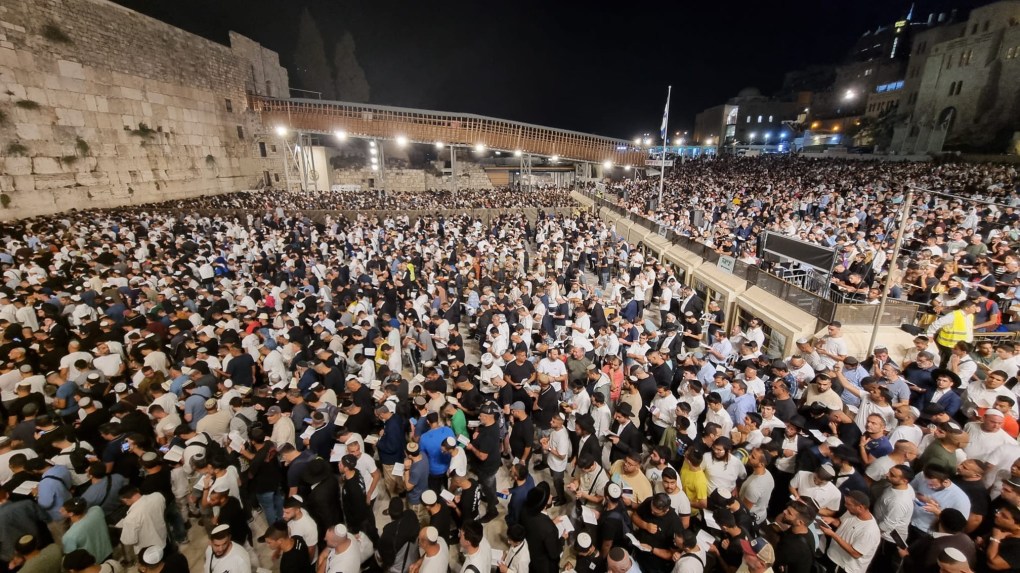
Parshat Vayelech presents the mitzvah of hakhel (assembly), when the entire Jewish people gathered during Sukkot at the end of the shemita year to hear the Torah read aloud. While this mitzvah could only be fully observed when the Mikdash stood, the commentaries emphasize that its essence carries enduring relevance.

The Torah commands that all participate in hakhel: men, women, and children. Rashi explains that men came to learn, women (who were then less educated) to hear, and young children to give “s’char” (reward) to their parents who brought them. Regardless of one’s level of knowledge, the Torah reading would touch the heart of each person in some way. Rambam explains that whether a person was exceptionally learned or couldn’t understand the words, everyone stood and listened together recalling the giving of Torah at Sinai. Hakhel was inclusive of all, no matter one’s level of understanding, knowledge and commitment. 

The Kli Yakar draws a parallel between hakhel and Yom Kippur: “The essence of hakhel is repentance.” Just as the Ten Days of Repentance focus on the individual, hakhel represents the collective dimension—a rare opportunity for communal teshuva, for the entire people to return together. Rav Soloveitchik similarly observes that Yom Kippur contains both dimensions: the shorter, personal vidui (confession) is followed by the longer, more powerful, communal one. Both are necessary, but the power of the collective confession lies in its voice as Knesset Yisrael—binding us not only to our present community but also to Jews across generations and to the entirety of Israel.

May we be blessed this year to experience the strength of hakhel and the embrace of Knesset Yisrael. May we find ways to deepen our unity and draw closer to the whole Jewish people. Shabbat Shalom and Gmar Chatima Tova – Karen Miller Jackson


Nitzavim-Vayelech: Communal Gatherings

On two occasions Nitzvaim-Vayelech emphasizes the value of gathering together all of Knesset Yisrael: Men, women, children and strangers. This presents a modern-day model for inclusivity and inspiration within our communities.

Nitzavim opens with Moshe assembling the people before God. The Talmud Shevuot see this moment as a renewal of the brit Sinai, a re-commitment to Torah by the children of those who experienced Matan Torah. This brit included both those present and “those who are not with us here this day.” Ramban and others commentaries understand this brit as including all future generations of Jews as well. 

The parsha closes with a model which can recur throughout time: the mitzvah of Hakhel, to gather the whole Jewish people at the end of the shemita year to hear portions of Torah read out publicly. This took place in Israel while the Temple stood and men, women, children and strangers were commanded and expected to participate. Rashi comments that men came to learn, women (who were then uneducated) to hear and young children to give “s’char” (reward) to their parents who brought them. No matter one’s level of education, the Torah reading would touch the hearts of each person in some way. Rambam explains that whether a person was exceptionally learned or couldn’t understand the words, everyone stood and listened together recalling the giving of Torah at Sinai. 

Other gatherings and communal re-committing to Torah occur several more times throughout Tanach, most notably by Ezra the Scribe. Then the people gathered “as one” and requested the Torah be read to the whole kahal (assembly). This gathering too recalls Matan Torah. It also contains many elements of modern-day Torah readings in shul including: lifting of the open Torah scroll and the reciting of a blessing.  

May we find more ways to create gatherings which are inclusive of others and where we can internalize and be inspired by the words of Torah. Shabbat Shalom – Karen Miller Jackson


Parshat Vayelech: Power of Communal Gathering

Parshat Vayelech contains the mitzvah of “hakhel” (assembly), when the Jewish people gathered together to hear portions of the Torah read out during Sukkot at the end of the shmita year. This mitzvah could only be fulfilled when the beit hamikdash stood, yet the commentaries highlight that the essence of hakhel is particularly relevant today.

The Torah emphasizes that all are required to participate in the mitzvah of hakhel: men, women and children. Rashi comments that men came to learn, women (who were then uneducated) to hear and young children to give “s’char” (reward) to their parents who brought them. No matter one’s level of education, the Torah reading would touch the hearts of each person in some way. Rambam explains that whether a person was exceptionally learned or couldn’t understand the words, everyone stood and listened together recalling the giving of Torah at Sinai. Hakhel was inclusive of all, no matter one’s level of understanding, knowledge and commitment. 

The Kli Yakar’s interpretation of hakhel adds a timely connection to Yom Kippur: “The whole essence of hakhel is about repentance.” While the ten days between Rosh Hashanah and Yom Kippur are about individual repentance, hakhel – the gathering of all – represents a rare opportunity and inspiration for communal teshuva. 

Rav Soloveitchik writes that actually there are elements of both individual and communal teshuva on Yom Kippur in the vidui (confession). The individual confession is shorter and a precursor to the more powerful and longer communal confession. Both are necessary but the tefila of “Knesset Yisrael” (gathering of Israel) binds us – with our own community, with Jews throughout history and with the whole of Israel. 

May we be blessed to feel the communal strength of “hakhel” and “Knesset Yisrael” this year. May we find ways to deepen our bonds and positive connection with the whole Jewish people. Shabbat Shalom and gmar chatima tova – Karen Miller Jackson